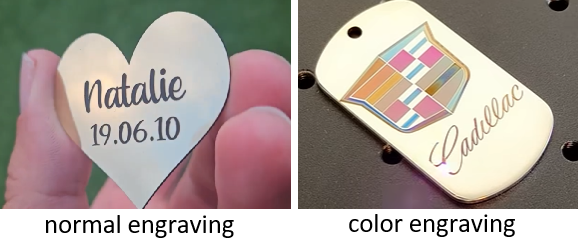
You may have seen a titanium lighter with a rainbow gradient, or a metal accessory featuring a colorful logo.
These colors are created directly on the metal surface using laser color marking.
With a MOPA fiber laser, operators can create vivid colors such as gold, blue, purple, green, and red on metals including stainless steel, titanium, and copper.
But how does a laser create color? And why are MOPA fiber lasers considered the best choice for metal color marking? Let’s explore.
What Is Laser Color Marking?
Laser color marking is a process that creates visible colors on metal by precisely controlling laser-induced surface oxidation.
When a laser beam heats a metal surface, it creates an extremely thin oxide layer only hundreds of nanometers thick.
When white light hits the oxide layer:
• part of the light reflects from the top surface
• another part reflects from the metal underneath
• the reflected waves interact with each other
Depending on the oxide thickness, certain wavelengths become stronger while others disappear. The human eye then sees different colors.
Why MOPA Fiber Laser Is Essential for Color Marking
Compared with standard Q-switched fiber lasers, MOPA fiber lasers provide independent and wider pulse width adjustment, giving operators better control over heat input and oxide layer formation.
Best MOPA Fiber Laser for Metal Color Marking
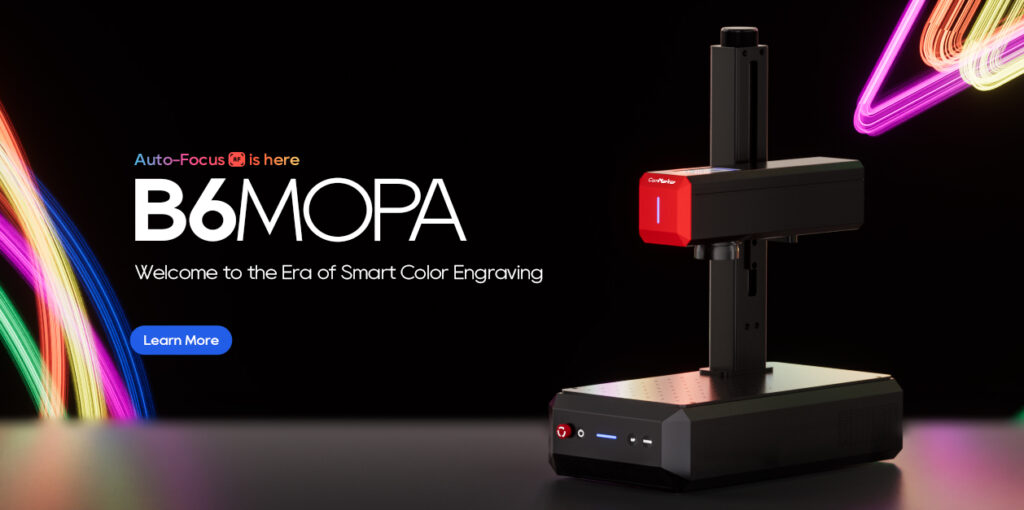
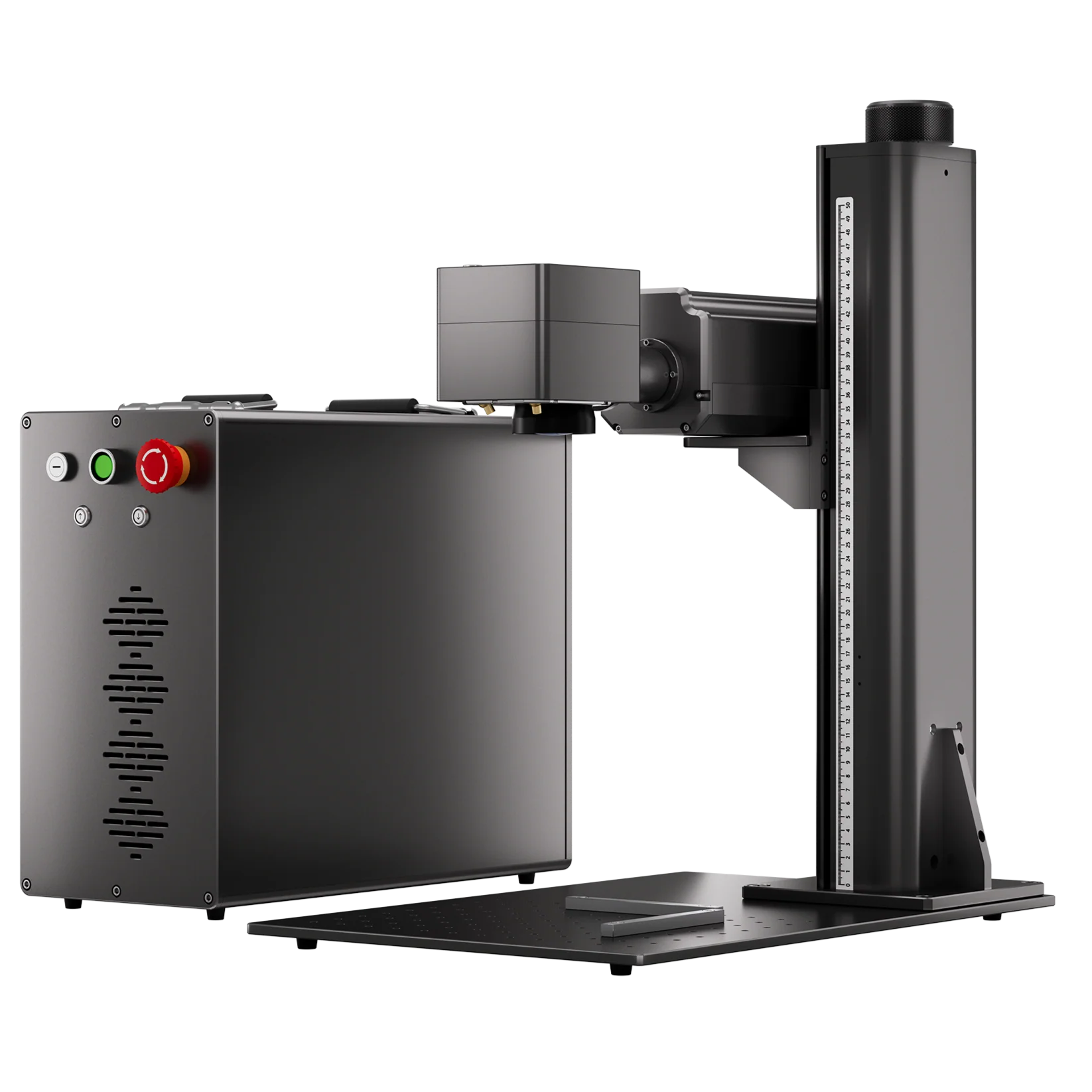
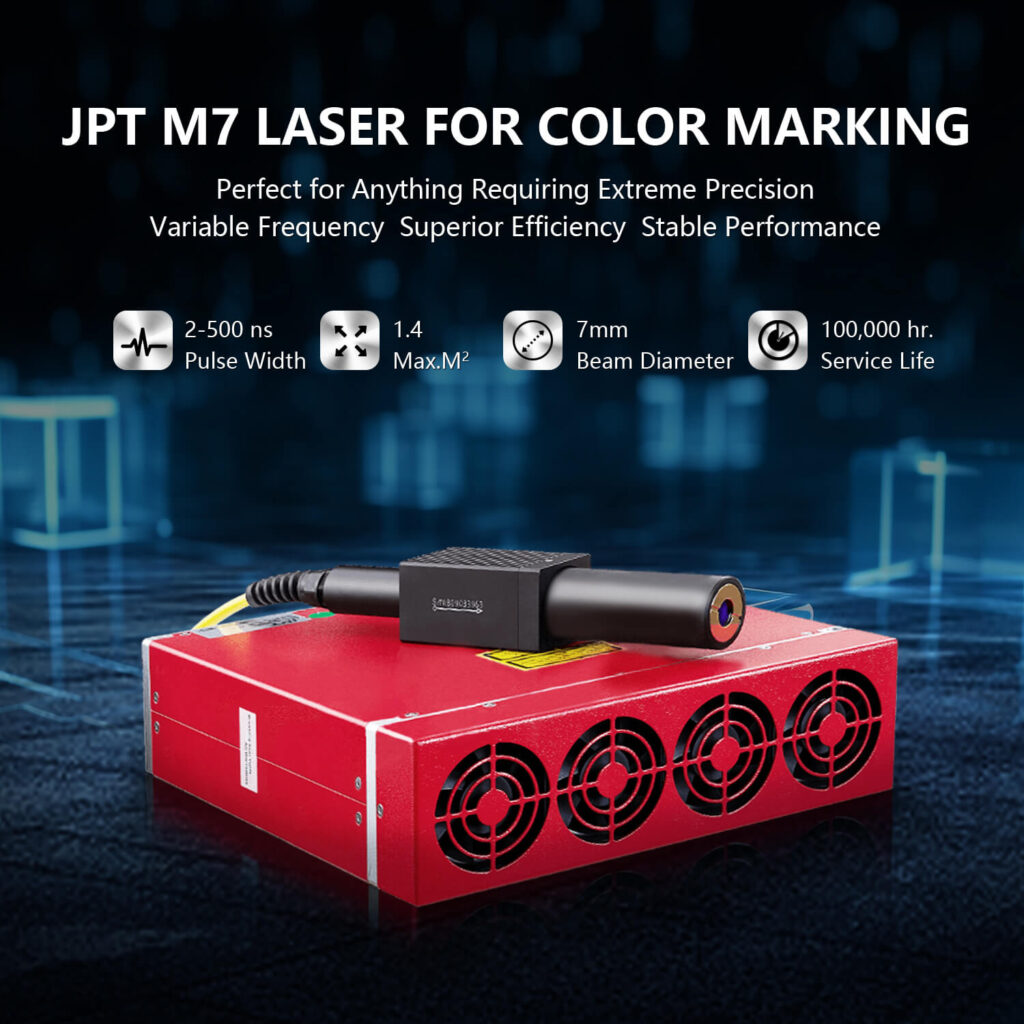
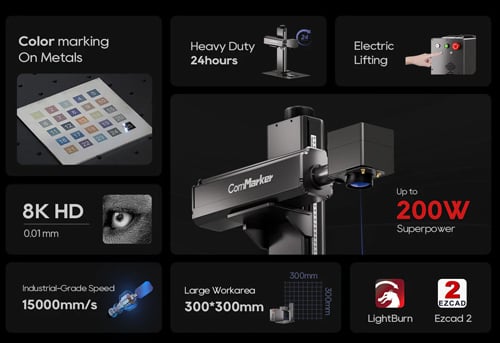
For metal color engraving, consistent results depend on precise control of laser energy and surface oxidation. The ComMarker Titan MOPA Fiber Laser Engraver is designed for applications requiring flexible parameter adjustment and repeatable color marking.
Key features include:
• JPT MOPA fiber laser source: Provides independent control of pulse width and frequency, helping operators fine-tune oxide layer formation for different color effects.
• 2–500 ns adjustable pulse width: Allows precise control of heat input, making it easier to optimize colors on stainless steel, titanium, and copper.
• 60W / 100W / 200W power options: Provides flexibility for different applications, from decorative color marking to deeper engraving and faster production.
• Up to 15,000 mm/s marking speed: Improves efficiency for batch customization projects.
With MOPA technology, the Titan series enables professional color marking, titanium color engraving, copper processing, and advanced metal customization.
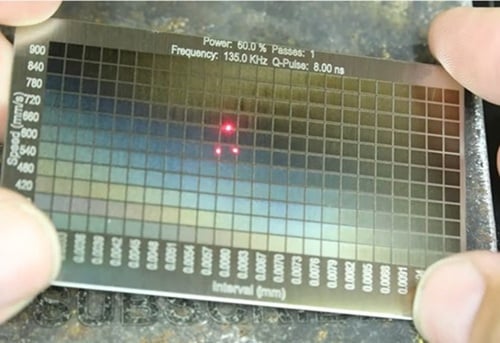
How Laser Parameters Affect Metal Color Marking
Pulse Width
Definition: The duration of each individual laser pulse, measured in nanoseconds (ns).
Physical effect: Determines the peak power of the laser. A short pulse width produces high peak power with minimal heat‑affected zone; a long pulse width does the opposite.
Significance for color: Short pulse widths concentrate energy, which favors the formation of fine oxide layers; long pulse widths allow more heat diffusion, resulting in thicker oxide layers.
Frequency
Definition: The number of pulses emitted per second, measured in kilohertz (kHz).
Physical effect: Determines the overlap ratio of laser spots. Higher frequency means shorter pulse intervals, so more pulses hit the material per unit time, leading to a more pronounced heat accumulation effect.
Significance for color: At high frequencies, the spot overlap ratio is high, and thermal accumulation is stronger, which favors the formation of thicker oxide layers. However, if the frequency is too high, the material may overheat and fail to produce any color.
Power
Definition: The average output power of the laser beam.
Physical effect: Directly determines the total heat input.
Significance for color: As power increases, heat input increases, which thickens the oxide film, and the color changes accordingly. Depending on the material and parameter combination, increasing power can gradually change oxide thickness and shift the visible color.
Scanning Speed
Definition: The speed at which the laser beam moves across the material surface, usually measured in mm/s.
Physical effect: Determines the interaction time between the laser and the material. High speed means short interaction time and less heat input; low speed means the opposite.
Significance for color: The effect is opposite to that of power. As speed increases, the interaction time shortens, and the oxide layer becomes thinner, thus changing the color. Speed variations also affect surface roughness, which in turn influences the visual perception of the color.
Hatch Spacing
Definition: The distance between adjacent parallel scanning lines in the fill pattern.
Physical effect: Determines the overlap rate of the scan lines. Small hatch spacing gives high overlap and denser heat input; large spacing gives lower overlap.
Significance for color: This is a fine‑tuning parameter. Smaller hatch spacing (e.g., 0.01 mm) produces more saturated and uniform colors. Even changing only the hatch spacing can lead to completely different colors.
What Metals Can Be Color Marked with a MOPA Laser?
Stainless Steel
Stainless steel is currently the most mature and widely used material for laser color marking.
It is also the easiest material for beginners because it provides stable and repeatable color results with proper parameter adjustment.
• Core Principle: Laser heating generates a transparent oxide film on the stainless steel surface, with a thickness ranging from 50 to 300 nanometers. The film thickness determines the final color.
• Parameter Effects:
Pulse Width & Frequency: Pulse width is the core control parameter for color. Under the same conditions, adjusting pulse width changes color more effectively than adjusting frequency.
Power & Speed: Lower speed and higher power result in a thicker oxide film and more saturated colors.
Hatch Spacing: Very dense hatch spacing (e.g. 0.02–0.03 mm) is typically used to obtain uniform and saturated colors.
Check setting for color laser engraving stainless steel with ComMarker Titan
Titanium
Titanium alloys (e.g., Ti-6Al-4V (TC4), TB2) are also ideal for color marking, producing vibrant colors.
• Core Principle: Similar to stainless steel, laser parameters control the formation of an oxide film (mainly titanium dioxide, TiO₂) on the titanium surface, and colors appear through thin‑film interference.
• Parameter Effects:
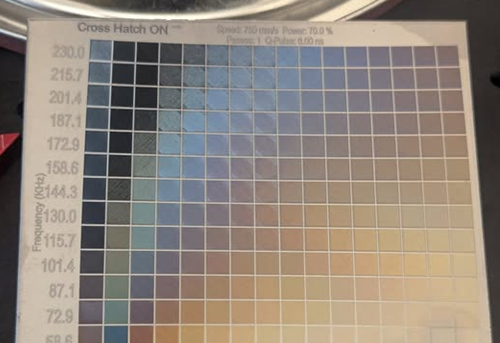
Scanning Speed: On TB2 titanium alloy, fixing power and frequency while changing only the scanning speed can yield yellow, purple, blue, and other colors.
Power & Frequency: On TC4 titanium alloy, varying power in the range of 9–18 W and frequency between 100-600 kHz produces a range of colors from silver to blue, gold, orange, bright silver, purple, and more.
Defocus Distance: In addition to theregular parameters, defocus distance (focal position) is also an important variable affecting the final color on titanium.
Check setting for color laser engraving titanium with ComMarker Titan
Copper
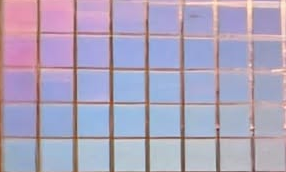
Unlike stainless steel and titanium, copper laser coloring relies primarily on the formation of copper oxides. Laser heating of the copper surface produces a mixed oxide layer of Cu₂O and CuO. By controlling the thickness and composition ratio of the oxide layer, colors from pink to blue can be achieved.
Technical Requirements
Copper has extremely high thermal conductivity. Higher-power MOPA lasers (such as 50W and above) can improve processing efficiency on copper because copper quickly transfers heat away from the marking area.
Pulse width has a significant effect on copper coloring; shorter pulse widths help reduce heat diffusion and produce sharper color boundaries.
Check setting for color laser engraving copper with ComMarker Titan
Frequently Asked Questions
Does laser color marking fade?
No.
Because the color comes from a controlled oxide layer formed on the metal surface, it does not peel like paint or printed coatings.
However, extreme environments such as strong chemicals, high temperatures, or corrosion conditions may affect certain materials.
Can a normal fiber laser create colors?
Some non-MOPA fiber lasers may create limited color effects under certain conditions such as rising laser head to defocus.
However, MOPA lasers provide much greater control over pulse width and processing parameters, making them the preferred choice for repeatable professional color marking.

Applications of Color Laser Engraving
This technology is far more than a novelty; it has powerful practical and commercial applications that make color engraving matter:
-
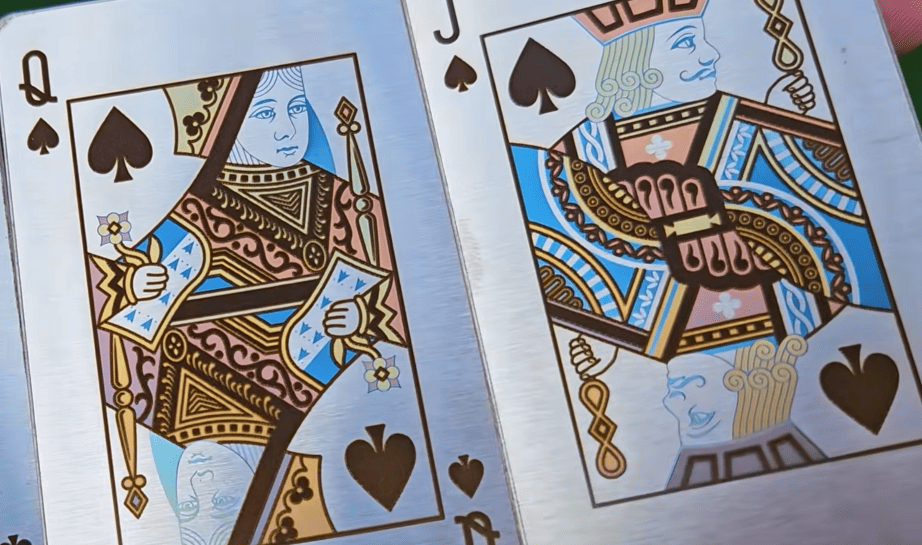
Jewelry & Personal Accessories: Add multi-colored logos, intricate names, or beautiful decorative patterns to rings, pendants, and watches, creating truly unique pieces.
-
Custom Tools & EDC Gear: Personalize knives, multi-tools, lighters, and pens with vibrant, wear-resistant color designs that won’t fade or rub off.
-
Industrial & Medical Part Identification: Use permanent color-coding for organizing components, indicating safety information, or adding tamper-proof branding to parts.
-
Branding & Promotional Products: Create eye-catching, high-value corporate gifts, awards, and retail products that stand out from the competition.
For small businesses and entrepreneurs, these capabilities open the door to new, premium product lines and significantly higher profit margins.
Final Thoughts
Laser color marking transforms ordinary metal surfaces into premium products without ink, paint, or coatings.
With the right MOPA fiber laser settings, manufacturers and creators can produce durable, high-value metal products with unique colors and designs.
Among different materials:
• Stainless steel is the easiest starting point.
• Titanium provides the brightest and smoothest colors.
• Copper offers unique results but requires more precise control.
If your business focuses on personalized metal products, jewelry, tools, or premium gifts, the ComMarker Titan MOPA Fiber Laser provides the pulse control and power flexibility needed for consistent color marking production.