When shopping for a CO2 laser engraver, you might run into two confusing choices: RF CO2 laser or traditional glass tube CO2 laser? Galvo system or gantry system?
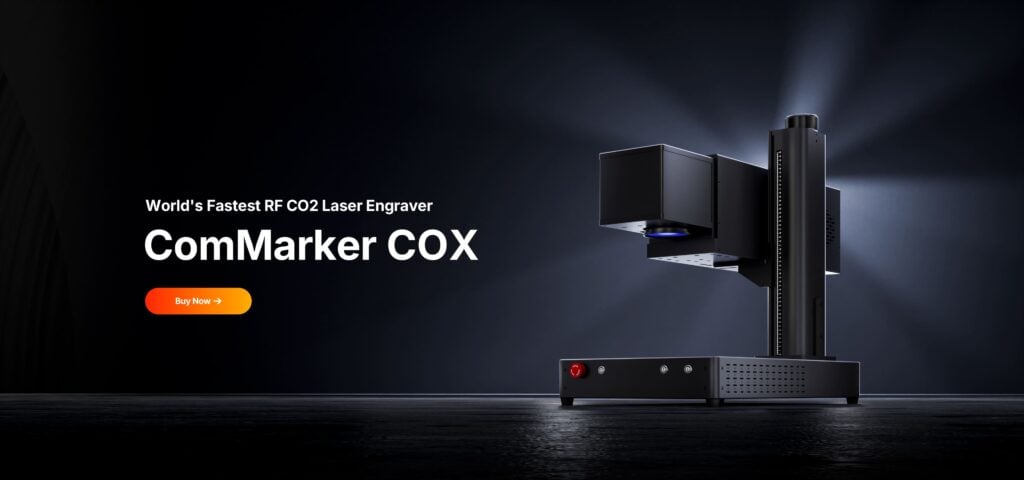
For small businesses focused on custom engraving, RF CO2 Galvo laser systems have become the preferred upgrade over traditional CO2 machines.
In this guide, we’ll break down the core advantages of different CO2 laser systems, the main machine types, application scenarios, and key buying tips to help you avoid costly mistakes.
RF CO2 laser vs glass tube CO2 laser: What’s the difference?
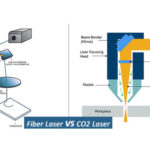
RF CO2 and glass tube co2 differentiate by how laser energy is generated.
A glass CO2 tube works like a traditional light bulb, using high voltage to excite gas.
An RF CO2 tube works more like a modern LED, using radio frequency to deliver precise and controlled energy output.
This fundamental difference enables RF lasers to achieve higher precision, faster speeds, and much better consistency.
Why RF CO2 Lasers Are a Major Upgrade
Ultra-long lifespan [1]
RF CO2 laser tubes can last up to 30,000–50,000 hours, which is more than 10× the lifespan of traditional glass tubes
What does this mean for your business
• Lower maintenance costs
• Better stability for long production runs
• More suitable for continuous commercial operation
For production businesses, RF CO2 laser engraving machines win on long-term cost advantage.
Higher Real-World Performance at the Same Power
RF lasers produce a finer and more concentrated beam than glass tube systems.
For example, in real engraving and cutting applications, a 40W RF CO2 laser can often perform similarly to a 70W traditional glass tube machine.
Benefits include
• Better engraving consistency
• Higher processing efficiency
This allows desk top RF CO2 Galvo laser systems to achieve professional industrial-level results.
Simpler Cooling System and Easier Maintenance
Unlike traditional glass tube lasers, that require bulky water-cooling tank, RF CO2 lasers simply use air-cooling system to do the job.
For workshops and small businesses, this leads to:
• Easier setup
• Fewer maintenance points
• Smaller space requirement
• Easer operation
For many users, this alone significantly improves daily usability.
Galvo vs Gantry CO2 Laser Systems: Which One Fits Your Business?
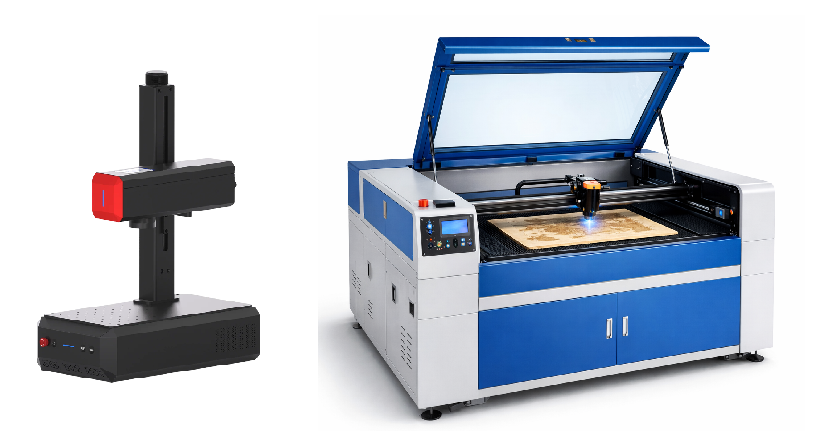
RF CO2 Galvo Laser: High-speed & High-precision Solution
For businesses focused on engraving efficiency, detail quality, and production speed, RF CO2 Galvo systems offer hard-to-ignore advantages that can significantly improve productivity.
1. Extremely Fast Engraving Speed
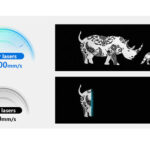
RF lasers can pulse at very high frequencies. When combined with a high-speed galvo system instead of moving the entire laser head mechanically, they enable:
• 15000 mm/s engraving speeds
• Faster production cycles
• Better grayscale control and higher repeatable accuracy
Perfect for batch marking and mass production.
2. Superior Precision and Fine Detail
With professional field lenses, RF CO2 lasers provide:
• 0.005mm detailed spot size
• Better energy consistency
• More stable beam quality
This ensures no loss of precision even on large-format engraving, making ultra-fine patterns and small text extremely sharp.
3. Flexible Engraving & Light Cutting Capability
RF CO2 Galvo lasers can handle both engraving and light cutting.
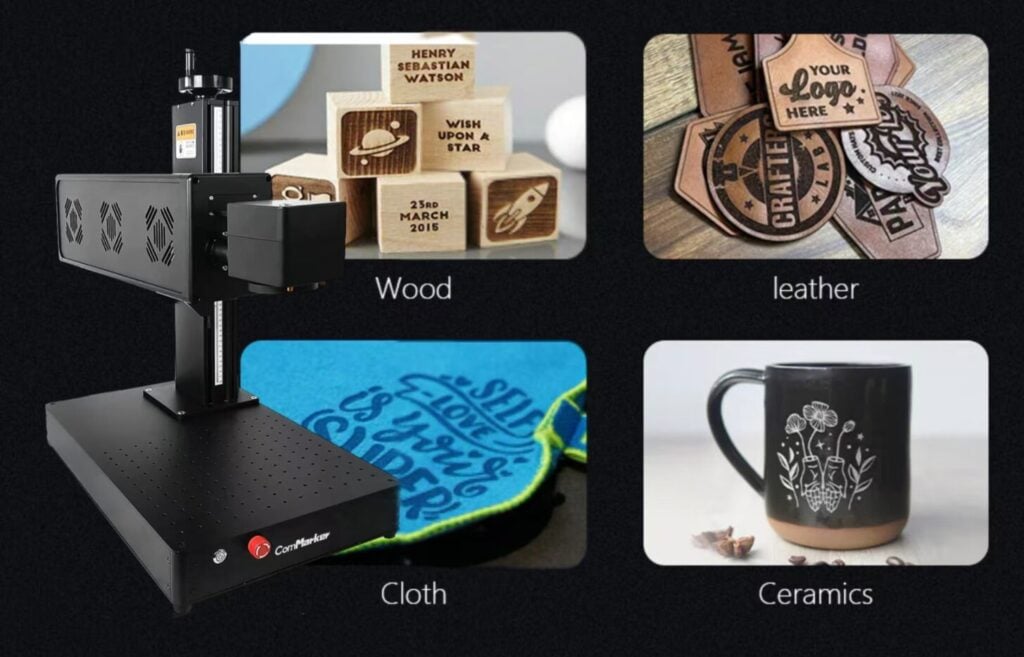
• Suitable for multiple materials: thin acrylic cutting, leather, paper, thin wood laser engraving, etc.
• Enables contour cutting and shape cutting in one step
• Removes the need for additional equipment
This gives businesses greater production flexibility with one machine.
4. High-profit advanced applications
RF CO2 galvo systems unlock premium production capabilities thanks to the RF CO2 wavelength and superior beam control.
They deliver cleaner marking and lower defect rates on coated metals like anodized aluminum and painted surfaces.
With 360° rotary system, you get seamless, high-accuracy processing on tumblers, mugs, and other cylindrical products.
These capabilities help businesses produce higher-value products and win more premium custom orders.
Main Limitation of Galvo Systems
Galvo systems are optimized for speed and precision. Compared to gantry systems, they generally have smaller working areas and smaller material cutting depth
Gantry CO2 Laser: Better for Thick Materials and Large Sheets
Traditional Gantry RF CO2 systems are designed primarily for cutting applications. They are ideal for:
1. Superior thick-material cutting
Designed for wood, plywood, acrylic, and other thick materials at 25mm thick. Great for furnishing or custom signage.
2. Large-format engraving capability
The gantry structure combined with RF tube stability ensures:
• Huge large work areas around 2000mm square size
• Consistent engraving and cutting on full-size sheets
Main drawback
• Larger machine size for studio space requirement
• Slower engraving speed compared to galvo systems
Quick Guide: Which CO2 Laser Should You Buy?
Identify your core needs
| Requirement | Choose Galvo Type | Choose Gantry Type |
| Core process | Cylindrical engraving, fine marking, small parts | Thick cutting, large sheets |
| Priority | Speed, precision, versatility | Cutting power, heavy-duty production |
| Business type | Gift customization, industrial marking, creative goods | Woodworking, signage, panel processing |
Key factors before purchasing
1.Consider long-term operating cost, not just purchase price
2.Confirm support for your high-value applications (e.g., rotary engraving, cutting requirements)
3.Check software compatibility and parameter libraries
4.Choose brands with reliable after-sales support and spare parts availability
Conclusion: Why RF CO2 Galvo Lasers Are Becoming the Preferred Choice
The laser engraving industry is shifting toward higher speed, better precision, and lower maintenance systems.
With an RF CO2 laser, you’re investing in Speed that increases throughput; Precision that improves product quality and Reliability that reduces downtime
For businesses focused on customization, industrial marking, and efficient production, an RF CO2 Galvo laser is the door to your competitive advantage.
Reference
[1] Hochuli et al. (1985) NASA RF CO2 Laser Life Test