Whether you’re starting a custom stamp business or upgrading an existing production line, choosing the wrong laser can reduce engraving speed, increase material waste, and limit production capacity.
In this guide, we compare CO2 , UV, and fiber lasers for stamp making, including their performance on rubber, silicone, wood, and metal, to help you find the best laser engraver for your business.
Quick Answer: Which Laser Is Best for Stamp Making?
| Laser Type | Rubber | Silicone | Wood | Metal | Best For |
| CO2 Galvo | ★★★★★ | ★★★★★ | ★★★★★ | ❌ | Commercial rubber stamp production |
| UV Laser | ★★★★ | ★★★ | ★★★★ | ★ | Ultra-fine detail engraving |
| Fiber Laser | ★ | ★ | ❌ | ★★★★★ | Metal seals & branding tools |
| Diode Laser | ★ | ★ | ★★ | ❌ | Hobby projects |
Bottom line:
If your business primarily produces rubber stamps, a CO2 galvo laser engraver is the most efficient and cost-effective solution.
Rubber materials are engineered to absorb the 10.6 μm wavelength produced by CO2 lasers, enabling rapid material vaporization, clean engraving walls, and excellent depth control. This makes CO2 lasers the industry standard for commercial stamp manufacturing.
CO2 vs UV vs Fiber Laser for Stamp Engraving
Laser wavelength determines how efficiently different materials absorb energy, directly affecting engraving speed, depth, edge quality, and productivity.
CO2 Laser: Best for Fast & Batch Rubber/Wood/Silicone Stamp Production
Most commercial laser rubber is specifically formulated for CO2 lasers operating at a wavelength of 10,600 nm, highly absorbed by rubber, converting laser energy into heat with minimal reflection.
The result is fast material removal, deep engraving, and clean sidewalls.
Unlike gantry machines that move the workpiece, a galvo CO2 laser uses high-speed scanning mirrors to position the beam. This significantly increases acceleration and engraving speed, making it ideal for high-volume stamp production.
|
Best Applications • Rubber stamps • Silicone stamps • Wooden stamps • Acrylic stamp components
Why Professionals Choose CO2 Galvo Lasers • Fast engraving speeds for mass production • Consistent engraving depth • Excellent edge quality • Low maintenance with RF laser sources • High daily production capacity |
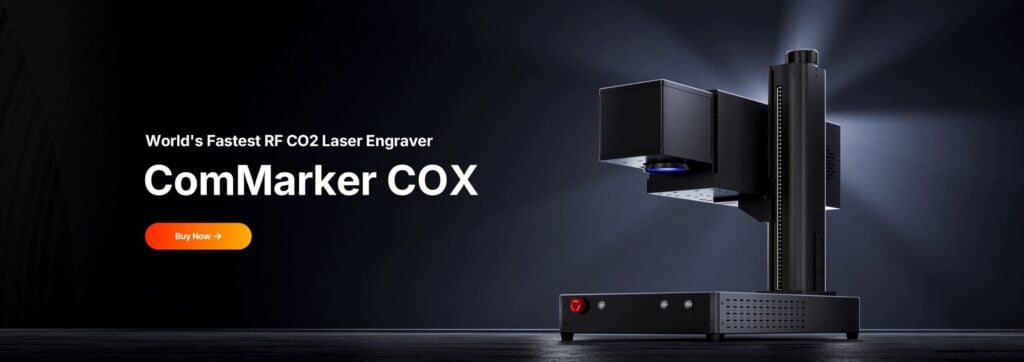
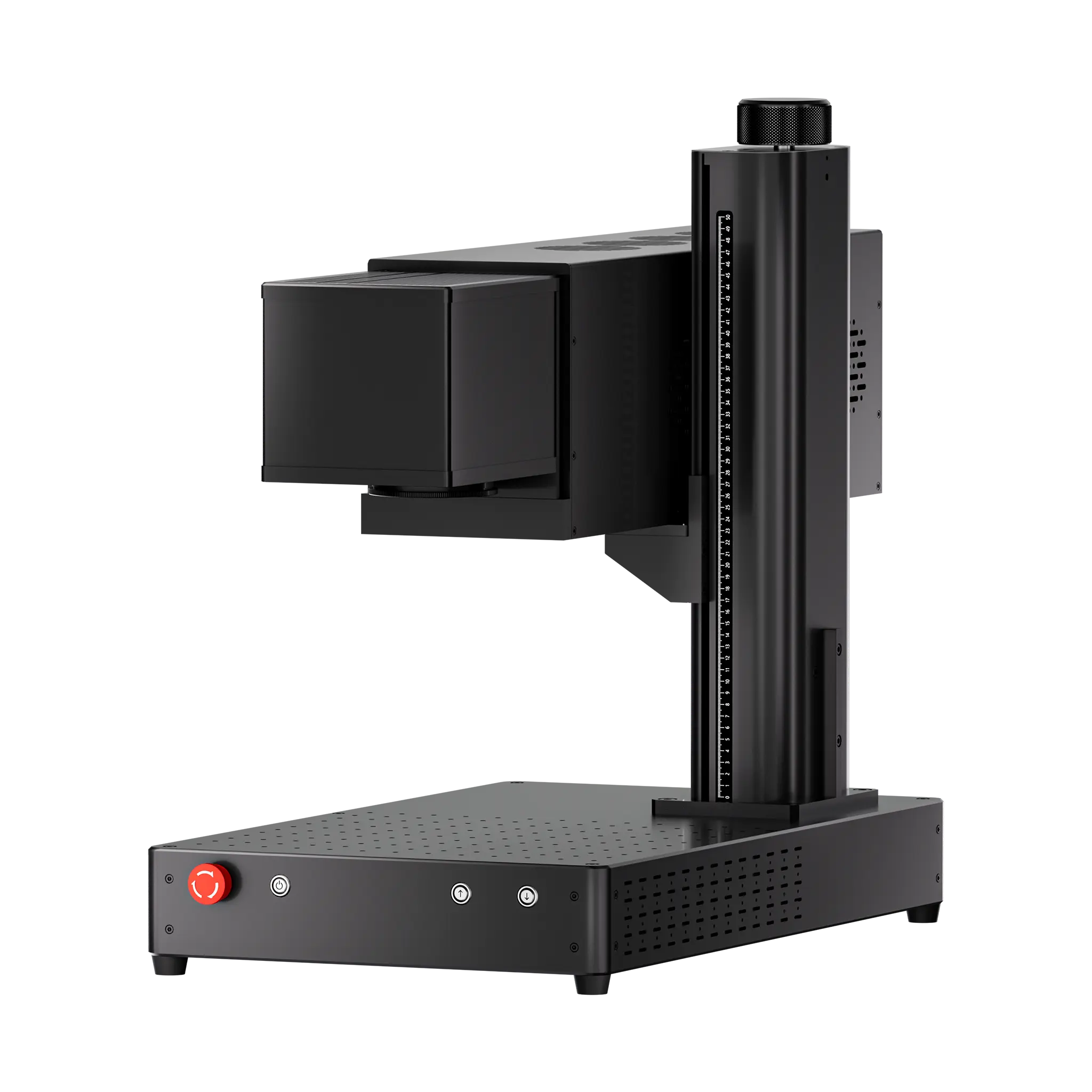
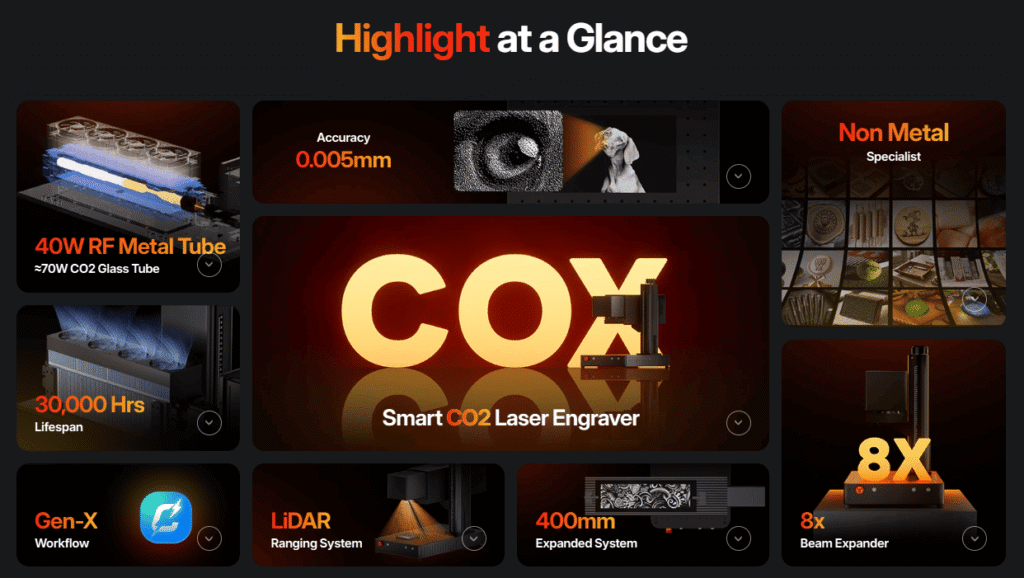
Recommended Machine: ComMarker COX RF Galvo CO2 Laser
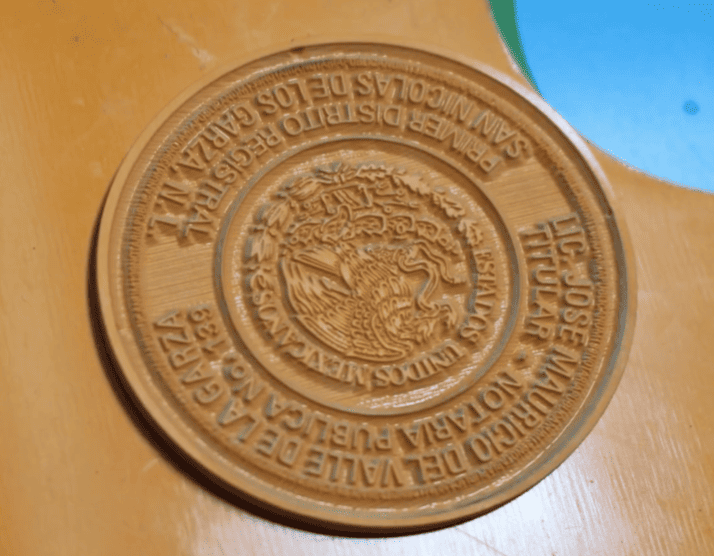
• Industrial RF metal laser source with up to 30,000-hour lifespan—longer-lasting and lower maintenance than typical glass-tube CO2 systems. • 15,000 mm/s galvo scanning delivers much faster engraving than gantry lasers for higher daily output. • 0.005 mm laser spot reproduces fine text, logos, and intricate stamp details with excellent edge quality. • Optimized for commercial stamp production, supporting air assist and ComMarker fume extraction for cleaner, more consistent engraving. • Production tested: Engraves a 30 × 30 mm rubber stamp to approximately 2 mm depth in about 50 seconds, helping stamp shops increase daily throughput while maintaining consistent engraving quality. For businesses producing dozens or hundreds of rubber stamps every day, machine uptime and engraving speed often matter more than peak laser power. An RF galvo CO2 laser minimizes downtime, reduces maintenance, and shortens production cycles, helping lower the total cost of ownership over the life of the machine. |
ComMarker COX CO2 Galvo vs Traditional CO2 Gantry: Which Is Better?
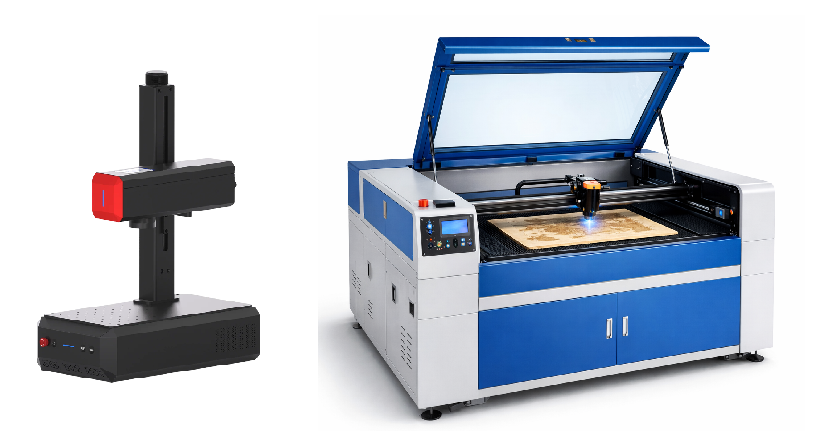
| Feature | RF CO2 Galvo | Glass tube CO2 Gantry |
| Speed | 15,000 mm/s | 1200 mm/s |
| Lifespan | 30,000 hours | 3,000 hours |
| Small Stamp Accuracy | 0.005 mm spot size | 0.15 mm spot size |
| Large Sheet Cutting | Limited | Excellent |
| Maintenance | Lower | Higher |
| Best Use | Engraving | Cutting |
If your business focuses on rubber stamps, galvo technology offers significantly higher productivity.
UV Laser: Best for Fine Detail and Heat-Sensitive Materials
UV lasers operate at 355 nm, using a shorter wavelength that minimizes thermal effects during engraving.
Instead of maximizing engraving speed, UV technology focuses on achieving exceptional detail, making it ideal for small text, intricate artwork, and delicate materials.
|
Best Applications • Fine-detail rubber stamps • Small logos • Wooden stamps • Heat-sensitive materials
|
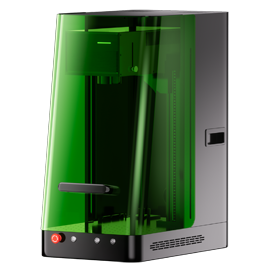
Recommended Machine: ComMarker Omni X UV Laser
• 0.0019 mm ultra-fine spot size allows sharp reproduction of small text, thin lines, and intricate patterns where edge quality is critical. • UV laser source delivers precise engraving with reduced heat impact, making it suitable for detailed stamp designs and 1500+ materials. • Real Engraving Task: ComMarker Omni X achieved approximately 1.5 mm engraving depth on rubber using 800 mm/s speed, 30 frequency, pulse 3, Line distance 0.03, 50 passes and 70mm lens. |
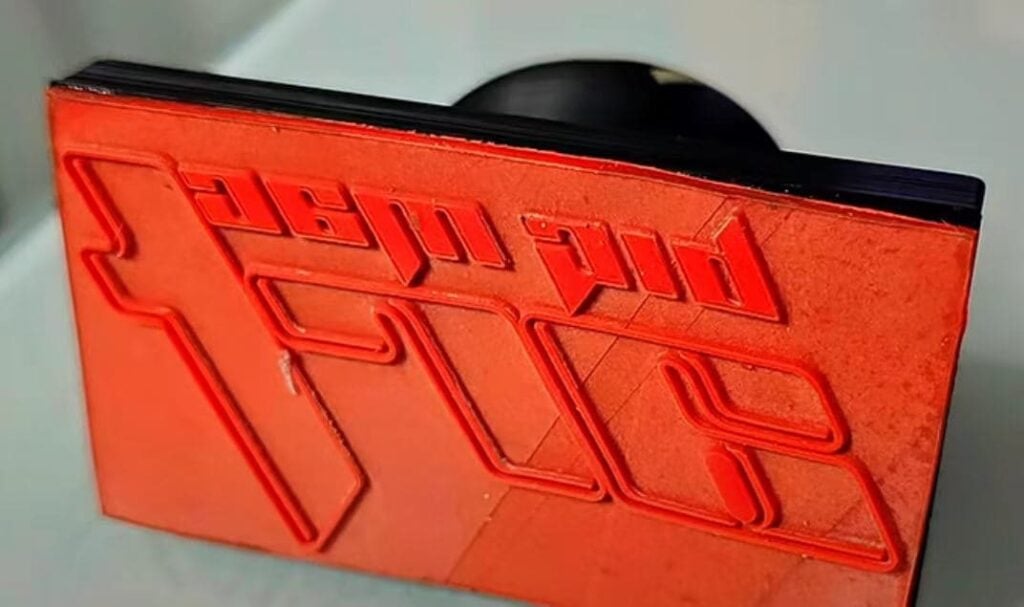
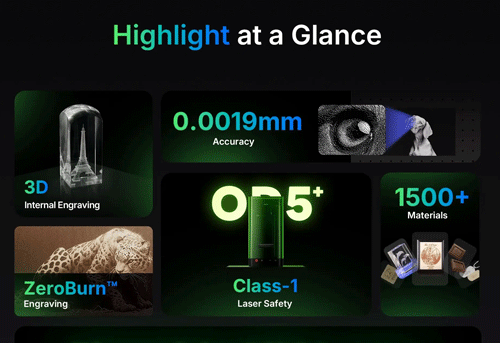
Excellent detail control makes UV a strong choice for specialty stamps, artistic designs, and applications where precision is more important than maximum production speed.
While for high-volume rubber stamp production requiring deeper engraving, CO2 galvo lasers are generally the more efficient choice.
Fiber Laser: Best for Metal Stamps
Fiber lasers emit light at approximately 1064 nm, a wavelength optimized for metals rather than rubber.
Because rubber absorbs this wavelength poorly, fiber lasers are generally unsuitable for commercial rubber stamp production.
|
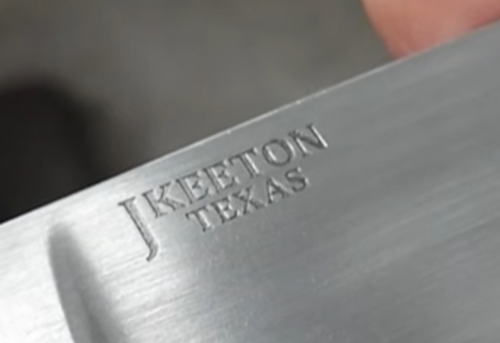
However, fiber laser excel at producing: • Brass seals • Stainless steel stamps • Leather branding irons • Industrial identification tools
|
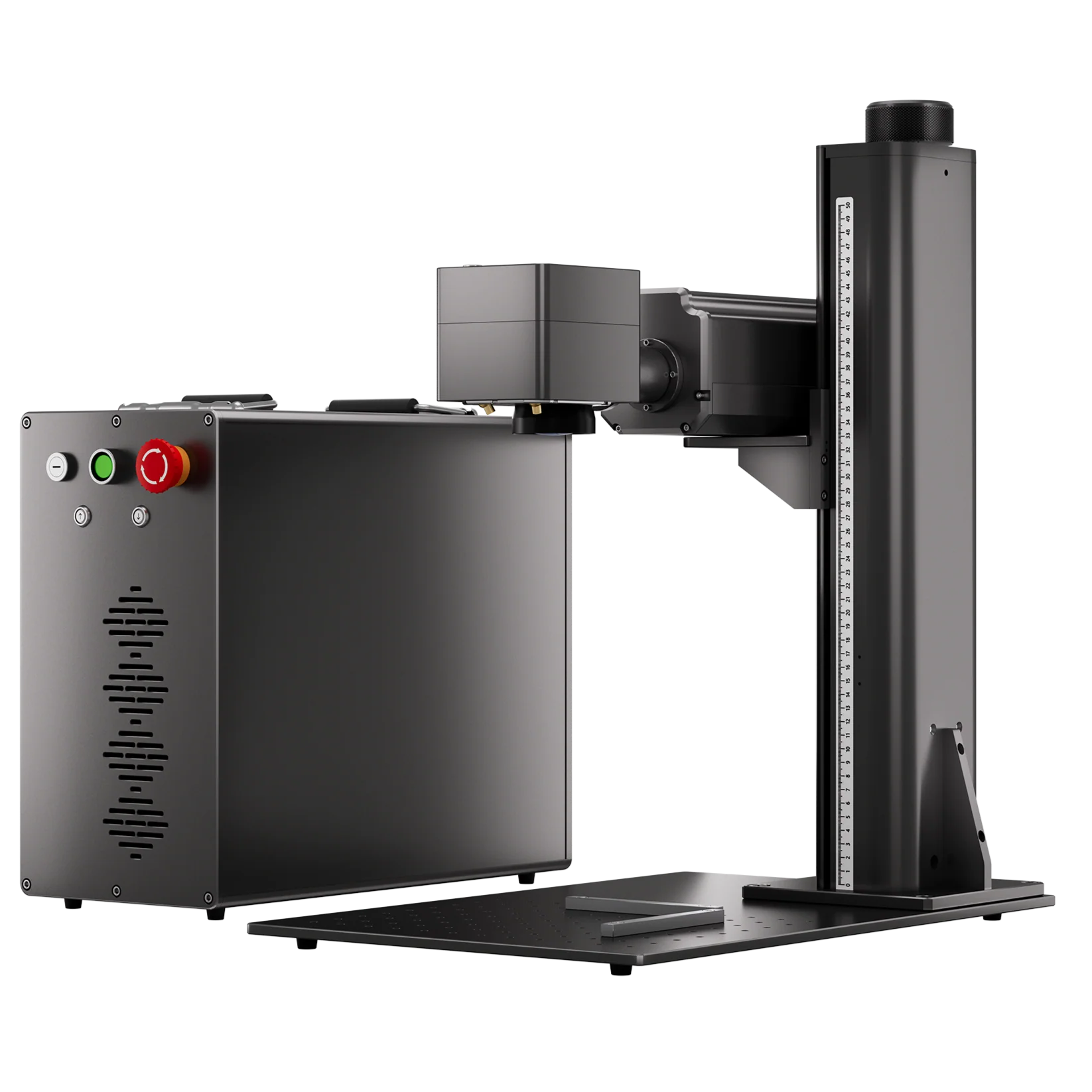
Recommended Machine: ComMarker Titan Fiber Laser
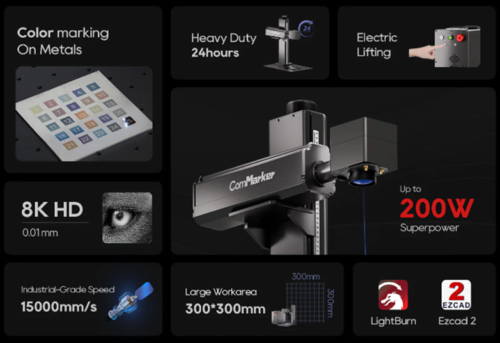
• Up to 200W fiber laser power provides high energy density for deep engraving on brass, stainless steel, and other metals, making it ideal for durable metal stamp production. • 0.01 mm precision metal processing delivers clean edges for detailed logos, text, and custom branding designs. • For a detailed guide, see Laser Engraving Leather Branding Irons. |
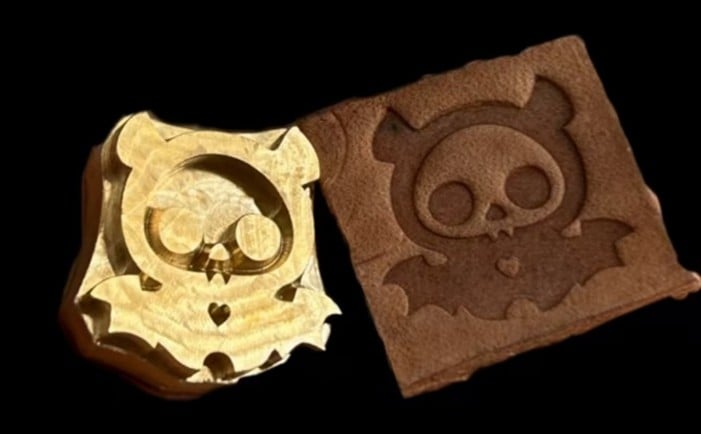
Note: With proper setting, fiber laser is capable of engraving stamps on laserable rubber sheet.
However, due to the need for massive material testing and its strict material requirements, making rubber engraving with a fiber laser more of a hassle than it’s worth.
Recommended Workflow for Laser Stamp Production
Step 1 – Prepare the Artwork
• Use vector graphics whenever possible
• Mirror the design before engraving
Step 2 – Secure the Material
Note: For best results, use laser-compatible rubber sheets specifically designed for engraving.
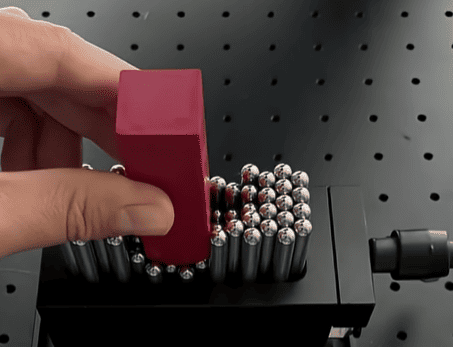
Step 3 – Set Laser Parameters
Typical starting parameters for a ComMarker COX 40W RF CO2 Galvo 140mm lens
| Parameter | Value |
| Speed | 1000 mm/s |
| Power | 95% |
| Frequency | 5 kHz |
| Hatch Distance | 0.03 mm |
| Passes | 15–30 |
Fine-tuning may be required depending on the rubber formulation.
Step 4 – Engrave
Check focus carefully before engraving. If required, cut the stamp outline after engraving.
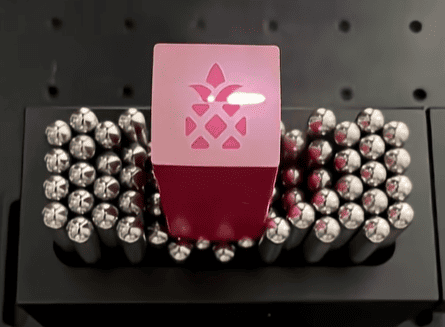
Step 5 – Clean and Assemble
Wash away residue using water and a soft brush.
Mount the engraved rubber onto the stamp base before testing.
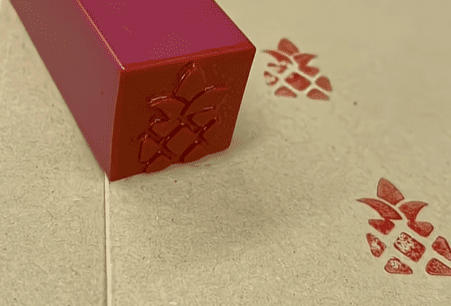
Tips for Better Stamp Laser Engraving
Achieving high-quality laser engraved stamps requires more than choosing the right laser. Material selection, parameter adjustment, and smoke control all directly affect engraving depth, edge quality, and final stamping results.
1. Use the Right Stamp Material
For beginners, try laser-compatible rubber materials, which is designed for clean vaporization and consistent engraving results. Low-quality rubber may create excessive smoke, sticky residue, uneven depth, or unclear details.
2. Start with Low Energy and Adjust Gradually
Laser parameters such as power, speed, frequency, and hatch spacing determine engraving depth and surface quality. When testing a new material, start with lower power and higher speed settings, then gradually increase energy until the required depth and edge definition are achieved. Multiple lighter passes can often produce cleaner results than excessive energy in one pass.
3. Use Fume Extraction
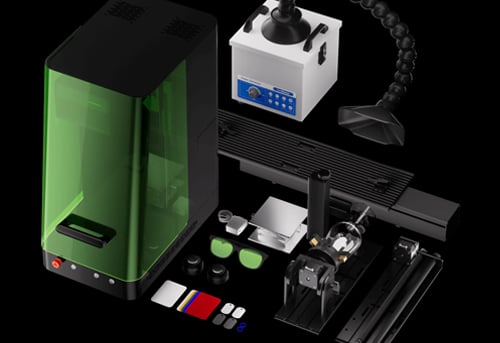
Rubber and silicone engraving generate smoke, odor, and fine particles. Proper air assist helps remove engraving debris, while a dedicated laser fume extractor captures smoke and particles to keep the workspace cleaner and maintain consistent engraving quality.
For professional stamp production, ComMarker recommends pairing laser equipment with a suitable fume extraction system to improve workplace comfort and protect machine components from residue buildup.
4. Check Engraving Depth and Clean the Stamp
A good stamp needs enough depth to prevent unwanted ink transfer from surrounding areas while maintaining strong edges for repeated stamping.
After engraving, remove remaining rubber particles with proper cleaning methods before testing the impression. Clean details are especially important for small text, logos, and fine patterns.
Final Thoughts
The best laser engraver for stamps ultimately depends on your materials and production goals.
If your business focuses on rubber, silicone, or wooden stamps, a CO2 galvo laser delivers the highest productivity, deepest engraving, and lowest long-term operating costs.
If you prioritize ultra-fine detail, a UV laser is an excellent choice for specialty applications.
For metal seals, branding irons, and industrial marking tools, a fiber laser remains the industry standard.
The ComMarker COX RF CO2 Galvo Laser combines industrial reliability, high engraving speed, and professional-grade precision, making it an ideal solution for businesses seeking efficient, scalable stamp production.