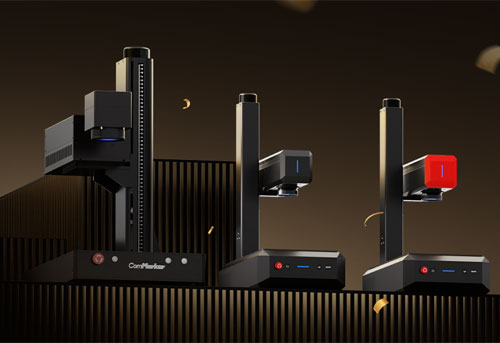
Taking your laser engraver to craft fairs, trade shows, maker markets, or customer locations allows your business to increase popularity and gain more profit. However, reliable electricity is often the biggest challenge when working away from a wall outlet.
Whether you use a fiber laser, UV laser, or compact CO₂ laser, choosing the right battery capacity and inverter output is essential for reliable performance.
This guide explains how to calculate your power requirements, estimate runtime, and choose the best portable power station for your laser engraving business.
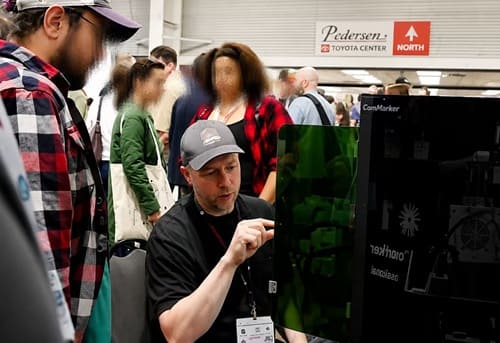
Why Portable Power Matters for Live Laser Engraving
A portable power station offers more than simple convenience. It allows you to build a flexible engraving workstation almost anywhere.
Typical applications include:
• Creating personalized gifts during busy trade shows
• Offering live engraving inside retail stores
• Demonstrating laser equipment for potential customers
• Operating temporary booths during seasonal markets
• Providing on-site customization for corporate events
Unlike stationary workshops, mobile engraving setups often need to power multiple devices simultaneously. Besides the laser engraver itself, exhibitors frequently connect a laptop, LED lighting, payment terminal, product display lighting, and even a small ventilation system. Choosing the correct power station means considering the entire workstation instead of only the laser machine.
Portable Power Station vs. Generator for Laser Engraving
Generators work well for construction sites and remote outdoor jobs, but they are rarely ideal for exhibitions. Continuous engine noise can make conversations difficult, while fuel smells and exhaust emissions create an unpleasant buying experience.
Portable power stations solve these problems by delivering clean AC electricity with virtually silent operation.
Many exhibition centers and convention halls either discourage or completely prohibit gasoline generators because of fire safety regulations, indoor air quality requirements, and excessive operating noise.
Battery-powered systems eliminate these concerns entirely while providing a more professional presentation.
| Portable Power Station | Generator | |
| Advantages | • Quiet customer-friendly operation • Zero exhaust emissions indoors • No fuel storage requirements • Minimal maintenance requirements • Stable pure sine wave output • Easy transportation between events |
• Unlimited operating duration with fuel • Higher maximum power availability • Lower initial purchase price • Rapid fuel replenishment process |
| Disadvantages | • Limited battery operating capacity • Recharge time between events • Higher upfront equipment investment • Performance affected by extreme temperatures |
• Loud operating noise levels • Exhaust fumes restrict indoor usage • Fuel transportation creates inconvenience • Regular engine maintenance required |
For businesses that regularly attend craft fairs, shopping malls, conventions, and maker events, a portable power station has become the preferred power source rather than an optional accessory.
Which Machine Should You Choose for a Crafts fair with Portable Power Stations?
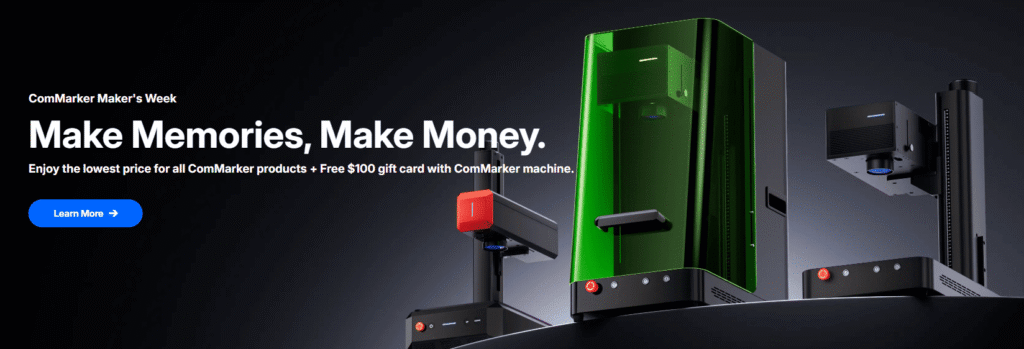
Large industrial systems are difficult to transport and usually require significantly more power, while compact desktop machines are much easier to operate at trade shows, craft fairs, and live engraving events.
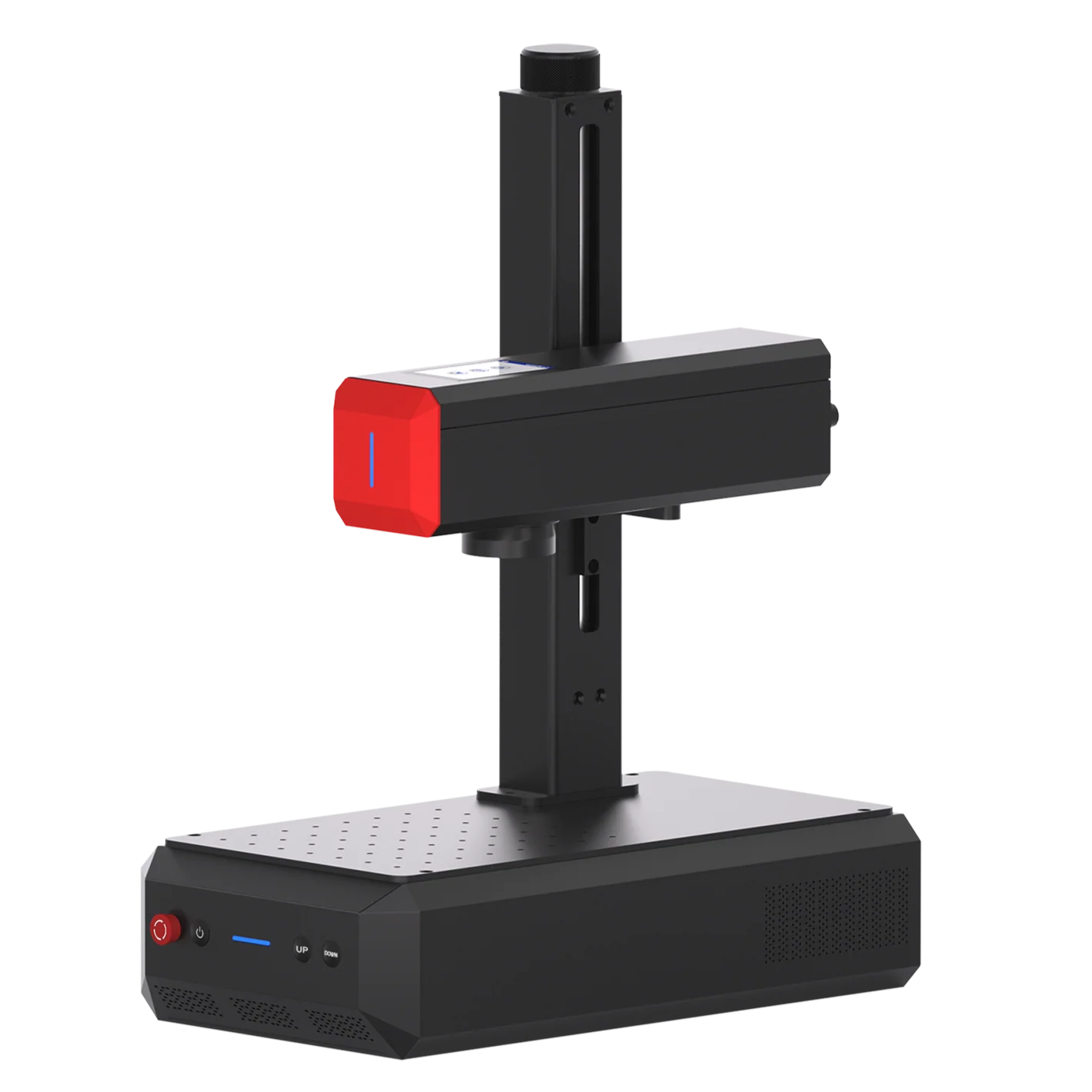
ComMarker B6 MOPA Fiber Laser
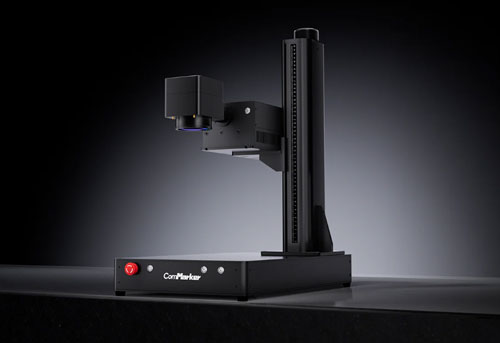
The ComMarker B6 JPT MOPA Fiber Laser is an excellent choice for exhibitors who focus on metal personalization.
Its compact 23.5 kg desktop design makes it easy to transport between trade shows, maker fairs, and customer events while remaining powerful enough for professional metal engraving. The safety enclosure could be installed for safety.
Typical MOPA fiber laser applications include:
• Personalized stainless steel rings
• Custom metal keychains
• Aluminum business cards
• Bottle openers
• Pet tags
At busy exhibitions, a simple stainless steel ring or metal keychain can typically be engraved in about two minutes, allowing exhibitors to complete dozens of personalized products throughout the day.
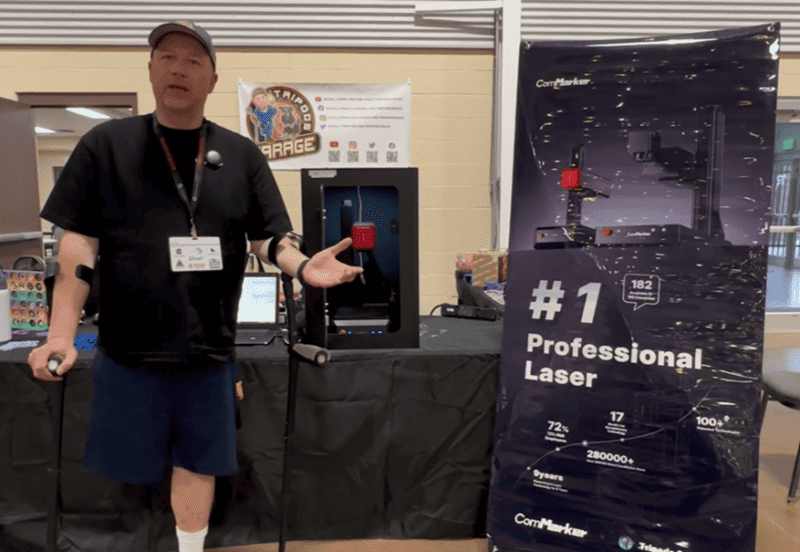
(ComMarker B6 MOPA at 3D Printing exhibition)
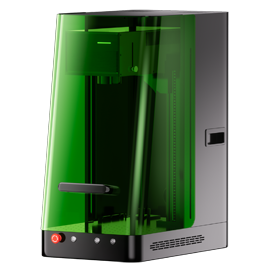
ComMarker Omni X UV Laser
Compared with a fiber laser, the ComMarker Omni X UV Laser allows exhibitors to offer a wider range of personalized products, giving customers more choices and increasing potential sales opportunities at craft fairs.
It’s class 1 safety enclosure make it safe for customers to watch the engraving process. Making it a memorable experience for growing business reputation.
Unlike fiber lasers, which are primarily designed for metals, the Omni X UV laser can engrave many additional materials, including:
• Glass promotional products
• Wooden gift items
• Clear acrylic products
• Leather accessories
• Plastic consumer products
Most personalized items can be completed in approximately two to three minutes, giving exhibitors a broader product selection while keeping customer waiting times short.
This flexibility makes the Omni X particularly attractive for gift shops, souvenir businesses, and exhibition booths that serve different customer requests throughout the day.
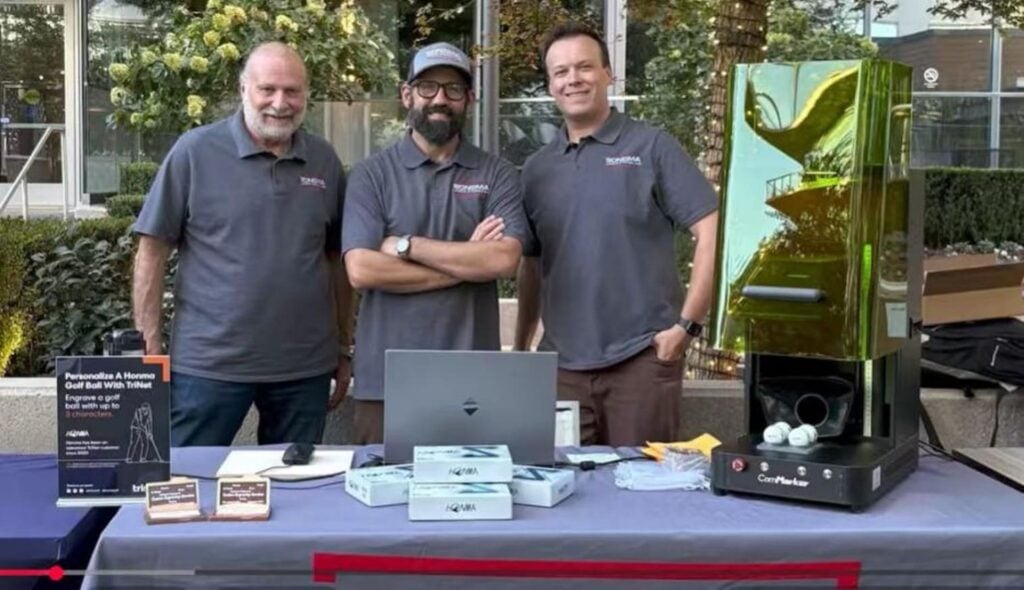
(ComMarker Omni X at golf exhibitions)
Which ComMarker Laser Engraver Is Best for Craft Fairs?
| If you mainly engrave… | Recommended Machine |
| Metal jewelry and industrial parts | ComMarker B6 JPT MOPA Fiber Laser |
| Glass, wood, acrylic, leather, and plastics | ComMarker Omni X UV Laser |
| Mixed-material retail personalization | ComMarker Omni X UV Laser |
| Fast metal engraving demonstrations | ComMarker B6 JPT MOPA Fiber Laser |
Both machines are compact enough for mobile businesses and can be paired with a qualified portable power station for trade shows, retail events, and live personalization services. The choice depends primarily on the materials you plan to engrave.
6 Requirements for Choosing a Qualified Portable Power Station for Laser Engravers
Don’t be distracted by impressive marketing claims or oversized battery numbers. Evaluate every portable power station using the following five specifications.
Choosing correctly the first time can save money, reduce unnecessary weight, and prevent costly interruptions during customer demonstrations.
1. Choose a Pure Sine Wave Inverter
| Always purchase: | Never purchase: |
| Pure sine wave AC inverter
Stable output voltage design Reliable protection circuitry included |
Modified sine wave inverter
Unknown inverter technology Unverified low-cost alternatives |
Laser engravers contain sensitive power supplies, motion controllers, and industrial electronics. Modified sine wave output may cause:
• Excessive electrical supply noise
• Controller communication instability
• Unexpected engraving position errors
• Random software restart problems
• Reduced electronic component lifespan
Although some machines may appear to function normally on modified sine wave output, long-term reliability cannot be guaranteed. Professional users should always choose pure sine wave power for valuable laser equipment, laptops, and precision electronics.
2. Startup Surge Is More Important Than Average Load
Average power consumption determines runtime. Startup power determines whether the machine starts successfully.
When a laser engraver powers on, the internal switching power supply briefly draws significantly more current than during normal engraving.
For example:
• Maximum input rating: 480W
• Temporary startup surge: 1,200–1,800W
Although this surge usually lasts less than one second, an undersized inverter may immediately enter protection mode and shut down.
For this reason, a portable power station should provide both:
• Adequate continuous AC output
• Sufficient instantaneous surge capability
Buying slightly more inverter capacity than you currently need also allows future expansion, such as adding rotary attachments, additional lighting, or multiple laptops without replacing the entire power station.
3.Choose the Correct Output Voltage
Choosing the wrong voltage can permanently damage electronic equipment.
Always verify your laser engraver’s electrical requirements before connecting any portable power station.
• United States and Japan:110–120V AC output
• Europe, Australia, and Most Asian Countries: 220–240V AC output
4. Match Battery Capacity to Your Workflow
For portable power stations, Watt-hours (Wh) are the specification that matters because they represent the total amount of usable stored energy. Runtime is determined primarily by battery capacity, your average power consumption, and inverter efficiency.
Which Battery Capacity Fits Your Business?
| Battery Capacity | Laser Operation Time | Typical Trade Show Runtime* | Best For |
| 1000Wh | Around 4 hours | 6–7 hours | Short demonstrations |
| 1500Wh | Around 5–6 hours | Around 8 hours | Most craft fairs |
| 2000Wh | Around 7 hours | Full working day | Full-day exhibitions |
| 3000Wh+ | More than 10 hours | Multi-day flexibility | Commercial mobile businesses |
Estimated trade show runtime assumes intermittent engraving rather than continuous laser operation.
Why Real-World Runtime Is Usually Longer
In reality, the laser is only firing for part of the day while the operator spends the remaining time interacting with customers, preparing artwork, adjusting machine settings, packaging finished products, and processing payments.
For most ComMarker users attending markets or exhibitions, a 1500Wh–2000Wh portable power station offers the best balance between portability, runtime, and purchase cost.
If you plan to work outdoors for extended periods, larger batteries or solar charging can help. Although solar charging should be viewed as a supplementary charging method rather than the primary power source during indoor trade shows, where available sunlight is limited.
5. Two Extra Features That Matter at Trade Shows
Two additional features can significantly improve your experience during live events.
Fast Charging Saves Your Entire Day
Lunch breaks at trade shows usually last only one or two hours.
If your portable power station requires eight hours to recharge, your booth may be unable to continue operating after the battery becomes depleted.
Look for features such as:
• High-speed AC charging capability
• Input power above 1000W
• Battery management safety protection
• Automatic charging temperature control
Many premium LiFePO₄ portable power stations can recharge from approximately 20% to 80% in about 1.5–2 hours, making them much more practical for exhibitions.
Quiet Cooling Improves Customer Experience
Portable power stations generate heat whenever large amounts of electricity pass through the inverter.
A noisy cooling fan can become distracting during customer conversations.
Look for features including:
• Intelligent thermal management system
• Automatic variable-speed cooling fans
• Quiet operating mode support
• Noise levels below 45 dB
A quieter booth creates a more professional shopping experience and allows customers to focus on the engraving demonstration instead of background equipment noise.
How to measure Your Actual Power Consumption Before Buying
Testing your own machine provides far more accurate information than relying solely on online estimates because engraving materials, laser parameters, and accessories all influence electrical consumption.
The easiest method is purchasing an inexpensive electricity monitor (Kill-A-Watt meter) or other compatible power meters.
Record the following values during a normal engraving session:
• Idle system power consumption
• Average engraving power consumption
• Peak startup electrical demand
• Energy consumed per customer order
Sample machines’ data:
| Output power | Peak | During engraving | Note |
| 100W fiber laser | ≤ 160W | 80W – 120W | 30 min engraving 0.039 kWh。 |
| 50W fiber laser | ~ 150W | 100W – 130W | 100% power dog tag engraving |
Actual values vary by machine design, laser source brand, cooling method, and engraving parameters. Measuring your own machine always provides the most reliable information.
Multiply your measured average power by 1.3 to maintain a comfortable operating safety margin when selecting battery capacity.
What Makes a High-Quality Portable Power Station?
When comparing different models, prioritize quality over advertising claims.
Choose products that include:
• Long-life LiFePO₄ battery cells
• Pure sine wave inverter
• High surge power capability
• Comprehensive battery protection system
• Reliable manufacturer warranty coverage
Why LiFePO₄ Batteries Are Preferred
LiFePO₄ (Lithium Iron Phosphate) batteries’ major advantages include:
• Longer overall service life
• Improved thermal operating stability
• Higher daily charging durability
• Lower long-term ownership costs
Many quality LiFePO₄ batteries are rated for approximately 3,000–4,000 charge cycles, making them well suited for businesses that attend exhibitions throughout the year.
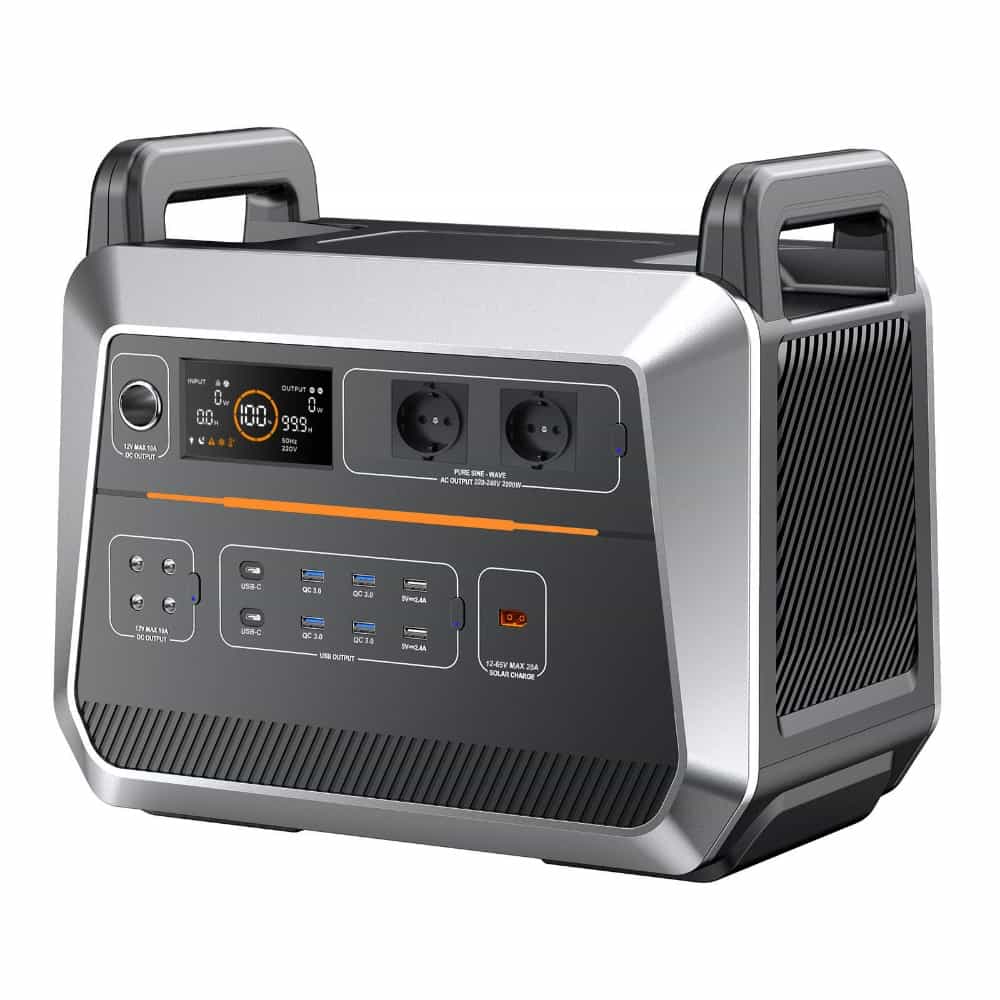
Piforz portable power stations use LiFePO4 (Lithium Iron Phosphate) batteries, offering a cycle life of up to 3,500 cycles. With 1.5-hour fast charging, they can be quickly recharged and are especially suitable for businesses that participate in trade shows and exhibitions throughout the year.
*Third-party products are provided by independent manufacturers. Compatibility information is for reference only. Please contact the manufacturer for product support.
Is Buying a Portable Power Station Worth the Investment?
For many businesses, the answer is yes.
Consider a typical North American trade show.
| Item | Typical Cost |
| Trade show booth | $150–400 per day |
| Electrical outlet rental | $50–150 per day |
| Personalized keychains | $10–25 each |
| Custom metal tags | $15–40 each |
| Typical daily orders | 20–40 pieces |
| Potential daily revenue | $300–800 |
If your business attends several exhibitions each year, a quality portable power station can quickly recover its purchase cost by:
• Eliminating venue electricity fees
• Increasing demonstration flexibility
• Reducing booth setup limitations
• Supporting live customer personalization
For businesses attending more than three trade shows annually, investing in a reliable portable power station often becomes a productivity decision rather than simply another equipment purchase.
Final Thoughts: Power Your Mobile Laser Engraving Business
A portable power station gives laser engraving businesses the freedom to operate beyond traditional workshops, whether at craft fairs or trade shows for broader customer reach.
The right choice is based on your laser engraver’s power consumption, engraving frequency, accessories, and required operating time.
For most mobile engraving applications, a pure sine wave inverter, reliable surge capacity, LiFePO₄ battery, and 1500Wh–2000Wh capacity provide a practical balance between portability and performance — perfectly paired with machines like the ComMarker B6 MOPA Fiber Laser and ComMarker Omni X UV Laser.
Now it’s your turn. Pair your setup with the right portable power station, and turn every fairground, show floor, or pop-up event into a new revenue stream.
Upgrade your gear, expand your reach, and start powering more possibilities today.