Knowing how to use a laser engraver is only part of running a successful laser engraving business. One of the biggest challenges for new business owners is deciding how much to charge for each job.
A profitable pricing strategy should consider machine time, materials, labor, design work, setup, job complexity, risk, overhead, and profit. This guide explains how to calculate your laser engraving costs and choose a pricing model for different types of jobs.
What Build up Your Laser Engraving Price?
Laser engraving pricing involves many factors. From the work itself, the material, machine, design, quantity, and local market all affect pricing. For example, hourly shop rates may range from roughly $25–$100 or more per hour.
Meanwhile, labor cost also matters. A laser may only run for five minutes, but the customer may still require file preparation, setup, positioning, testing, cleanup, and quality control. A batch of 100 identical pieces may require very little additional labor once the setting is found.
A useful laser engraving pricing formula is: Final Price = Materials + Machine Time + Labor + Design + Setup + Risk + Overhead + Profit
Understanding each component helps prevent underpricing, or charging too much to scare the customer away.
1. Material Cost
If the customer provides the material, your material cost may be close to zero.
2. Machine Time
The operation of the laser engraving machine consumes cost such as Laser purchase price, Expected machine lifespan, Electricity and Software costs
For example,
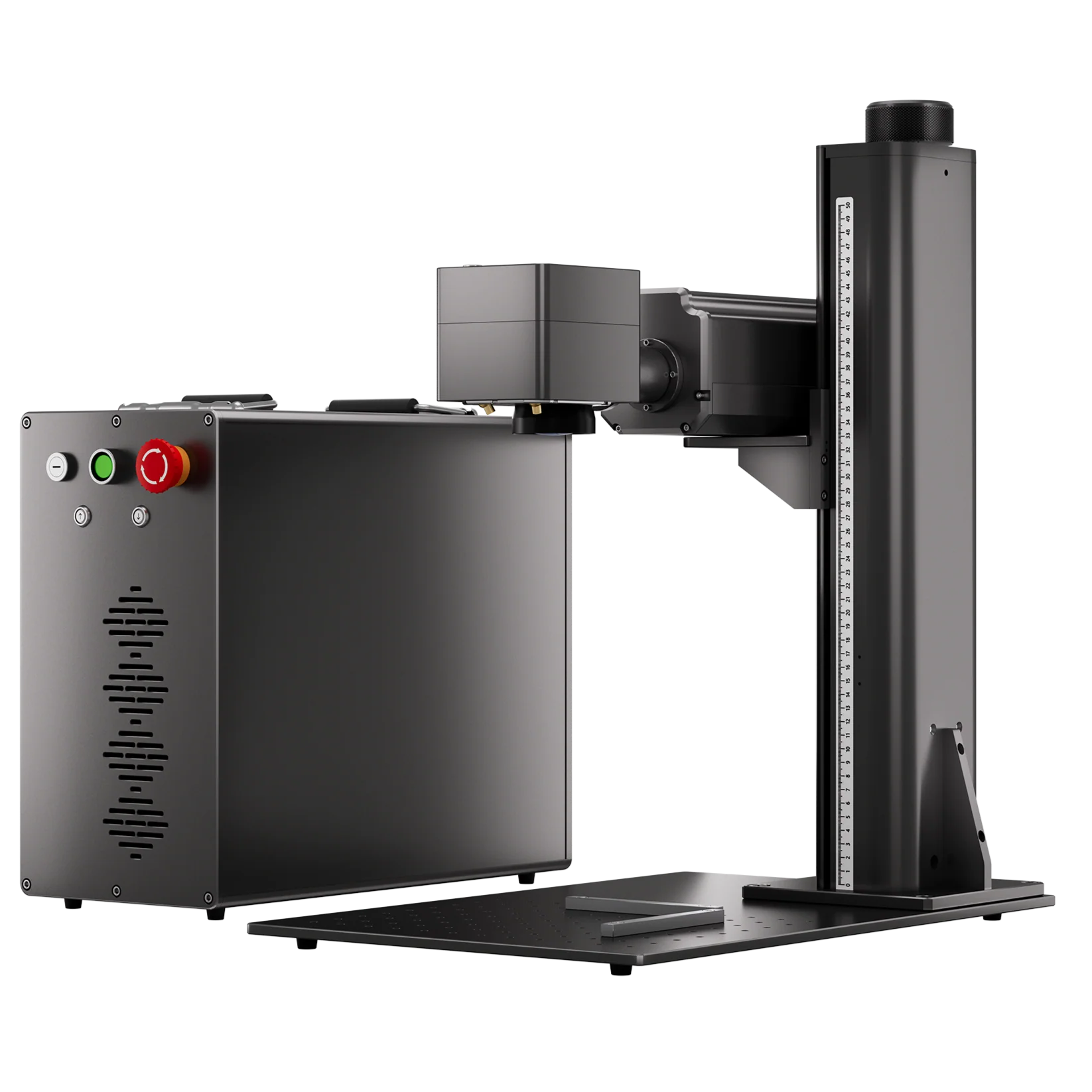
ComMarker B6 MOPA $3999, 100,000 hr lifespan, max input power 480w, Lightburn price $199.
Electry cost $0.07 per hour (US)+ Equipment cost $0.04 per hour+ Lightburn Software cost $0.002per hour= $0.112 per hour.
3. Labor
During engraving, you need to prepare File, test Material, setup Machine, Cleaning and Packaging.
A five-minute engraving can easily become an hour job when the entire workflow is considered.
4. Artwork and Design
Some customers came with only an idea. You may need to Redraw a logo, modify artwork for the material or Make revisions
Therefore, it can make sense to charge a separate design fee or include design work in the project price.
5. Setup and Positioning
Setup becomes particularly important when engraving unusual objects.
For example, engraving a flat metal plate may be straightforward. Engraving a tumbler, or a bracket may require accessory cost, more positioning and testing.
6. Testing and Rework
Different materials and finishes may require test marks to determine the right.
Deep engraving and precision applications can require multiple tests before the final settings are ready. Therefore, take into account the costs of testing materials and time.
7. Risk
Risk becomes especially important when customers bring their own products.
You might end up with a failed engraving on a Rolex watch and ruin the order by having to pay out a compensation
Customer-owned items that may require additional risk consideration include: Watches, Jewelry, Electric gear, Finished products. Etc.
You do not necessarily need to show “risk fee” on the invoice, incorporate the additional risk into the overall project price would work fine.
8. Overhead and Profit
Finally, your price needs to support the business itself. After covering your costs, you also need a reasonable profit margin.
Overhead may include: Rent, Insurance, Website costs, Advertising, tax. Etc.
How the Cost Structure Changes by Job Type
The same cost framework applies to every laser engraving job. What changes is which cost components matter most.
Simple Engraving: Use a Minimum Charge
Consider a customer who wants a logo engraved on a metal part.
The job may require: Minimal design work; Minimal testing; Simple positioning and Only a few minutes of laser time.
With the max engraving speed of 15000 mm/s, engraving a logo with the ComMarker B6 MOPA fiber laser would be done with in 1 minute. With the machine operation cost is $0.112 per hour, the machine cost for this task is $0.002.
But the job still requires customer communication, testing, operation, inspection, and cleanup. Charging only $5 would rarely make sense.
Therefore, best pricing model: Minimum Charge + Material, if applicable
Complex Jobs: Project-Based Pricing
Some jobs require much more on one specific element on the formula.
Deep Metal Engraving: Testing Takes Time
A deep engraving project require Multiple passes to build depth, time consuming testing, additional finishing or cleaning
For example, With a ComMarker B6 MOPA fiber laser, a 1.5 mm coin engraving takes around 1 hour.
However, you might need half an hour for the design, 2 hours for testing, and half an hour for cleaning the coin or adding a texture. Making it a 4 hour job.
Best pricing model:
Custom Price = Machine Time + Labor + Testing + Setup + Complexity + Profit
Metal Color Engraving: Price for Testing and Precision
Color engraving is another job where machine time alone does not determine the price.
With precise laser control you can get stunning colors including red, bule, pink on stainless steel and titanium using a ComMarker B6 MOPA fiber laser.
However, this also means achieving the desired result may require material testing consuming extra material and time.
Meanwhile, A color engraving project also involve Design and layout preparation
For this type of work, the value comes from the skill required to achieve the desired color and appearance.
Best pricing model:
Custom Price = Design + Testing +Machine Time + Labor + Complexity + Profit
How to Price Bulk Laser Engraving
Bulk orders require a different pricing strategy.
Imagine a customer ordered 50 zippo lighter. If the artwork is already prepared and the material is supplied, the setup cost can be distributed across the entire batch.
The workflow involves testing parameters with a patch. The rest is to arrange the materials in batches on the engraving bed and then carve them in the software according to the layout. If you have a dedicated jig, the speed of batch engraving will be faster.
Consider: Bulk Price = Setup + Total Production Cost + Profit
This allows you to offer a lower per-piece price while still making money.
Bulk discounts can also help attract business customers who may place repeat orders.
How to Price Engraving on Customer-Owned Items
Customer-owned products deserve special consideration. laser settings and effort might be simple, but the risk is not.
Messing up a $3 metal tag requires a visit to the hardware store, while a $500 watch takes away the whole profit of the month.
For expensive or difficult-to-replace items, your price should account for:
- Replacement risk
- Insurance or business policies
- Potential rework
Before accepting high-value customer-owned items, it is also important to have clear policies about damage, customer-supplied materials, and approval of the final artwork.
Real-World Laser Engraving Pricing Examples
The following examples demonstrate how the pricing logic can change depending on the job.
Example 1: Custom Challenge Coin
A customer wants a coin with complex design.
The process may include: making the depth map, testing different engraving settings, achieving the correct depth, engraving, and finishing.
Pricing approach: $130 original price
This example shows why complex inlay work should not be priced based on laser time alone. Testing, precision and labor can account for a large part of the total cost.
Example 2: Engraving a Customer-Owned Watch
A customer wants a birthday message engraved on the back of a watch.
The process may include: text layout, curved text preparation, positioning, engraving, and handling a valuable customer-owned item.
Pricing approach: $50 original price
The large difference between the original price and the later estimates highlights an important factor: risk. When engraving valuable customer-owned products, the price may need to account for potential replacement costs in addition to labor and machine time.
Example 3: Engraving a Personalized Lighter
A customer wants a name and a short phrase engraved on a branded windproof lighter.
The process may include: simple text layout, positioning, engraving, and basic inspection.
Pricing approach: $30 original price
Example 4: Photo Engraving on a Tumbler
A customer wants a custom logo engraved on two surfaces of an angled steel bracket.
The process may include: custom artwork, positioning under the laser, and fitting the engraving into a limited area.
Pricing approach: $40 original price
Example 5: Bulk Faux Leather Patches
A business customer wants 50 small faux leather patches marked and cut. The customer provides both the artwork and material.
The process may include: artwork preparation, batch setup, loading the material, cutting and engraving 50 pieces, inspection, and handling a B2B order.
Pricing approach: $150 total, or $3 per piece
Is It Profitable to Start a Laser Engraving Business?
A laser engraving business does not necessarily require thousands of orders to recover the cost of a professional machine.
For example, consider a 60W ComMarker B6 MOPA priced at $3,999, or $4,259 with the rotary attachment to unlock tumbler and jewelry engraving.
Based on the real-world engraving orders discussed above, a small engraving business could potentially recover the machine investment through a combination of simple personalized products, higher-value customer items, and bulk orders:
| Job Type | Example Price | Jobs to Cover $3,999 |
| Simple lighter engraving | $30 | ~134 jobs |
| Customer watch engraving | $50 | ~80 jobs |
| Bulk faux leather patches | $150 | ~27 orders |
| Challenge coin engraving | $130 | ~31 orders |
| Job Type | Example Price | Jobs to Cover $3,999 |
| Tumbler engraving | $40 | ~107 jobs |
A laser engraving business doesn’t rely on a single product for profitability—you may only need to sell 15 engraved coins, 30 personalized tumblers, and a handful of simple orders to recover the machine cost.
How to Make Laser Engraving More Profitable
Focus on Design
Better design helps you charge more because customers pay for the finished result, not just the engraving. A well-designed logo, photo, or personalized pattern can make a product feel more premium. Focus on creativity, customization, and perceived value rather than competing only on machine time.
Build Local Business Relationships
Local businesses can provide valuable batch and repeat orders. Reach out to companies, retailers, event planners, and manufacturers that need branded products, promotional items, or custom parts. Once you gain a reliable customer, make repeat orders easy to place. A $150 batch order is valuable, but a customer who orders every month is even more valuable.
Find the Right Niche
You don’t need to sell every type of laser engraving product. Choosing a focused niche helps you reach customers willing to pay for customization. Consider weddings, personalized gifts, jewelry, automotive accessories, sports memorabilia, or B2B marking. A clear niche also makes it easier to build repeatable products, a recognizable brand, and value-based pricing.
Choose a More Capable Laser
Your machine also affects how many profitable jobs you can take on. A more versatile laser can help you move beyond basic marking and offer higher-value services.
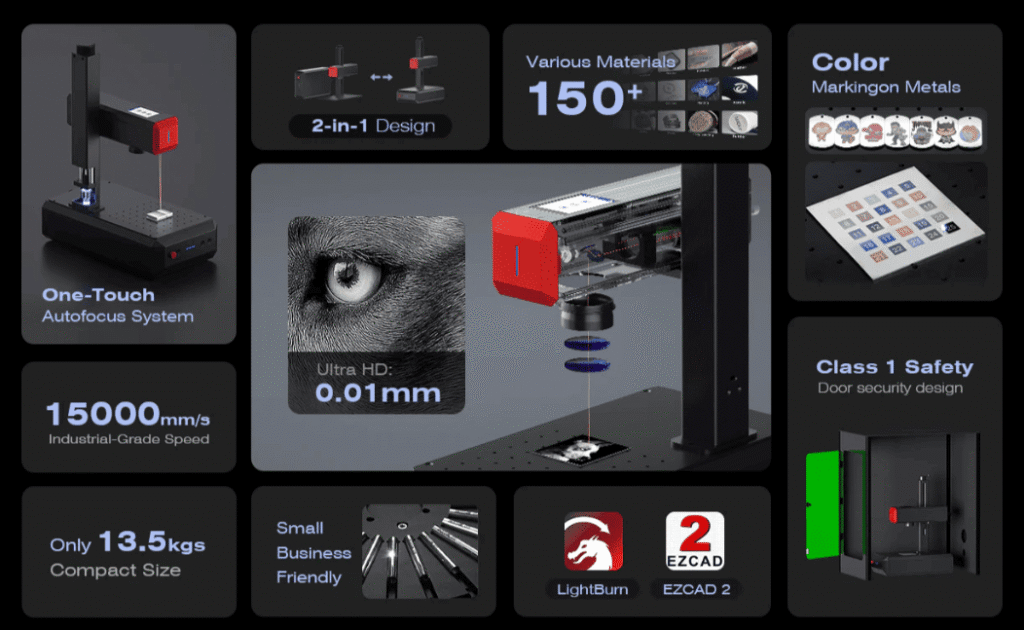
The ComMarker B6 MOPA can expand your product and service options with:
- Deep engraving for products that require more than a surface mark
- Color marking for creating more distinctive personalized products
- 0.01 mm marking precision for detailed designs and fine markings
- Automatic focusing to simplify positioning and speed up setup
When evaluating a laser for your business, Consider what you can make, how quickly you can set up, and how many different revenue streams the machine can support. A more capable machine can give you more opportunities to take on profitable jobs instead of limiting your business to one type of engraving.
Final Thoughts
A profitable price should reflect the full cost of the job, including materials, machine time, labor, design, setup, testing, risk, overhead, and profit.
The key is to match your pricing model to the type of work. Use minimum charges for simple jobs, per-piece pricing for personalized products, bulk pricing for larger orders, and project-based pricing for complex or high-risk work.
At the same time, profitability comes from more than pricing. Better design, the right niche, repeat B2B customers, efficient workflows, and a more capable machine can all help you increase your earning potential.
With the right pricing strategy and equipment, your laser can become more than a production tool—it can become a scalable business asset.