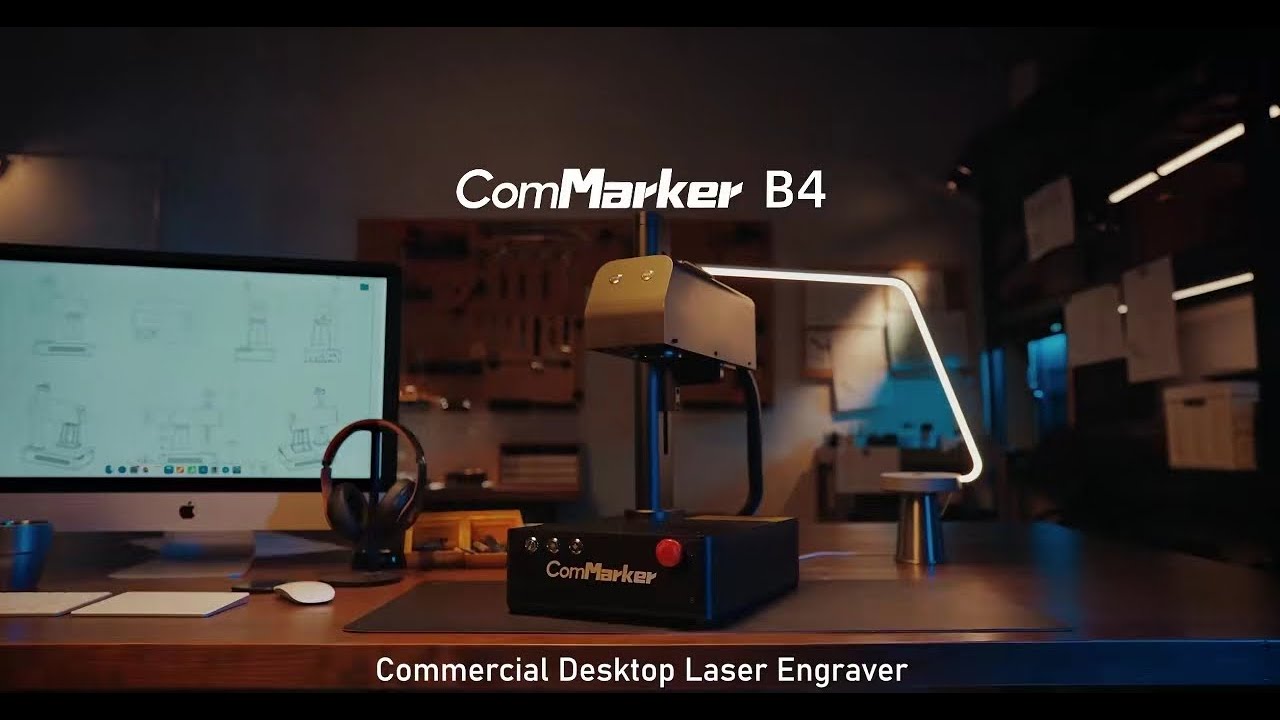
Leather laser engraving is one of the most classic laser engraving business work. But leather is not all the same. The laser type matters too. The best choice depends on whether you want engraving, cutting, fine detail, batch production, or the cleanest finish.
This guide brings everything together in one place: material choice, laser type, settings, design ideas, business uses, pro tips, common issues, and answers to the most common questions.
How can you use a Laser Engraver for Leather Works
Leather works well with lasers because it reacts strongly to heat. Depending on the settings, it can create three main results.
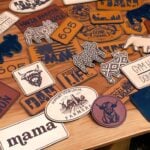
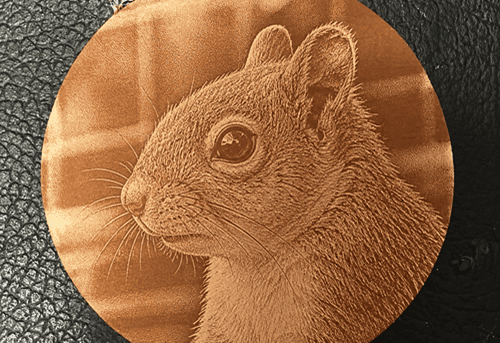
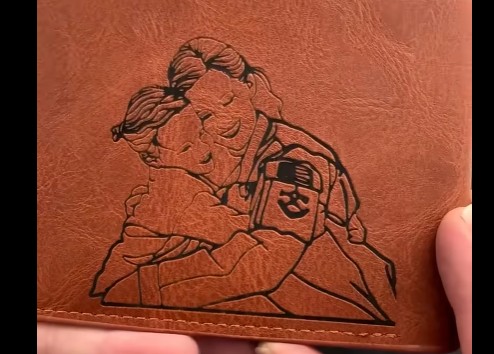
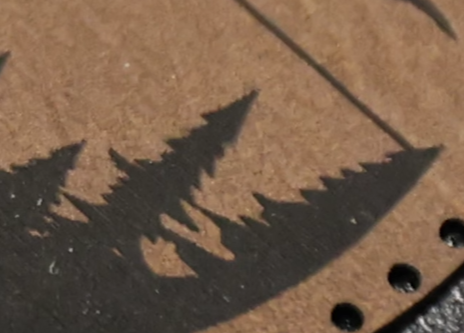
Engraving changes the top layer. It is used for logos, names, artwork, textures, and patterns. On natural leather, it usually darkens the surface. On PU leather or some leatherette, it may remove the coating and expose a different layer underneath.
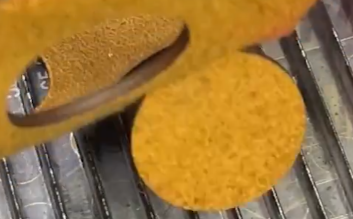
Laser leather Cutting can produce precise cutting holes and shapes. This can be used for patches, wallet parts, and tags.
A laser can also drill stitch holes or perforations, which is very useful for straps or leather goods that will be sewn or assembled later.
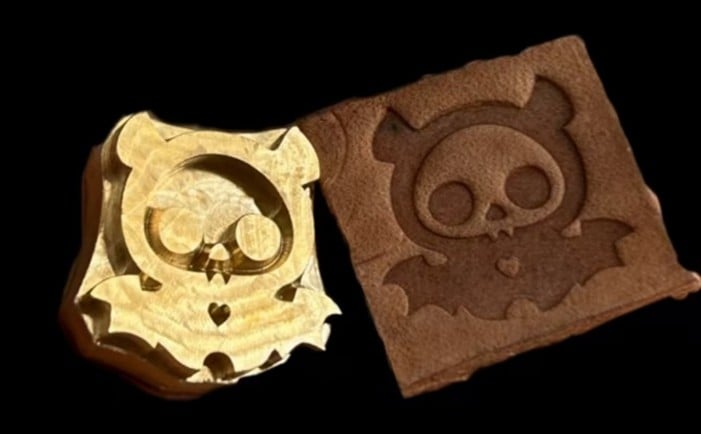
Beyond these common uses, there is also a more creative application: fiber laser engrave leather stamping plates for leather embossing.
What’s the Best Laser Engraver for Leather (CO2 vs Fiber vs UV vs Diode)
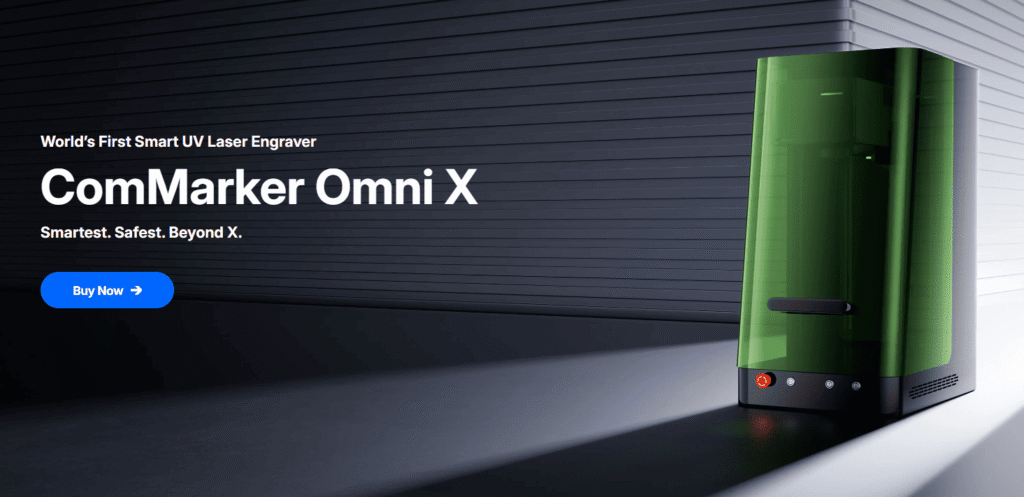
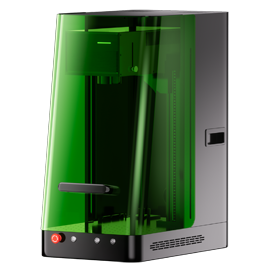
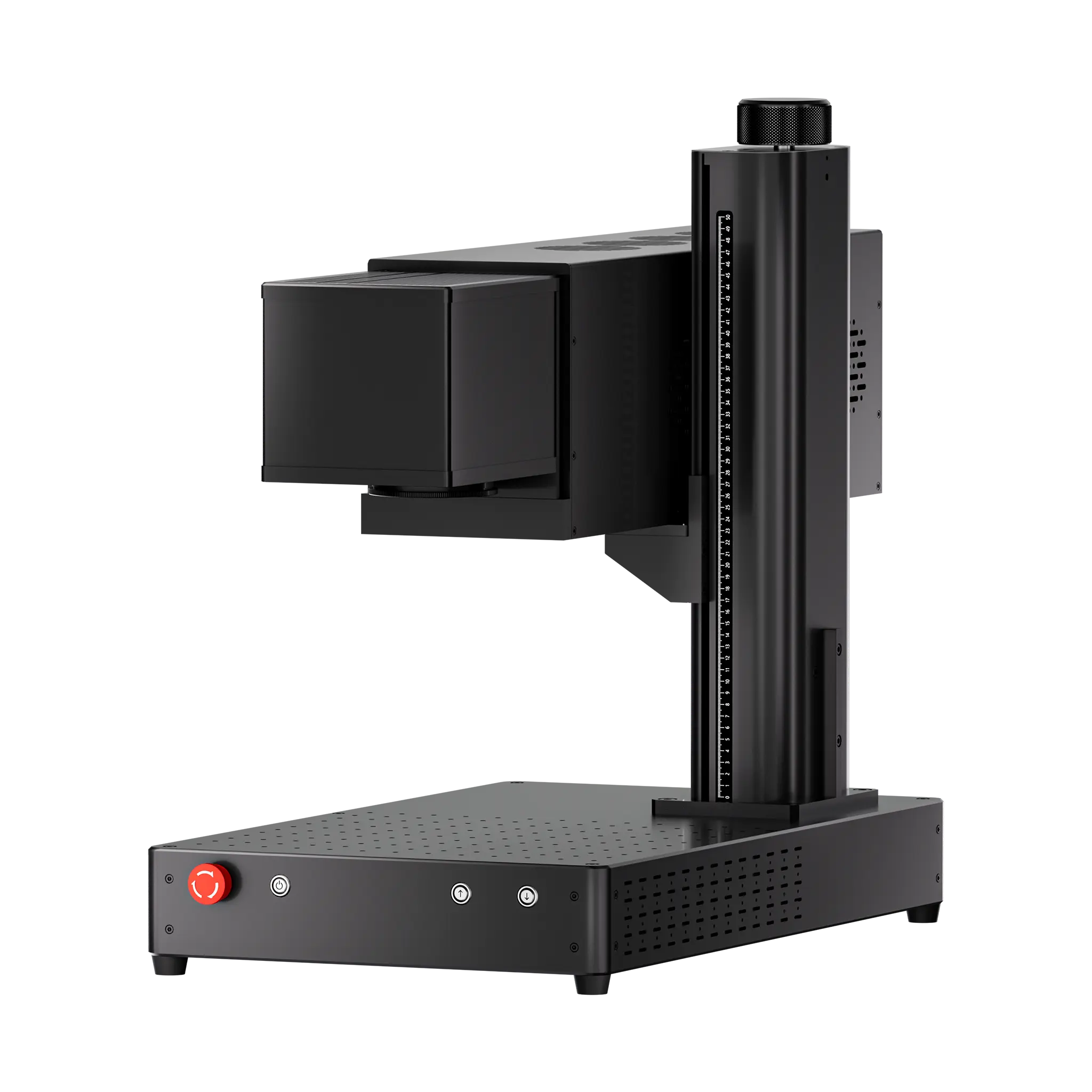
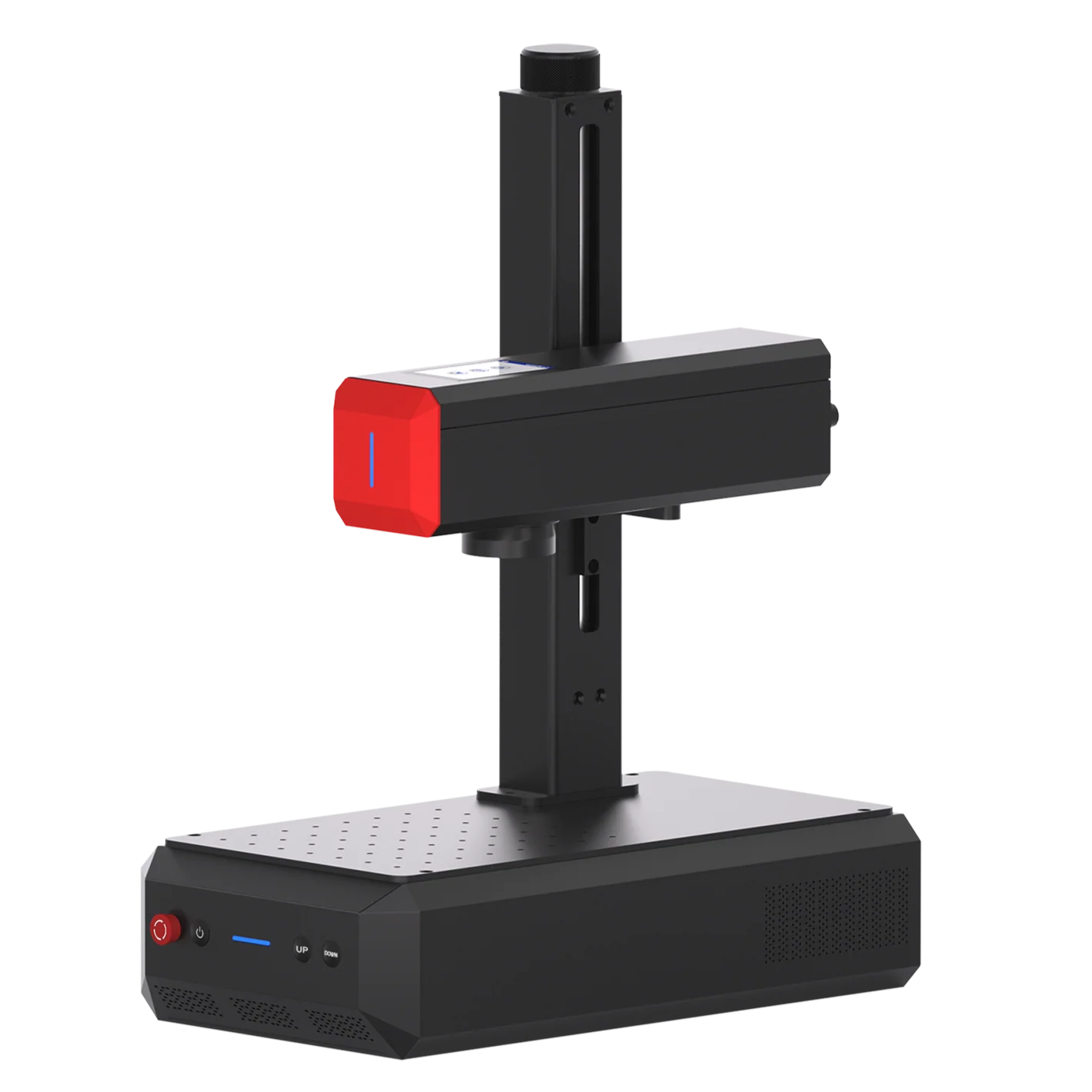
| Machine | ComMarker Omni X UV Laser Engraver | ComMarker COX CO2 Laser Engraver | ComMarker B6 MOPA Fiber Laser Engraver | Diode Laser |
| Price Position | From $3599 | From $2999 | From $2599 | Around $150 |
| Leather Marking Result | 10/10
16K HD Crisp detail, high contrast, minimal damage
|
8/10
Sharp result with high contrast.
|
6/10
Vintage style results. Needs precise settings control.
|
6/10
Acceptable for basic leather marking and testing.
|
| Cutting
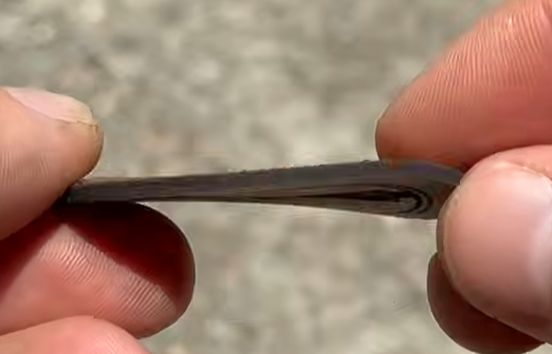
(3mm thick leather 2omm circle cutting) |
7/10
5w UV 5 mm/s cutting speed 20 sec Precise clean edge
|
8/10
40W CO2 20 mm/s cutting speed 4 sec Black edge |
5/10
20W Fiber 10 mm/s 8 sec Slightly Burned edge
|
5/10
10W Diode 3 mm/s 40 sec Burned edge |
| Speed | 10000 mm/s | 15000 mm/s | 15000 mm/s | ~800 mm/s |
| Precision | 0.0019 mm spot size | 0.005 mm spot size | 0.01 mm spot size | 0.05–0.2 mm |
| Best For | High-end leather patches, branding, photo-like results | Affordable cutting + marking workflow | Leather + metal mixed workflow | Hobby users / entry level |
| Slide Extension | Yes | Yes | No | – |

Best Leather for Laser Engraving
Before you grab a laser engraver and start fire it on your leather material, make sure you understand how different types of leather behave under the laser because not all leather performs the same, and some may not be safe to engrave at all.
Natural / Real leather
Natural leather is the safest and gives the best laser engraving result.
Vegetable-tanned leather is the top choice for laser engraving. It gives deeper, cleaner engravings and is much more predictable than chrome-tanned leather. It also works well for stamping, dyeing, antiquing, and sealing after engraving.
Full grain and top grain leather often hold up well overtime and can look especially good when the engraving is simple, and the surface is carefully cleaned.
Suede and nubuck can be used in some projects, but they are usually less predictable than veg-tan leather as they are softer and more textured, the engraving behavior can vary more.
PU leather
PU leather is made with a fabric base and a polyurethane surface. PU leather can laser engrave well, but it is more heat-sensitive than natural leather, so lower power, faster speed, good ventilation, and test run on scrap are important to avoid melting or uneven marks.
Leatherette
Leatherette is often used as laser engraved patches for hats. While can produce ventage style engraving results, some can include PVC-based materials. Since anything containing PVC or vinyl should not be lasered because of toxic fumes. Check the exact composition before engraving for laser safety.
Leather You Should Avoid: For Safety and Performance
Chrome-tanned leather engraving is often shallow, messy and less attractive, and it may release harmful fumes during processing.
PVC laser engraves release chlorine gas and other dangerous fumes when heated by a laser. If a synthetic leather or leatherette contains PVC, do not process it.
Bonded leather is made of leather scraps, glue and coating laser will remove the coating, leaving a poor engraving result.
Bicast leather uses real leather base and PU coating, with laser engraving you might get inconsistent results.
Business Opportunities with Leather Engraving
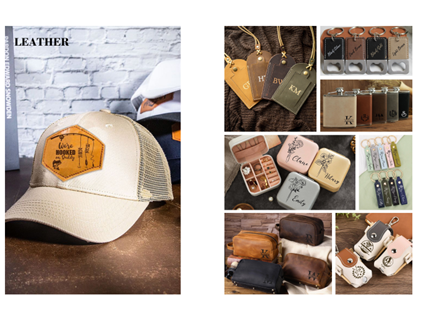
Custom hat patches: These are fast, easy to batch, and popular with trades, brands, teams, and events.
Wallets and card holders: These feel premium and are easy to personalize with logos, initials, or business branding.
Corporate and trade gifts: Electricians, plumbers, painters, builders, and small businesses all need branded gear.
Event products: Weddings, anniversaries, reunions, and company events often want custom leather items.
Final Thoughts:
Leather laser engraving is highly dependent on the right match between material and machine. Natural leather, PU leather, and leatherette all react differently, and each laser type, CO₂, UV, fiber, and diode, have its own strengths.
Whether you’re engraving, cutting, or exploring workflows for leather laser engraving, results come down to control and material compatibility.
If you’re planning to start or scale leather engraving, choosing the right laser system for your workflow can make a noticeable difference in quality, consistency, and production efficiency.