Rubber is widely used in rubber stamps, seals, gaskets, keypads, and customized products. Traditional rubber processing methods often require molds, manual cutting, or chemical processes, making customization slower and less flexible.
Laser engraving provides a faster solution. However, the best laser depends on your goal. Rubber stamp production requires deep engraving with clean edges, while industrial applications usually focus on durable surface marking.
This guide explains
• Best laser for rubber engraving
• CO2 vs UV vs fiber vs diode performance
• Rubber engraving settings
• How to make laser engraved rubber stamps
• Common problems and solutions
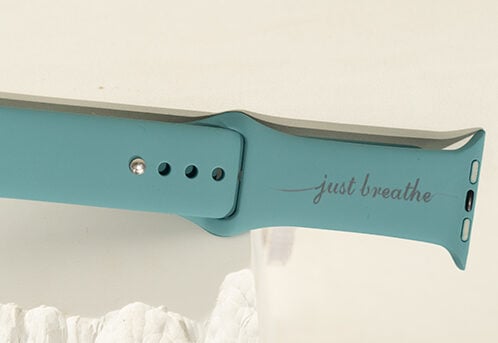
rubber strap-UV laser engraver
Laser Marking vs Deep Engraving Rubber
Laser processing rubber can be divided into two different approaches: surface marking and deep engraving.
| Process | Purpose | Typical Depth | Applications |
| Laser Marking Rubber | Create visible identification marks | <0.5mm | Logos, codes, industrial parts |
| Laser Engraving Rubber | Remove material to create depth | 0.8–1.8mm | Rubber stamps, seals, molds |
For rubber stamps, engraving depth is typically around 1.1mm or deeper depending on the rubber material and required print quality.
For industrial rubber applications, the required engraving depth depends on the function of the part, surface design requirements, and material thickness.
Laser Marking Rubber: Why High Contrast Is Difficult
Laser marking creates contrast by changing the material’s color or optical properties rather than removing large amounts of material.
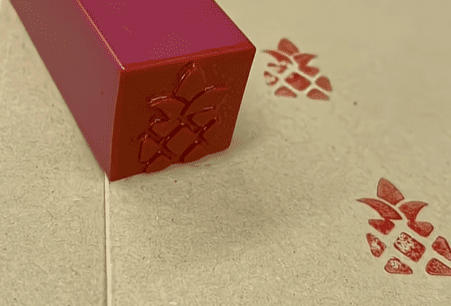
However, many rubber materials are not designed for laser marking. Without laser-sensitive additives or pigments, the laser may only modify the surface texture, resulting in a polished appearance or a groove instead of a visible mark. This groove could be used as stamps.
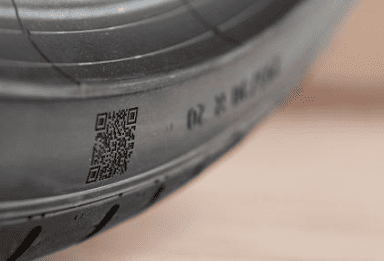
(laser marked normal black rubber)
For applications requiring clear logos, codes, or identification marks, use laser-markable rubber containing additives such as TiO₂ or specialized pigments. Another option is to fill engraved grooves with paint to improve contrast.
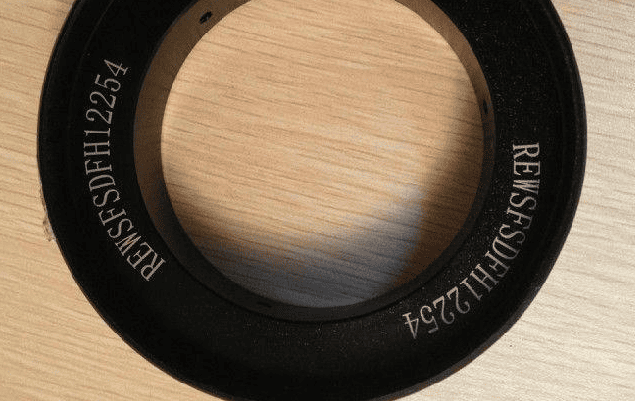
(laser marking rubber with laser-sensitive additives)
Laser Deep Engraving Rubber for Stamps, Seals, and Industrial Applications
Deep engraving removes rubber material to create a physical cavity. Unlike surface marking, the visibility comes from the difference in depth and shadow rather than color change.
This method is commonly used for rubber stamps, custom seals, branding tools, and decorative rubber products.
Deep engraving provides excellent detail reproduction, permanent results, fast customization, and eliminates the need for expensive molds.
CO2 vs UV vs Fiber Laser for Rubber Engraving
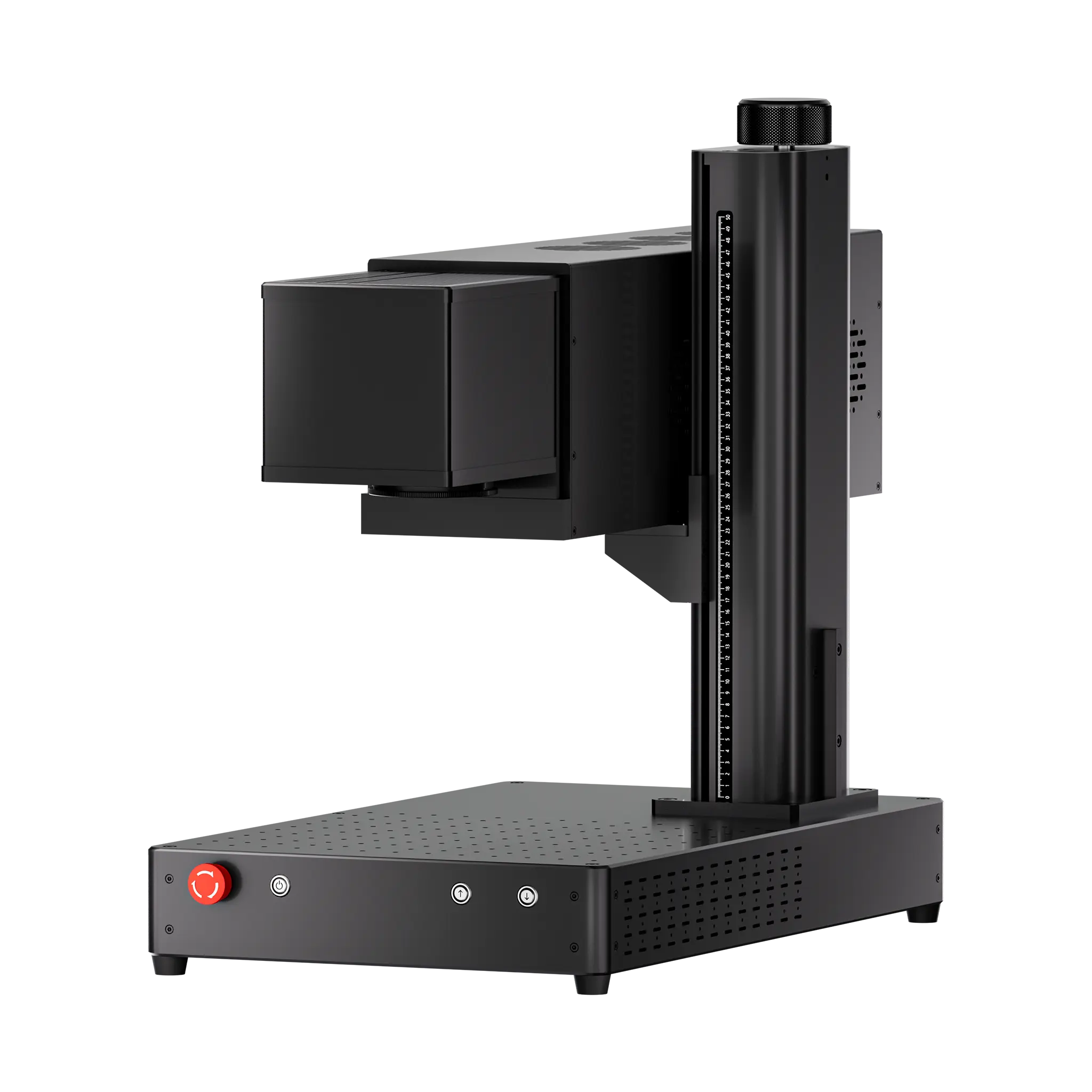
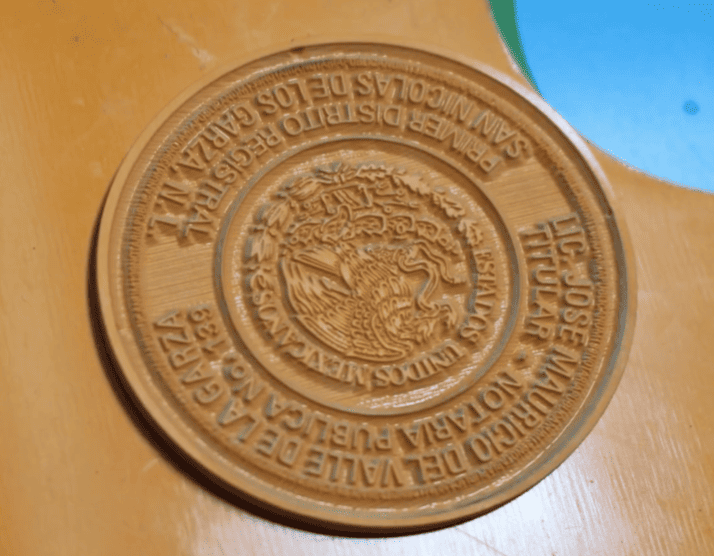
CO2 Laser: The Best Choice for Deep Rubber Engraving and High-Volume Production
CO2 lasers operate at a wavelength of 10,600 nm, which is efficiently absorbed by rubber materials.
Because rubber is an organic material with strong absorption at the CO2 wavelength, CO2 lasers are generally the most efficient choice for deep rubber engraving, especially when high material removal speed and consistent engraving depth are required.
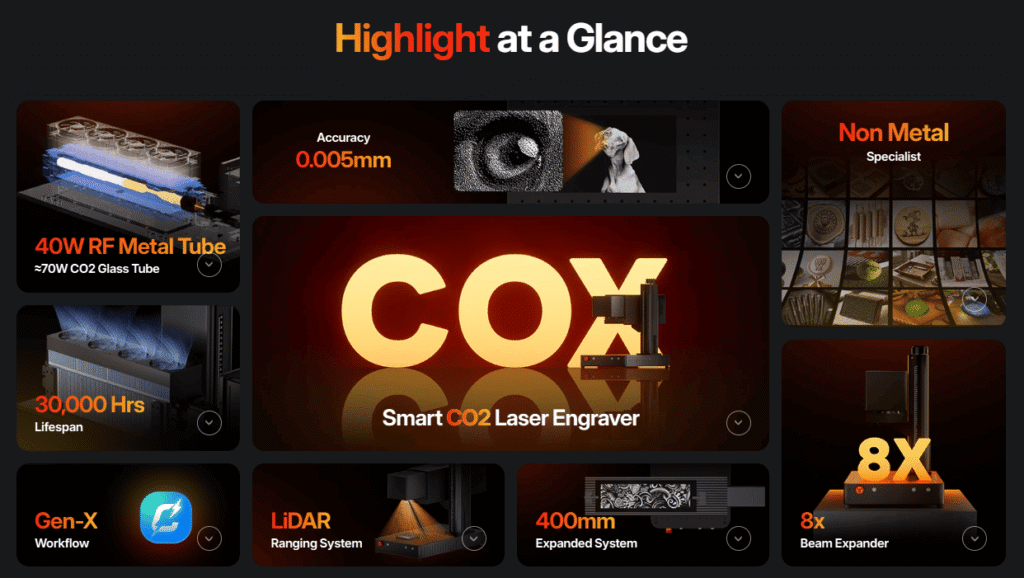
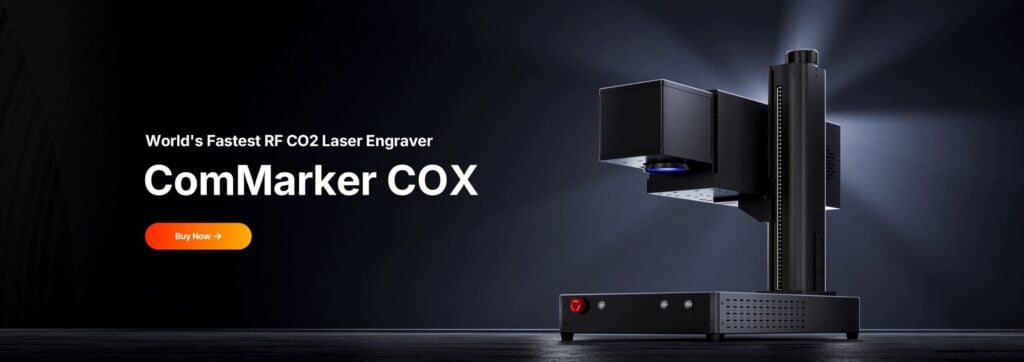
Recommended Machine: ComMarker COX RF Galvo CO2 Laser
Key advantages for rubber engraving:
• Industrial RF metal CO2 laser source with up to 30,000-hour lifespan — provides stronger and stable laser output during long production cycles compared with glass tube CO2 systems, helping maintain consistent engraving depth and reducing maintenance requirements.
• 15,000 mm/s galvo scanning speed — delivers much faster engraving performance than traditional gantry CO2 lasers, increasing daily production capacity for rubber stamp shops and customization businesses.
• 0.005 mm laser spot size — reproduces fine text, logos, and detailed patterns with excellent edge quality while maintaining high engraving efficiency.
• Deep engraving capability — efficiently removes rubber material to create recessed designs required for rubber stamps, seals, and textured rubber applications.
For businesses producing dozens or hundreds of rubber products every day, an RF galvo CO2 laser provides the ideal combination of speed, precision, and production efficiency.
UV Laser: A Precision Option for Rubber Marking and Small Detailed Engraving
UV lasers operate at a wavelength of 355 nm, producing a much smaller heat-affected zone compared with CO2 lasers. This makes UV lasers suitable for applications requiring fine details and reduced thermal impact.
Compared with high-power RF CO2 lasers, UV lasers generally provide lower material removal efficiency for deep engraving and are better suited for precision engraving rather than high-volume production.
For businesses focused on high-volume rubber stamp production, CO2 remains the more efficient solution.
Recommended Machine: ComMarker Omni X UV Laser
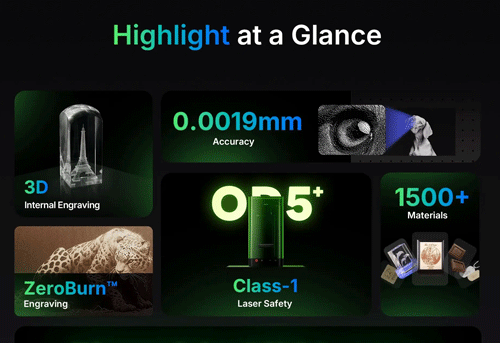
The ComMarker Omni X UV Laser is designed for users who prioritize engraving detail and surface quality over maximum production speed.
Key advantages for rubber engraving:
• 0.0019 mm ultra-fine laser spot size — enables sharp reproduction of small text, thin lines, and complex artwork where detail accuracy is critical.
• 355 nm UV wavelength with reduced heat impact — minimizes thermal effects and helps protect sensitive rubber surfaces from deformation.
• 16K HD engraving capability — delivers highly detailed results for precision customization applications.
• Advanced autofocus and positioning features — improve setup efficiency and repeatability for detailed engraving tasks.
For businesses that mainly process other materials but occasionally require fine rubber engraving, Omni X provides a flexible precision solution.
Fiber Laser: A Specialized Option for Rubber Marking, Mainly Designed for Metals
In most cases, fiber lasers should not be the first choice for deep rubber engraving because the 1064 nm wavelength is primarily optimized for metals and is less efficient on many untreated rubber materials.
However, they can process certain rubber materials when parameters are carefully adjusted based on rubber formulation, additives, color, and surface characteristics.
For businesses where metal engraving is the primary application, a fiber laser can provide additional flexibility for occasional rubber marking tasks.
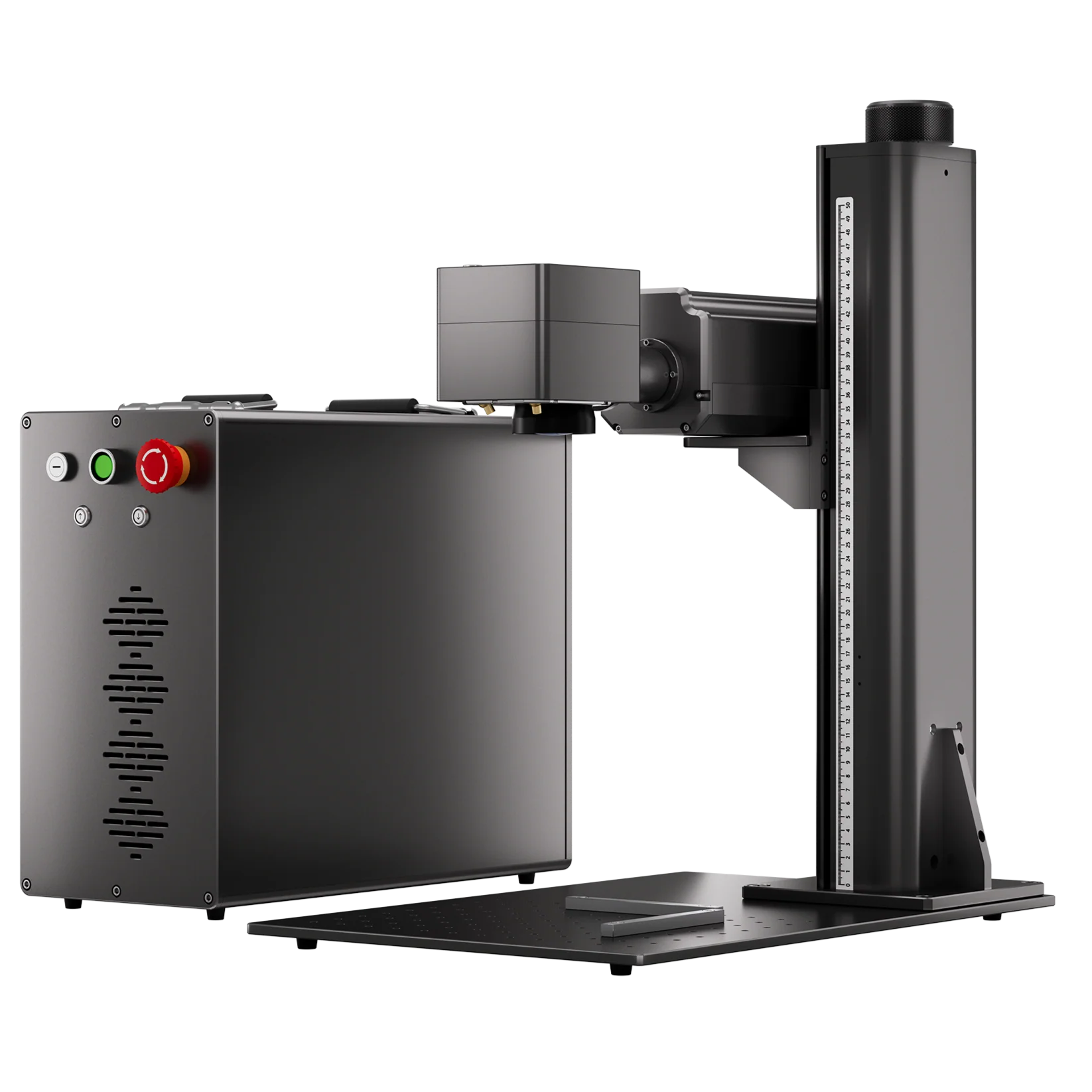
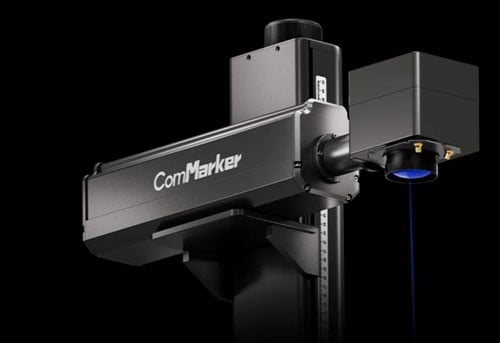
Recommended Machine: ComMarker Titan Fiber Laser
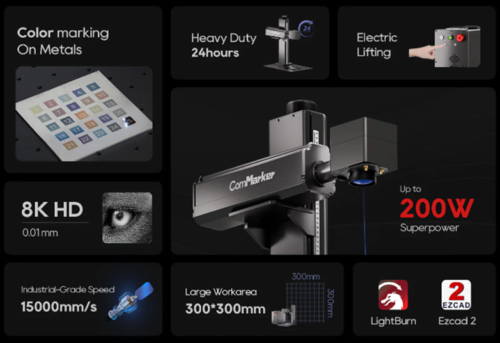
The ComMarker Titan Fiber Laser is primarily designed for professional metal engraving while providing flexibility for specialized material processing.
Key advantages:
• Up to 200W fiber laser power — provides high energy density for deep engraving on stainless steel, brass, aluminum, and other metals.
• 1064 nm wavelength optimized for metal processing — delivers excellent marking and engraving performance for industrial metal applications.
• MOPA fiber laser options — allow users to adjust pulse parameters for different materials, surface finishes, and marking requirements.
For businesses focused on metal engraving with occasional rubber processing needs, Titan provides a versatile multi-material solution without requiring a dedicated rubber engraving machine.
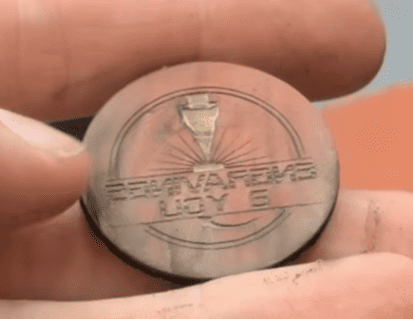
Recommended Rubber Laser Engraving Settings
There is no universal parameter because rubber types vary. Always test before production.
| Parameter | Diode laser | CO2 laser | UV laser | Fiber laser |
| Lens | 140mm | 70mm | 110mm | |
| Laser Power | 10W | 40W | 5W | 60w |
| Power | 90% | 45% | Pulse 3 | 70% |
| Speed | 100 mm/s | 500 mm/s | 800 mm/s | 300 mm/s |
| Pass | 50 | 7 | ||
| Frequency | 15 | 30 | 20 kHz | |
| Line distance (mm) | 0.01 | 0.06 | 0.03 | 0.1 |
If your goal is to create professional rubber stamps, check out our step by step guide on laser engraving stamps.
Common Rubber Laser Engraving Problems
| Problem | Cause | Solution |
| Burned edges | Too much heat | Increase speed or reduce power |
| Poor depth | Insufficient energy | Increase power gradually |
| Weak stamp impression | Engraving too shallow | Increase engraving depth |
| Melted surface | Excessive heat accumulation | Improve air assist |
| Dirty surface | Smoke residue | Improve extraction and cleaning |
| Uneven engraving | Material variation | Run material tests |
| Blurry small details | Incorrect focus or excessive heat | Adjust focus position and optimize power/speed settings |
| Rubber sticking to the surface | Excessive heat buildup | Increase airflow and reduce heat accumulation |
Safety Tips for Laser Engraving Rubber
Rubber processing produces smoke and airborne particles. Remember to:
• Use proper exhaust ventilation
• Install fume extraction
• Keep optics clean
• Use air assist
Avoid unknown rubber materials because some compounds may release harmful gases during laser processing.
Always verify the rubber composition before processing. Certain materials containing chlorine or unknown additives may produce hazardous fumes when exposed to laser energy.
Common Applications of Laser Engraved Rubber
Laser engraving rubber is used for creating customized designs, functional patterns, and permanent markings. The best laser depends on whether the goal is deep engraving or surface marking.
Rubber Stamps and Seals
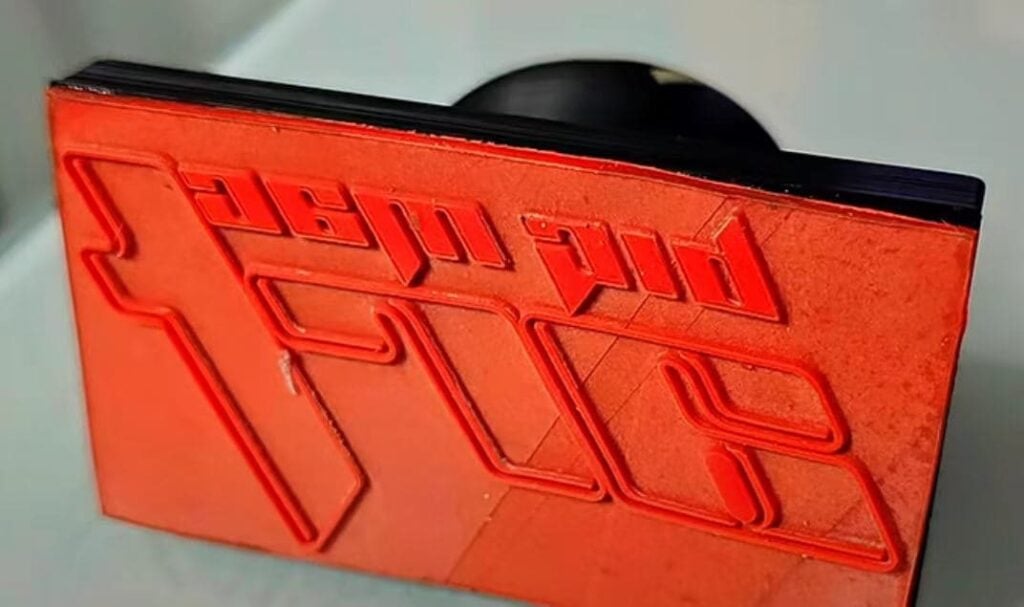
Rubber stamps are one of the most common laser engraving applications. The laser removes material to create a recessed design that transfers ink onto paper.
Common uses include:
• Business stamps
• Art stamps
• Logo stamps
For high-quality stamps, clean edges and consistent engraving depth are essential.
Industrial Rubber Parts
Laser processing is also used for rubber components such as:
• Seals and gaskets
• Identification marks
• Custom rubber parts
These applications usually focus on durable marking, traceability, or surface modification rather than deep engraving.
Customized Rubber Products
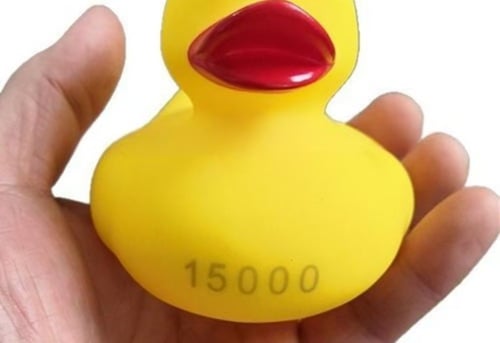
Laser engraving enables flexible production of personalized rubber items without creating new molds for every design, making it suitable for custom and small-batch projects.
Final Thoughts: Choosing the Right Laser for Rubber Engraving
| Application | Recommended Laser | Why |
| Rubber stamps, deep engraving, and commercial production | CO2 Laser | Best balance of speed, engraving depth, edge quality, and productivity. |
| Fine-detail rubber engraving and heat-sensitive applications | UV Laser | Higher precision and lower heat impact, but slower for deep engraving. |
| Metal engraving with occasional rubber marking | Fiber Laser | Excellent for metals and capable of rubber processing with parameter optimization. |
For most rubber engraving businesses, especially deep engraving and high-volume rubber processing, a ComMarker COX CO2 laser is the most efficient and reliable choice.
UV and fiber lasers are valuable alternatives for specialized applications where precision, heat control, or multi-material flexibility is more important than maximum engraving speed.