Medical device marking requires more than a dark or attractive mark. For reusable surgical instruments, the mark may need to remain readable after repeated cleaning, disinfection, sterilization, handling, and mechanical wear.
For stainless-steel surgical instruments, MOPA fiber is often the first technology to evaluate. For applications requiring extremely fine detail, mixed-material processing, or controlled interaction with sensitive materials, UV lasers can offer an alternative.
This guide compares fiber, MOPA fiber, and UV laser marking and explains what manufacturers should evaluate before moving a marking process into production.
What Makes Medical Device Marking Different?
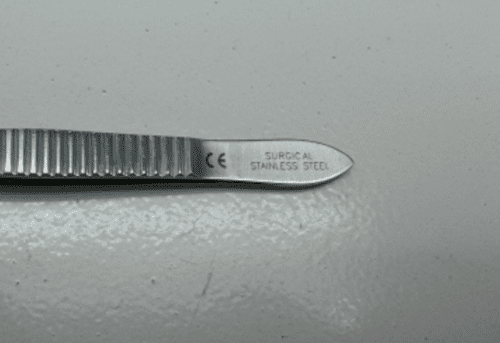
Medical device marking must remain readable and durable without compromising the device. Reusable instruments may undergo repeated cleaning, disinfection, sterilization, and mechanical wear, so manufacturers should evaluate marks throughout the expected service life.
* FDA: Reprocessing Reusable Medical Devices
In the U.S., applicable devices must meet FDA Unique Device Identification (UDI) requirements. Some reusable devices may also require permanent direct marking, subject to applicable rules and exceptions.
* FDA: UDI Direct Marking of Devices
UDI is the identification system, DataMatrix is a machine-readable 2D code format, and laser marking is one method of applying the mark. FDA does not require laser specifically; manufacturers must select and validate a suitable process.
Marking should be assessed for its effect on:
- Surface roughness and cleanability
- Critical dimensions and functional surfaces
- Corrosion resistance and coatings
- Mechanical performance
- Burrs, debris, oxidation, or other surface damage
What Medical Device Materials Can Be Laser Marked?
Laser marking can be used on stainless steel, titanium, cobalt-chromium alloys, aluminum, PEEK, engineering plastics, ceramics, and coated materials. Results depend on the material and laser choice.
For metal surgical instruments, fiber and MOPA fiber lasers are strong options.
For polymers, mixed materials, or extremely fine details and least surface damage, UV lasers may offer greater flexibility.
The best choice is the laser that produces the required readable, durable mark on the specific material without compromising surface quality or device performance.
Which Laser Is Best for Medical Device Marking?
MOPA Fiber: Strong Choice for Metal Instruments
Fiber lasers are fast and effective for marking metals such as stainless steel, aluminum, and brass.
A standard fiber laser can be sufficient for straightforward metal marking, while MOPA fiber provides greater control over laser pulse characteristics, giving manufacturers more flexibility when processing different metals and marking requirements.
For manufacturers primarily marking stainless-steel surgical instruments, MOPA fiber is often the first laser technology to evaluate.
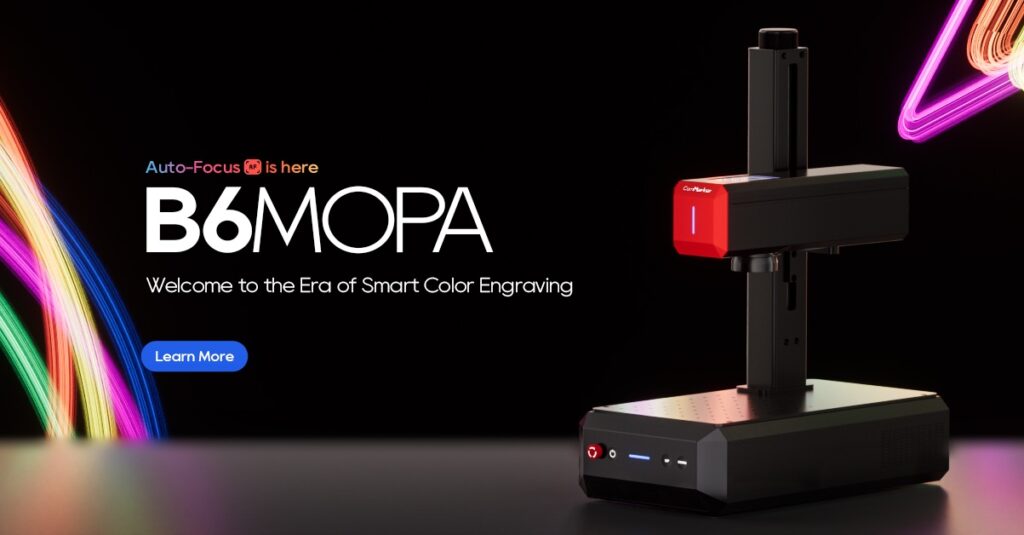
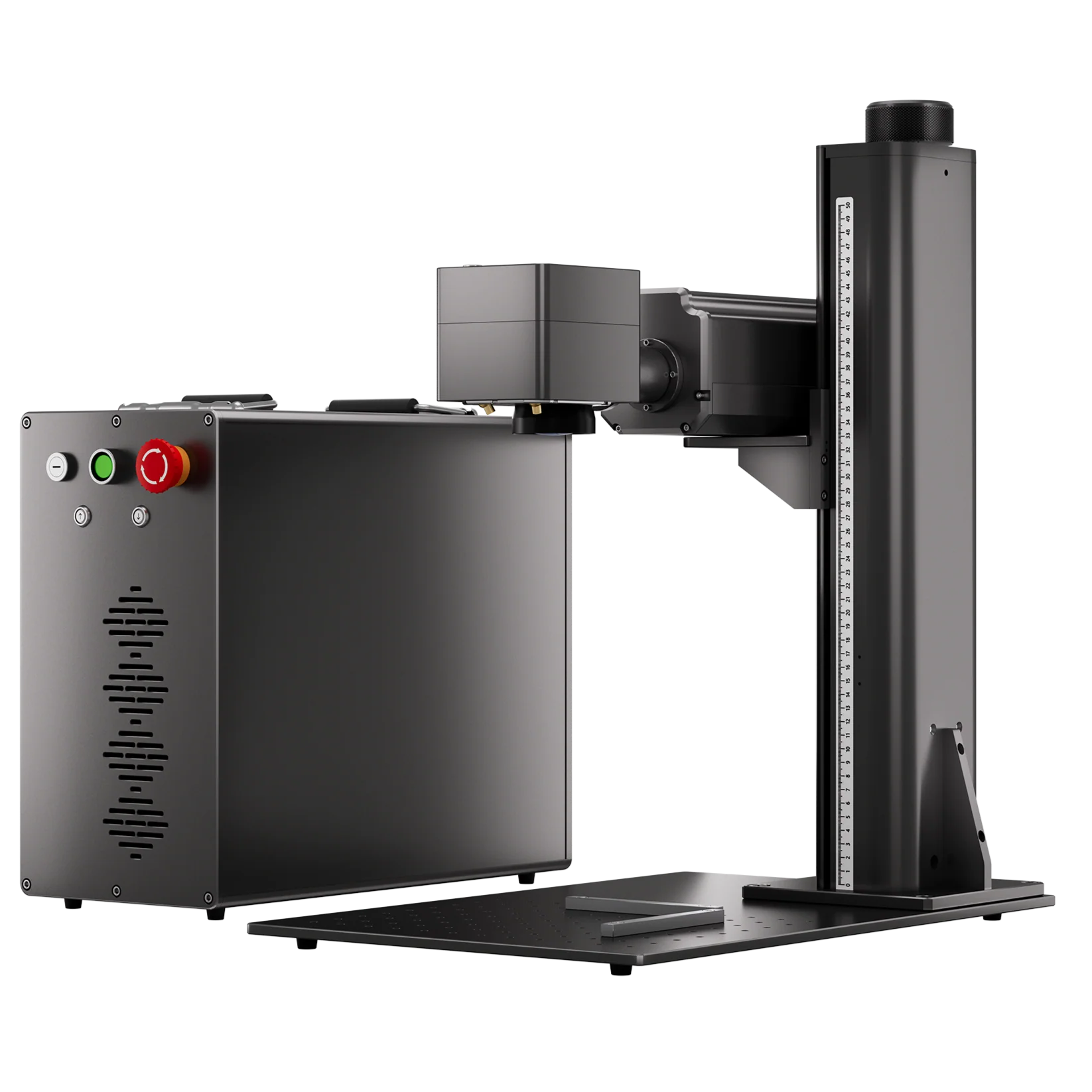
The ComMarker B6 MOPA combines several features that are particularly useful for medical device marking:
Adjustable pulse width and frequency: MOPA allows users to independently adjust pulse characteristics. This flexibility can be useful for producing black marks, fine surface details, and color marks on suitable metal including stainless steel.
Up to 60W laser power: Higher power provides greater processing capacity for material removal and deeper engraving. In testing, the ComMarker B6 60W MOPA Fiber Laser achieved a marking depth of 0.0045 inches on a 20 × 100 mm text area in approximately 3 minutes, compared with approximately 9 minutes using a 20W configuration under the same test conditions.
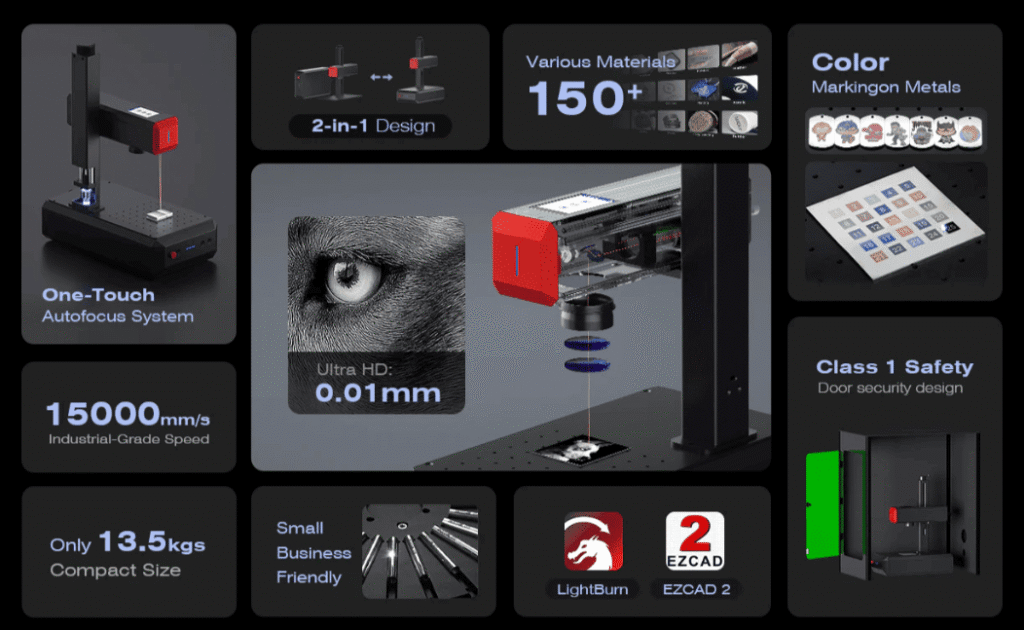
Up to 15,000 mm/s marking speed: High scanning speed can help reduce processing time, which can be valuable for production environments where many instruments or components need consistent identification.
0.01 mm laser spot size: The fine spot supports small text, detailed graphics, and compact identification marks.
Color marking on suitable metals: MOPA pulse control can create controlled oxide layers on stainless steel, allowing color-coded logos or identification features without paint or additional coatings.
These capabilities give manufacturers more control over the final marking result. Operators can adjust the process according to the material, surface finish, required contrast, marking depth, and level of detail.
UV Laser: Fine Detail and Multi-Material Processing
UV lasers operate at a shorter 355 nm wavelength than infrared fiber lasers, allowing them to offer smaller heat-affected zones and cleaner surface finish.
For manufacturers working with small marking areas, polymers, glass, ceramics, or mixed-material components, UV is worth evaluating when fine detail and controlled surface interaction are priorities.
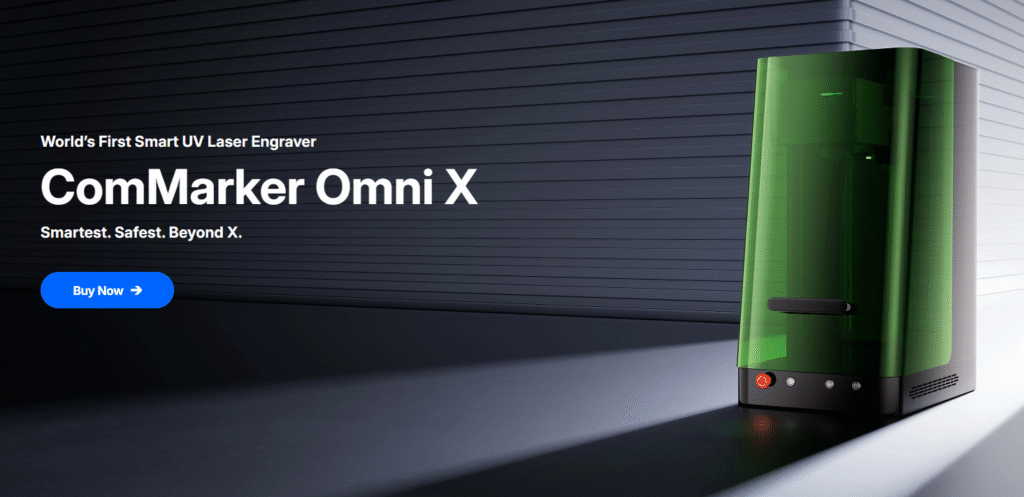
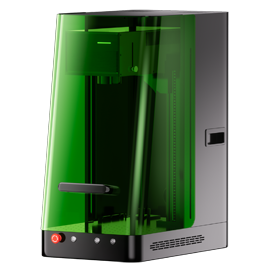
The ComMarker Omni X combines several features that are particularly useful for medical device marking:
355 nm UV wavelength: Lower thermal impact making UV useful for fine surface processing and sensitive materials.
0.0019 mm precision: The ultra-fine spot supports small text, thin lines, detailed graphics, and compact identification marks, helping reproduce fine features on limited marking areas.
1500+ material compatibility: Omni X is designed for a broad range of materials, including stainless steel, titanium, plastics, glass, ceramics, and coated metals, making it suitable for mixed-material components.
Fine-detail processing: The combination of UV wavelength and ultra-fine precision supports compact codes, small text, and detailed identification marks.
Class 1 configuration: The fully enclosed Class 1 configuration provides an option for integrating laser marking into a controlled production environment.
Real-World Test: Compact Machine-Readable Marks
In ComMarker testing, the Omni X UV laser was used to mark 5 × 5 mm machine-readable codes on plastic and metal samples, and both samples were successfully scanned.
| Test | Material | QR Code Size | Result | |
| Test 1 | Plastic | 5 × 5 mm | Scannable |  |
| Test 2 | Metal | 5 × 5 mm | Scannable |  |
The ComMarker B6 MOPA marked numbers on 2.5 mm-thick stainless steel wire, and the resulting characters were clearly visible and readable.
These tests demonstrate the ability of ComMarker UV and MOPA systems to produce compact, readable marks on different materials and geometries under the tested conditions.
Need smaller marks? Contact us to discuss your material and testing needs.
* Successful scanning should not be presented as UDI validation or regulatory qualification. Production applications should be evaluated using the applicable verification method and acceptance criteria.
Fiber vs. UV for Medical Device Marking
| Requirement | MOPA Fiber | UV |
| Stainless-steel marking | ★★★★★ | ★★★★☆ |
| Deep metal engraving | ★★★★★ | ★☆☆☆☆ |
| Fine detail Marking (DataMatrix / small codes) | ★★★☆☆ | ★★★★★ |
| Color marking on suitable metals | ★★★★★ | ★★☆☆☆ |
| Polymer marking | ★★★☆☆ | ★★★★★ |
| Batch marking | ★★★★★ | ★★★★☆ |
How to Test Laser Marking on Medical Devices
| Test Area | What to Evaluate |
| Marking Contrast | Confirm that the mark is suitable for visual inspection and machine-readable code scanning. Evaluate contrast together with cell geometry, edge quality, and surface condition. |
| Code Readability and Verification | Define the applicable verification method and acceptance criteria. ISO/IEC 15415 provides methods for evaluating and grading 2D symbols, while ISO/IEC 29158 is relevant to direct part mark verification. ISO/IEC 15415:2024 |
| Surface Condition | Inspect for excessive roughness, burrs, debris, oxidation, melting, deformation, coating damage, and other surface changes. |
| Dimensional Integrity | Confirm that the marking process does not compromise device performance. Deeper engraving is not automatically better because it removes more material and changes surface geometry. |
| Reprocessing Compatibility | Test marked samples under actual or representative reprocessing conditions: cleaning, disinfection, sterilization, handling, and mechanical wear.. FDA emphasizes that reusable-device reprocessing procedures are device-specific. FDA: Reprocessing Reusable Medical Devices |
| Repeatability | Evaluate multiple samples to confirm that the same process produces consistent marking quality. |
How to Get Fine and Clean Marks on Medical Devices
Choose the Right Laser and Lens
A smaller focused spot can help reproduce fine features, but marking quality also depends on lens selection, focus accuracy, laser parameters, hatch spacing, pulse characteristics, material response, and surface finish.
Keep the Instrument in Focus
Poor focus can cause wider lines, soft edges, uneven code cells, and inconsistent results.
This becomes especially important when marking small or curved surgical instruments. Proper fixturing and positioning can be just as important as the laser itself.
Prepare Artwork for Small Marks
Use clean artwork and avoid unnecessarily thin strokes or complex details.
For DataMatrix and other 2D codes, do not simply shrink a large design until it fits. Test the actual code size, cell structure, quiet zone, contrast, and verification requirements on the final device.
Optimize Parameters for the Actual Material
Important variables may include power; speed; frequency; pulse duration; hatch spacing; number of passes; focus position.
Too much energy can widen features or alter the surface. Too little can produce weak or incomplete marks.
The objective is controlled laser-material interaction.
Laser Safety for Medical Device Manufacturing
Laser marking equipment should be treated as industrial laser equipment.
Manufacturers should evaluate laser classification; enclosure; access controls and interlocks; protective eyewear where required; fume extraction; fire risk; operator training; facility-specific laser safety procedures.
The ComMarker Omni X is available in a fully enclosed Class 1 configuration.
The ComMarker B6 MOPA is listed as a Class 4 laser system, so appropriate enclosure and facility-level laser safety controls are important when integrating it into production.
Which ComMarker Laser Should You Evaluate for Laser Marking Medical Devices?
Best to evaluate for: metal identification, deeper engraving, batch-oriented metal processing, and color marking on suitable metals.
ComMarker Omni X UV Laser Engraver
Best to evaluate for: fine-detail marking, small & compact pattern, plastic components, metal surface marking, mixed materials, and applications requiring controlled surface interaction.

Final Thoughts
The best laser for medical device marking depends on the material, required marking result, level of detail, production requirements, and post-processing conditions.
For surgical instruments, ComMarker B6 MOPA fiber is a strong choice to evaluate first when durable metal marking, black marking, fine identification, or deeper engraving is required. ComMarker Omni X UV has an advantage when fine detail, controlled surface interaction, or multi-material processing is the priority.
Ready to evaluate laser marking for your medical device? Visit the ComMarker store to explore fiber, MOPA, and UV laser solutions, or email [email protected] to discuss your material and marking requirements.
FAQ
Is MOPA better than a standard fiber laser?
MOPA provides greater control over pulse characteristics, which can be useful for black marking, fine surface processing, color marking, and different levels of material removal. A standard fiber laser may still be sufficient for straightforward metal marking.
Is UV laser better for surgical instruments?
Not universally. MOPA fiber is generally the more direct choice for stainless-steel instruments. UV becomes more attractive for very fine detail, polymers, mixed materials, or applications requiring controlled surface interaction.
Can laser marking create UDI DataMatrix codes?
Yes. Fiber, MOPA, and UV lasers can produce machine-readable 2D codes when the laser, optics, artwork, and material are properly matched.
Does deeper laser marking last longer?
Not necessarily. Deeper engraving can improve resistance to some mechanical wear, but it also changes surface geometry. The appropriate depth should be determined through application-specific testing.
Does FDA require laser marking?
No. FDA’s UDI requirements address applicable identification and direct-marking requirements; they do not prescribe laser as the only marking technology. Manufacturers must select and validate an appropriate marking process for the specific device.
Important: Laser marking a medical device does not by itself make the device UDI-compliant or medically certified. Manufacturers must determine the applicable regulatory requirements and validate the complete marking process for the specific device.