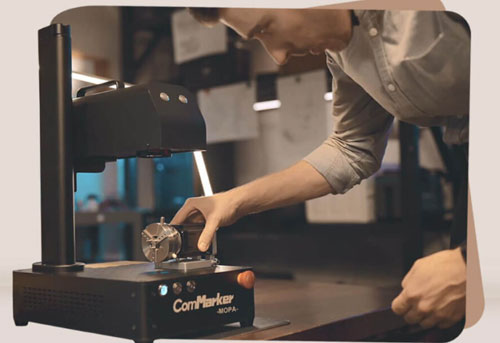
Looking for the best laser to mark a PMAG? UV, Fiber, MOPA, Diode, and IR lasers can all produce different marking effects, but their capabilities, precision, and applications vary.
So which laser is the right choice for your PMAG projects? In this guide, we’ll compare different laser technologies, examine real-world marking examples, and explore their advantages and limitations to help you choose the right laser for your needs.
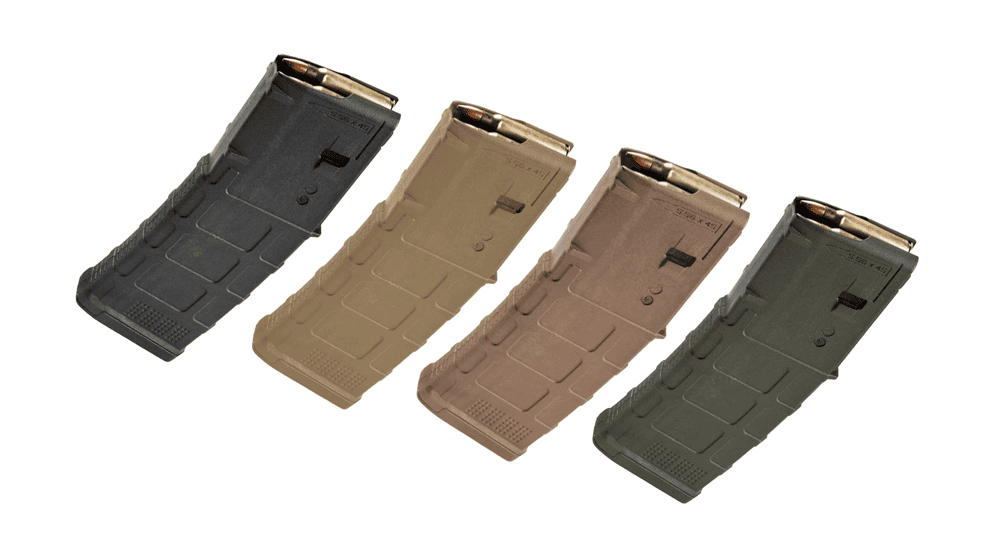
What’s the Best Laser Engraver for PMAG Marking?
UV, fiber, IR, and diode lasers have all demonstrated potential for PMAG marking. CO₂ lasers, on the other hand, generally require a different approach when working with this type of material.
UV Laser: High-Precision Marking, Limited Thermal Damage
UV lasers operate at a 355 nm wavelength and small spot size, making them suitable for users exploring fine-detail marking across different plastic materials and metal surface marking.
However, UV lasers are less suitable for applications requiring substantial material removal or deep metal engraving.
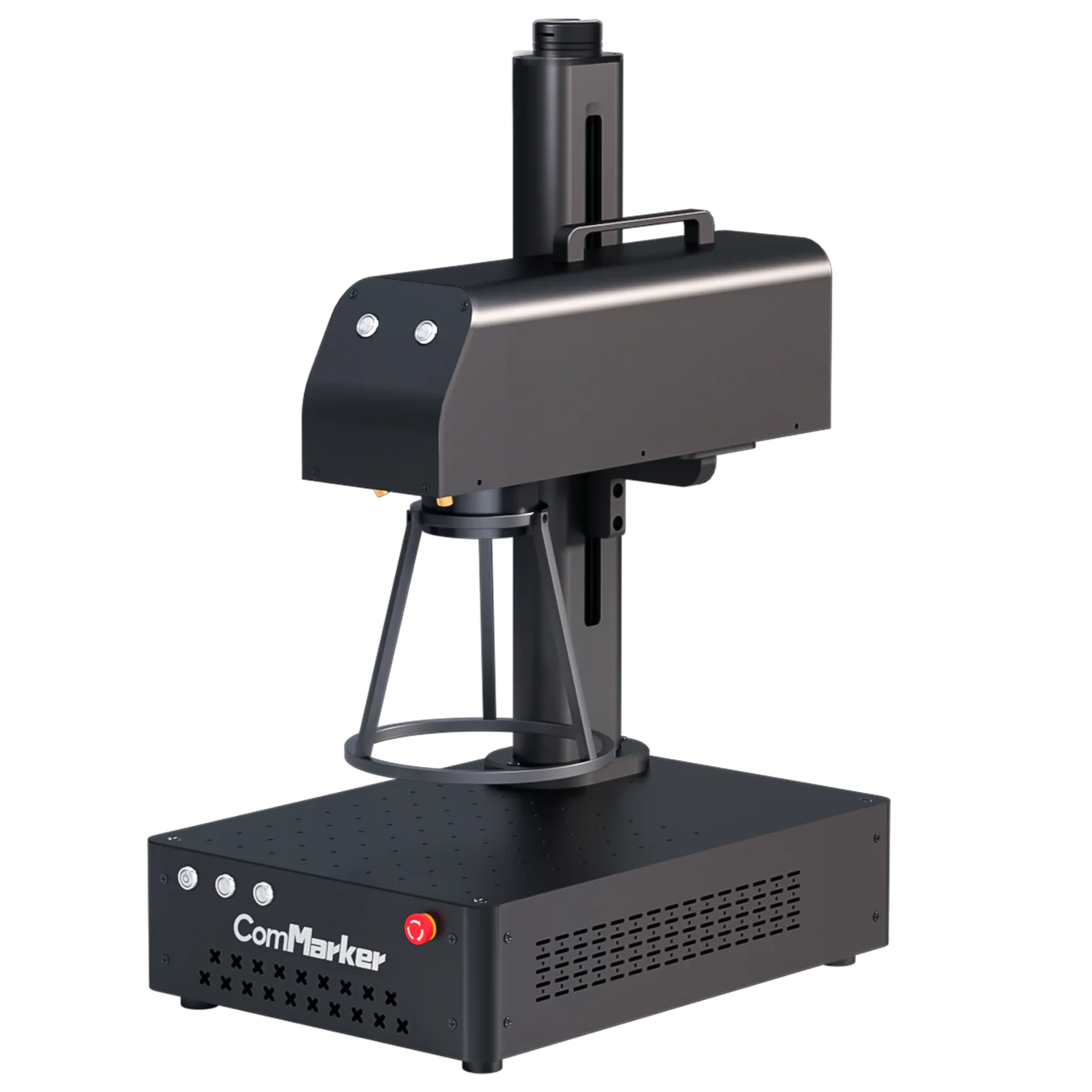
ComMarker Omni X UV Laser Engraver
• 355 nm UV wavelength: Suitable for exploring marking applications across different materials.
• 0.0019 mm laser spot: Supports 16K HD fine-detail marking.
• Up to 10,000 mm/s processing speed: Capable for fast marking applications.
• Optional slide extension: Provides additional flexibility for longer workpieces.
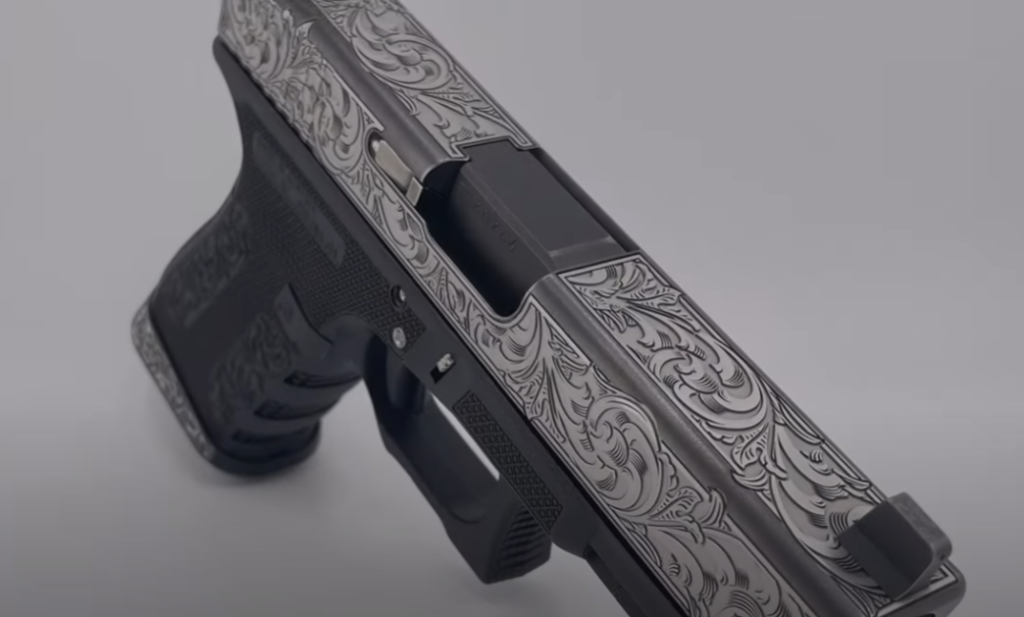
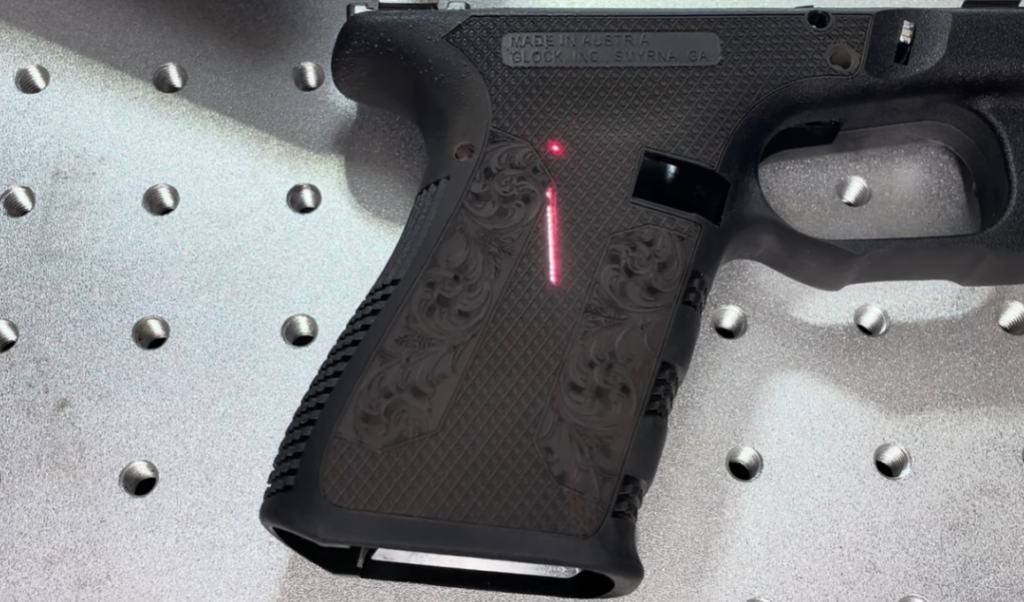
Real Engraving Cases:
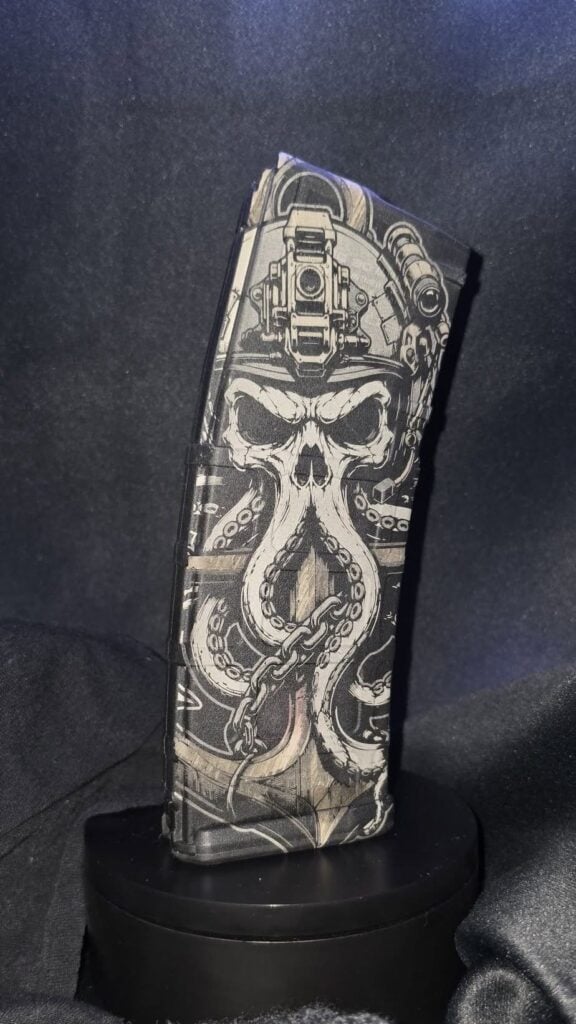
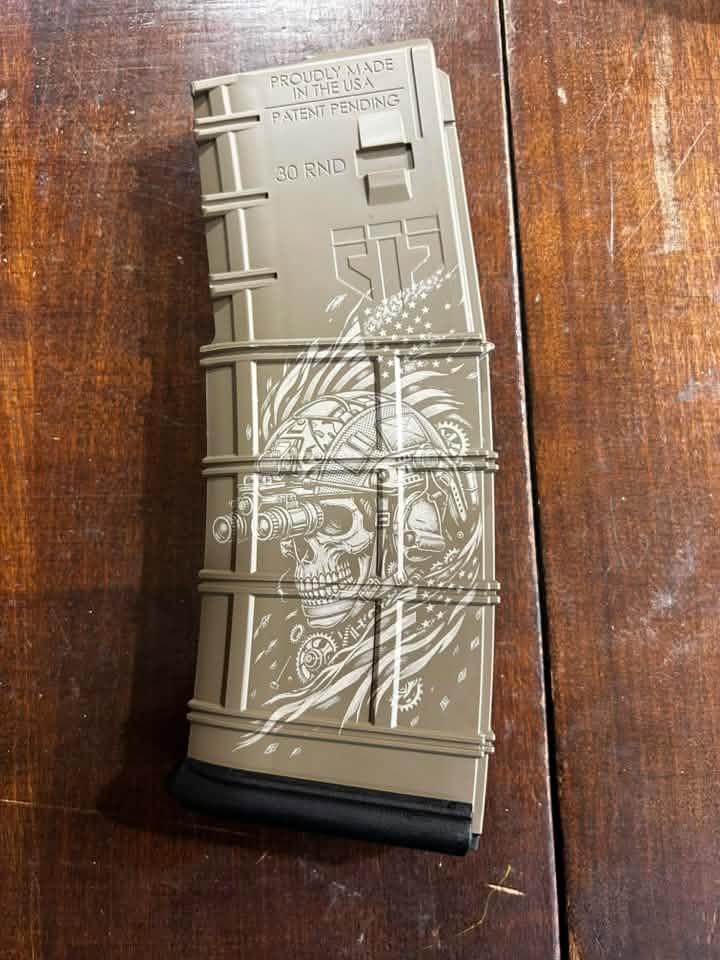
Fiber Laser: From PMAG Surface Marking to Deep Metal Engraving
Followd by IR 19%, Diode 17% and UV 11%.
Why Do People Choose Fiber Lasers for PMAG Marking?
• Lower cost than UV laser: PMAG marking can be achieved with 20W, 30W, and 50W fiber lasers, giving users multiple affordable entry-level options.
• Fast engraving speed: Compared with UV laser systems and gantry-style machines, galvo-based fiber lasers can achieve faster engraving speeds. Making them suitable for fast detailed designs and repetitive production tasks.
• Marking and Deep Engraving in One Machine: Beyond PMAG projects, fiber lasers can handle metal-marking and engraving applications, from logos to relief like designs.

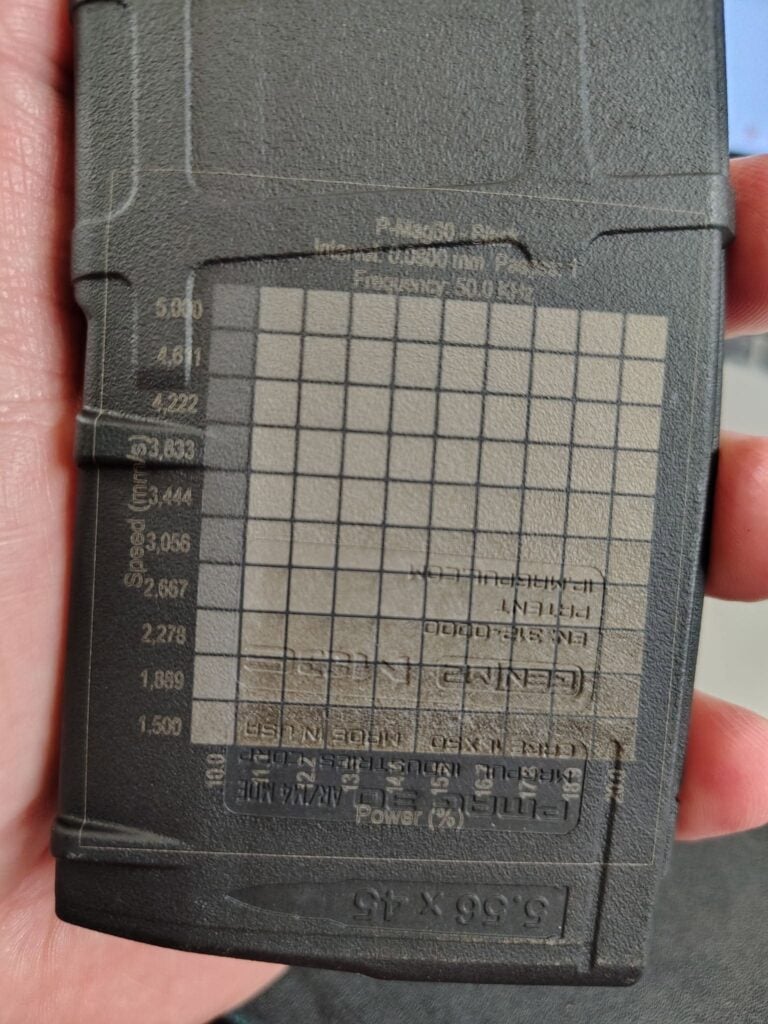
50W ComMarker B4 Black PMAG Marking Setting
Grey: Power 10%; Speed 5000mm/s; Freq: 50kHz, Line interval 0.03 mm;
White: Power 20%; Speed 5000mm/s; Freq: 50kHz, Line interval 0.03 mm;
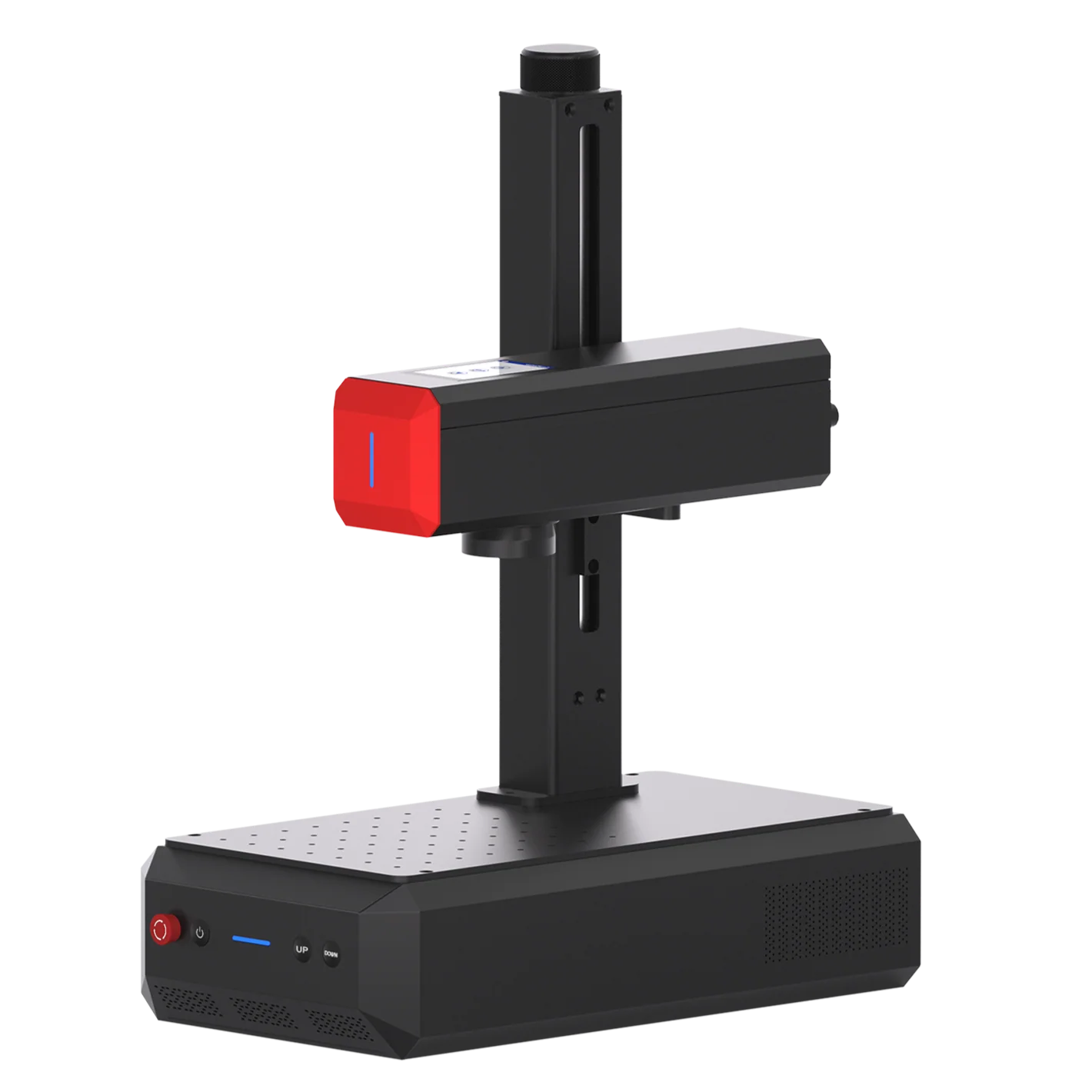
About the ComMarker B4 Fiber Laser
• Power Options: 20W, 30W, 50W, and 100W.
• 0.01 mm Precision: Delivers 8K HD engraving detail.
• High-Speed Engraving: Up to 15,000 mm/s for batch applications and faster turnaround.
• Flexible Working Area: Supports different field lenses, including 110 × 110 mm and 200 × 200 mm options.
Beyond PMAG marking, the ComMarker B4 can also handle metal engraving, deep engraving, and a variety of personalization projects.
Real Engraving Cases:
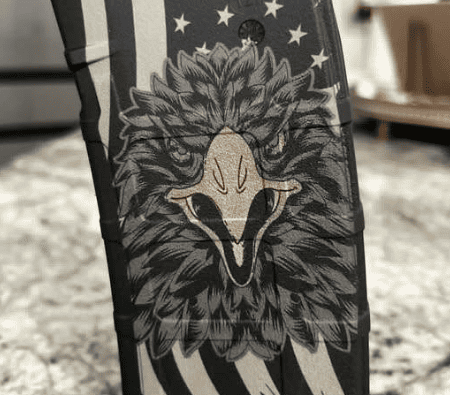
Do You Really Need a MOPA Fiber Laser for PMAG Marking?
Not necessarily. Non-mopa fiber lasers can also produce satisfactory results on compatible polymer formulations. The main difference lies in their level of laser control.
• Normal Fiber: Uses a near-infrared laser source to mark compatible materials, making it a practical option for PMAG projects.
• MOPA Fiber: Offers adjustable pulse width and frequency, adding extra flexibility for color marking on metals, deep engraving, and material cutting
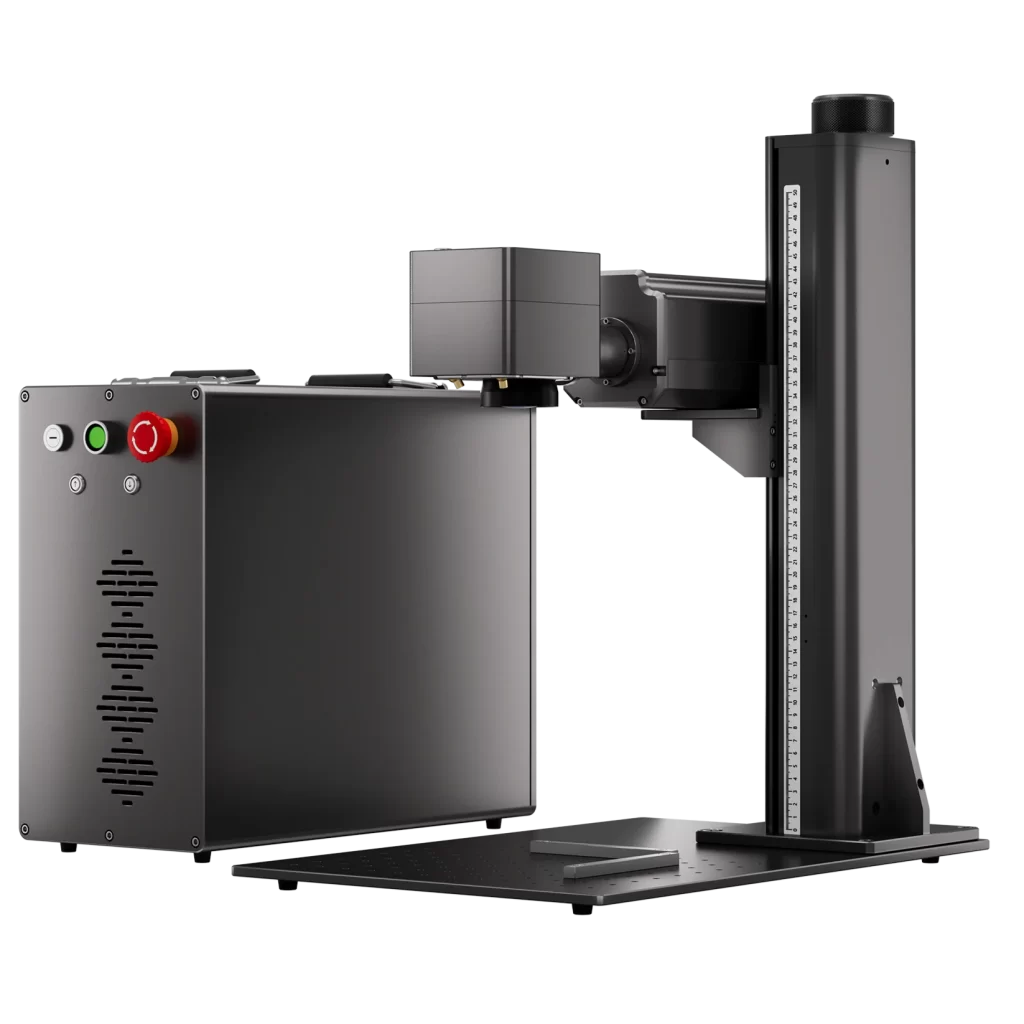
ComMarker Titan 1 MOPA Fiber Laser
• Power Options: Available in 60W, 100W, and 200W configurations to accommodate different marking and engraving requirements.
• 0.01 mm Spot Size: Delivers 8K HD engraving details.
• Color Marking on Metal: expanding the possibilities for personalized metal products.
• 3D Deep Metal Engraving: allowing users to create relief designs on metal surfaces.
If your work involves both polymer marking and metal personalization, a MOPA fiber laser can offer broader application possibilities beyond PMAG projects.
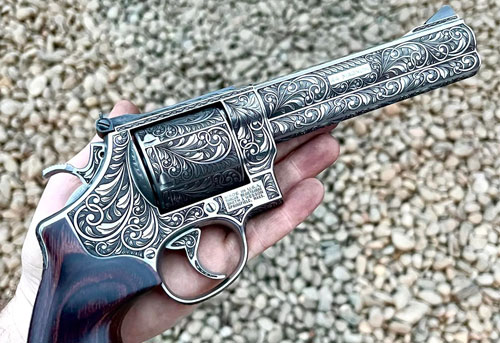
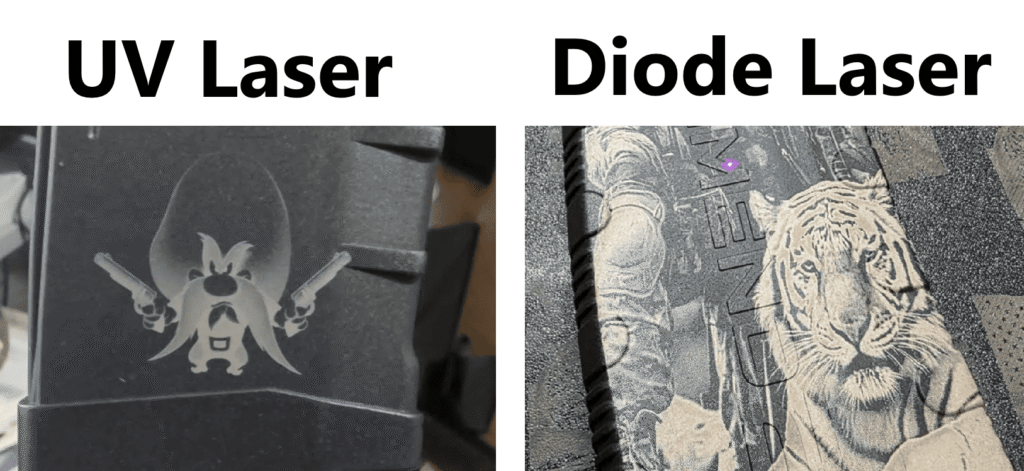
Diode Laser: Capable but Less Precise
Diode lasers can mark PMAG, making them a workable option for basic projects, especially if you already own one.
However, their typically larger laser spot makes it harder to produce fine details, sharp edges, and smooth gradient effects compared with UV or Fiber lasers.
For greater precision and more consistent marking quality, UV and Fiber systems are worth considering.
IR Laser: Capable but Slow
IR lasers can produce visible marks on compatible PMAG surfaces, but processing speed is their main limitation.
Based on user-reported examples, engraving one design can take 15–30 minutes per side, making IR suitable for hobby projects but less practical for repetitive jobs or larger production volumes.
IR can get the job done, but if you prioritize faster processing, finer details, and broader application flexibility, UV and Fiber laser systems may be better alternatives.
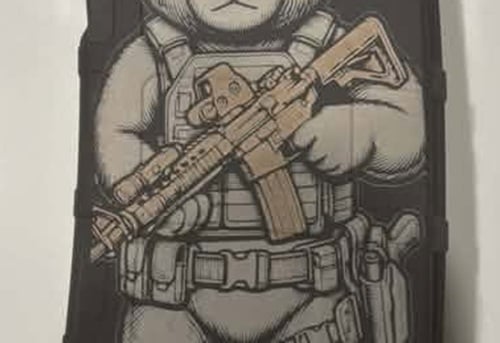
CO₂ Laser: Paint Needed for a Visible Design
CO₂ lasers typically operate at approximately 10,600 nm, significantly different from the wavelengths used by UV and fiber laser systems.
Their interaction with polymer materials is primarily thermal. This means a CO₂ laser may cause PMAG surfaces to melt rather than produce a clean, well-defined mark, making direct engraving challenging.
For a visable laser mark, you can try the two following methods:
Method 1: Engraving Followed by Paint Filling
1.Use the laser to engrave the desired design.
2.Apply paint to the engraved areas.
3.The added color enhances the visibility and contrast of the design.
Method 2: Reverse Engraving
1.Apply a contrasting coating to the PMAG surface.
2.Use the laser to remove selected areas of the coating.
3.The exposed underlying surface creates the final design.
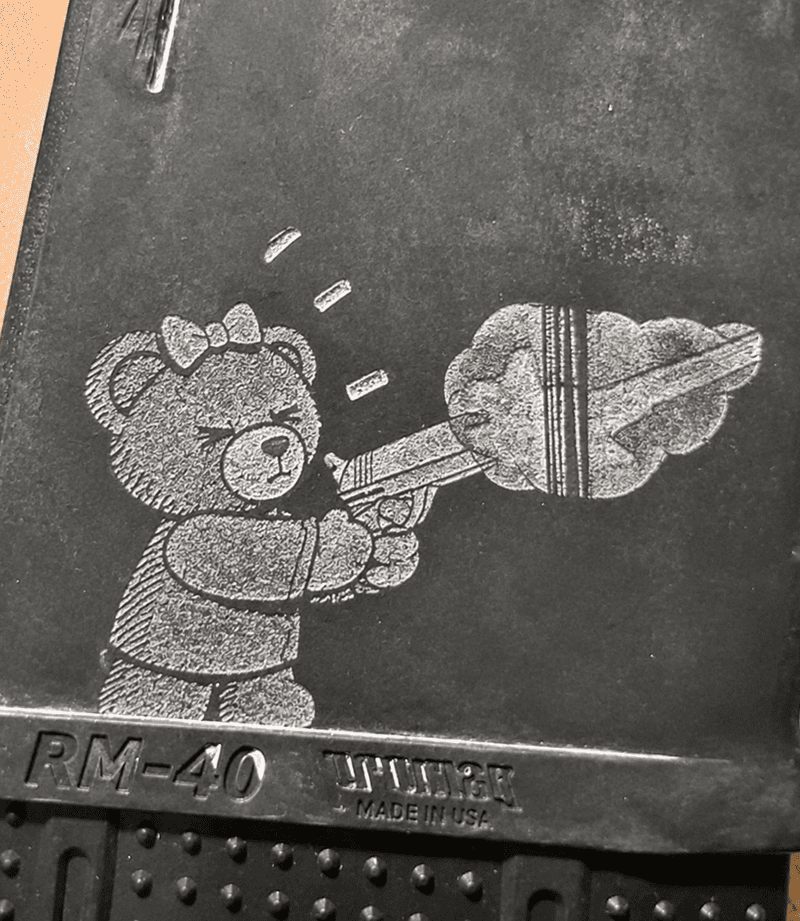
In both methods, the visible result comes from the combination of laser processing and added color, rather than direct laser-induced color change alone.
UV, IR, Diode, CO₂, and Fiber Laser for PMAG: Which one Should You Choose?
Here is a quick comparison of different laser technologies and their reported PMAG marking applications.
| Laser Type | PMAG Marking Applications | Main Consideration |
|---|---|---|
| UV | Fine-detail marking and high-contrast surface designs | Best suited for precision surface marking rather than deep metal engraving |
| MOPA Fiber | PMAG marking, metal engraving, and color marking on compatible metals | Higher cost than conventional fiber lasers |
| Conventional Fiber | PMAG marking and general metal marking and engraving | Limited laser control than MOPA fiber laser |
| Diode & IR Diode | Capable of marking PMAG with suitable settings | Generally slower processing and more limited fine-detail capabilities, depending on the system |
| CO₂ | PMAG designs using paint filling or coating-removal techniques | Direct marking can be challenging due to thermal interaction with the polymer |
For PMAG marking alone, UV, fiber, diode, and IR laser systems are all worth considering, depending on the desired marking effect and processing requirements. CO₂ lasers can be used with paint-based finishing methods.
For workshops looking to expand beyond polymer marking into metal personalization, MOPA fiber laser engravers offer greater versatility, combining polymer marking capabilities with advanced metal-marking effects.
Final Takeaway: Choose the Right Laser for Your PMAG Projects
PMAG marking is not a one-laser-fits-all application.
• Choose UV if fine details, high-contrast surface marking, and minimal thermal impact are your priorities. Its short wavelength makes it a compelling option for precision marking on compatible plastics.
• Choose Fiber if you want a versatile machine for PMAG projects as well as a broader range of metal engraving applications. It is also the most frequently recommended technology in our ommunity research.
• Diode, IR, and CO₂ can all play a role in PMAG-related projects, but you may need to compromise on detail reproduction, processing speed, or finishing methods depending on the technology and application.
Ultimately, choosing the right laser is about more than completing one engraving project. It’s about achieving the results you want today while building the capabilities and business opportunities you want tomorrow.
Ready to find the right laser for your next project?
Explore ComMarker’s range of UV and Fiber laser engravers to find a machine that matches your materials, marking requirements, and business ambitions.
Frequently Asked Questions
Do you need a MOPA fiber laser for PMAG?
Not necessarily. Community reports include successful results using conventional fiber and low-power IR systems. MOPA provides additional pulse control, but it is not a universal requirement.
Can a UV laser mark colors on PMAG like fiber lasers?
Yes. A UV laser can also produce tan, white, and grey marks on PMAG. The results depend on the material’s formulation, additives, and processing conditions.
Is a higher-wattage laser always better?
No. Higher power can improve processing speed in suitable applications, but it cannot compensate for an incompatible wavelength or material response.