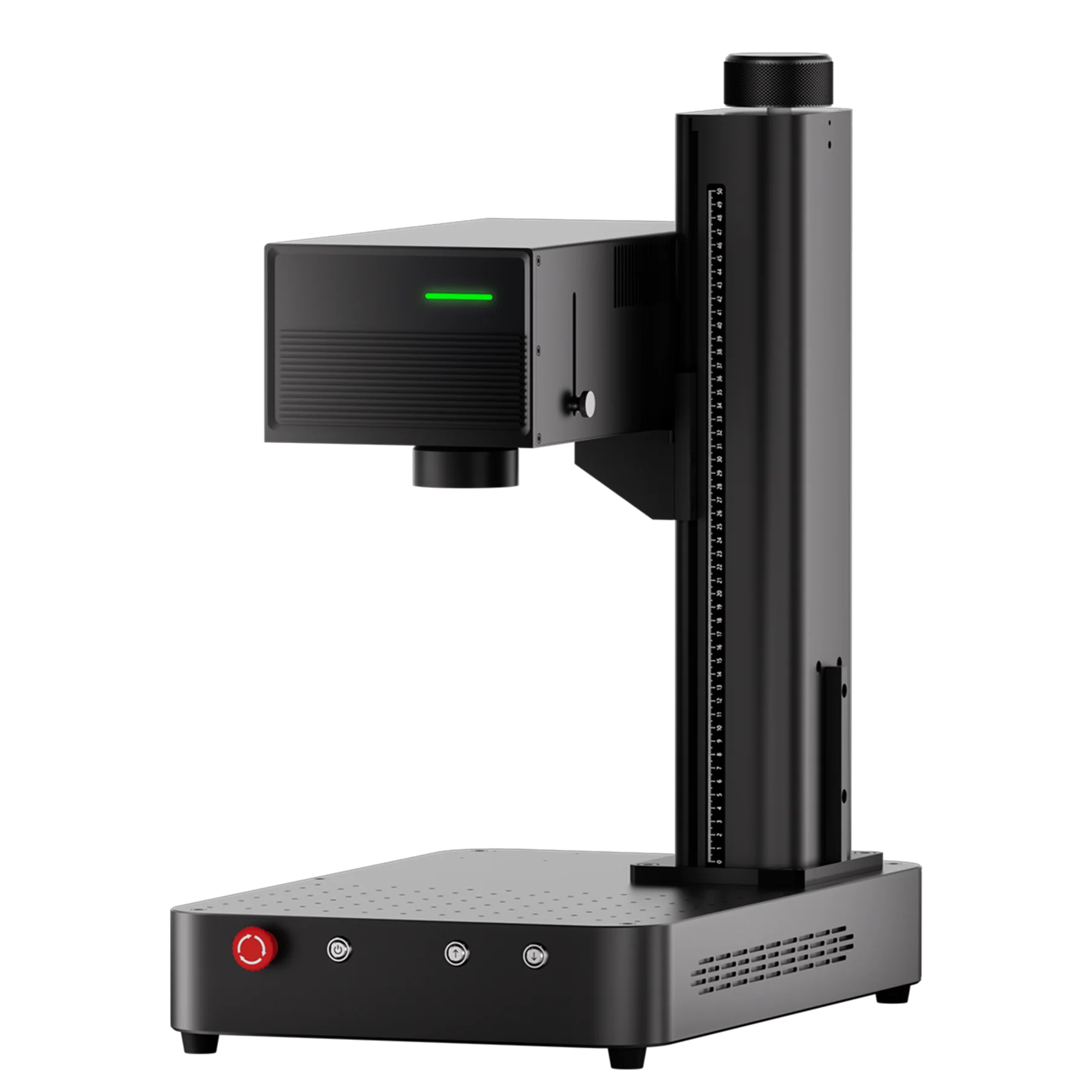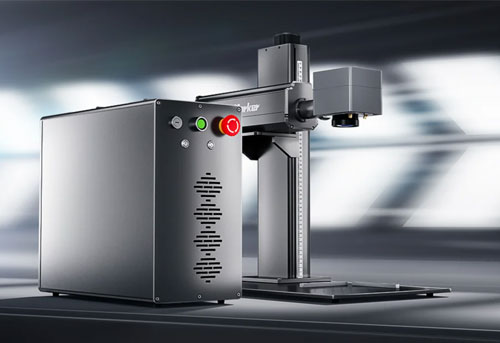
Fiber lasers are widely recognized for their precision and efficiency in metal marking and engraving. However, when it comes to glass processing, their performance is limited. This guide explains whether fiber lasers can engrave or cut glass, what types of glass they can process, and why UV lasers are often a better choice for glass applications.
Understanding Fiber Lasers
Fiber lasers generate laser beams through optical fibers doped with rare-earth elements such as ytterbium. Most fiber laser engravers operate at around 1064nm, a wavelength highly absorbed by metals, making them ideal for applications such as stainless steel engraving, deep metal marking, and industrial part identification.
However, transparent materials like glass interact differently with this wavelength, limiting direct glass engraving performance.
Can Fiber Lasers Engrave Glass?
Traditionally, fiber lasers were considered unsuitable for direct glass engraving because the common 1064nm wavelength is optimized for metals rather than transparent materials.
However, advances in high-peak-power fiber laser technology have expanded their capabilities. Modern high-energy MOPA fiber lasers can process certain glass applications, including specialized engraving and drilling tasks, by delivering extremely high peak power and concentrated energy.
For standard fiber laser engravers used for metal marking, however, glass processing remains limited and requires specific laser parameters, power levels, and material conditions.
The Challenges of Cutting Glass with Fiber Lasers
1.Wavelength Compatibility: The wavelength of fiber lasers (1,064 nm) is not as readily absorbed by glass as it is by metals. Glass tends to have a lower absorption rate at this wavelength, making the cutting process less efficient and potentially leading to incomplete or uneven cuts.
2.Thermal Conductivity: Glass has a lower thermal conductivity compared to metals, which can cause localized heating and thermal stress during the cutting process. This can result in cracks or fractures, making it difficult to achieve clean and precise cuts.
3.Glass Material Properties: The inherent properties of glass, such as brittleness and susceptibility to thermal shock, add to the complexity of cutting with fiber lasers. The high-intensity laser beam can cause rapid heating and cooling, leading to stress points that can crack or shatter the glass.
The Latest Breakthrough in Laser Technology
In recent years, fiber laser technology has made remarkable strides, now enabling efficient, high‑quality cutting of glass.
The core breakthrough lies in two key factors: ultra‑high peak power and exceptional beam quality.
Glass absorbs common infrared wavelengths (e.g., 1064 nm) poorly, so conventional lasers struggle to process it.
Modern fiber lasers deliver peak powers far beyond previous limits. This is sufficient to instantly vaporise the material at the focal spot, making effective removal possible (drilling glass typically requires at least 40 kW, while surface etching demands over 100 kW).
At the same time, a near‑diffraction‑limited beam (M² < 1.3) focuses the energy into an extremely small spot, not only boosting efficiency but also minimising the heat‑affected zone and effectively suppressing edge chipping and micro‑cracks—resulting in clean, smooth cut surfaces.
For users who combine glass and metal engraving in their workflow, this means an up coming up grade is right at the gate.
Types of Glass and Fiber Laser Capabilities
- Tempered Glass:
- Description: Tempered glass is a type of safety glass that has been heat-treated to increase its strength. It is commonly used in car windows, shower doors, and architectural applications.
- Challenges: The enhanced strength and thermal resistance of tempered glass make it particularly challenging to cut with fiber lasers. The rapid heating from the laser can cause the glass to shatter, making this process unsuitable for most fiber laser systems.
- Laminated Glass:
- Description: Laminated glass consists of multiple layers of glass with an interlayer, usually made of polyvinyl butyral (PVB). This type of glass is used in windshields and skylights for its safety and sound insulation properties.
- Challenges: The multi-layer structure of laminated glass presents a significant challenge for fiber lasers. The laser may cut through the outer glass layers but struggle with the interlayer, leading to incomplete or jagged cuts. Additionally, the laser’s interaction with the interlayer can cause delamination, compromising the structural integrity of the glass.
- Float Glass:
- Description: Float glass is a flat, smooth type of glass used in windows, mirrors, and picture frames. It is one of the most commonly produced types of glass.
- Challenges: While fiber lasers can cut float glass, the process requires careful calibration to avoid imperfections such as chipping or cracking. The laser’s intensity must be finely tuned to ensure a smooth cut without overheating the glass.
- Glass with Coatings:
- Description: Glass with special coatings, such as anti-reflective or low-emissivity coatings, is used in various applications, including architectural glazing and display screens.
- Challenges: Coatings can interfere with the laser cutting process, leading to inconsistent cuts or damage to the glass. The coating material may reflect or absorb the laser beam differently than the glass itself, complicating the cutting process.
Why UV Laser Is Better for Glass Engraving
While fiber lasers are optimized for metals, UV lasers are designed for precision applications involving delicate materials.
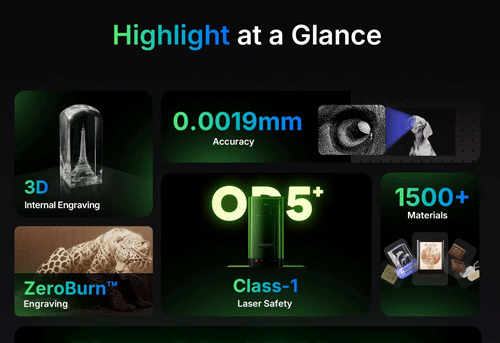
355nm wavelength
UV lasers operate at a 355nm wavelength, which is highly suitable for precise glass marking.
Cold processing
The lower heat impact helps reduce cracking and deformation.
Fine details
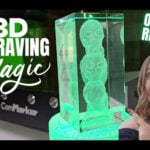
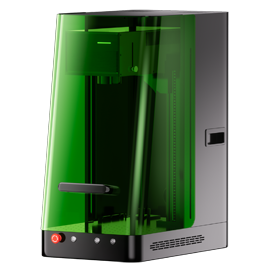
ComMarker Omni X UV lasers engraves with 0.0019 mm spot size, capable of creating 16K HD detailed logos, text, photos, and decorative patterns on glass products.
Laser Engrave Glass Guide: How to Mark, 3D Engrave & Cut
Fiber Laser vs UV Laser for Glass
| Feature | Fiber Laser | UV Laser |
|---|---|---|
| Best Material | Metal | Glass, plastic, delicate materials |
| Wavelength | 1064nm | 355nm |
| Glass Engraving | Limited | Excellent |
| Heat Impact | Higher | Lower |
| Fine Detail | Good | Excellent |
Conclusion
Fiber lasers remain one of the best choices for metal engraving and industrial marking. However, for direct glass engraving, UV laser technology provides better precision, cleaner results, and more reliable performance.
Can Fiber Lasers Cut Glass?
Fiber lasers are widely recognized for their precision …