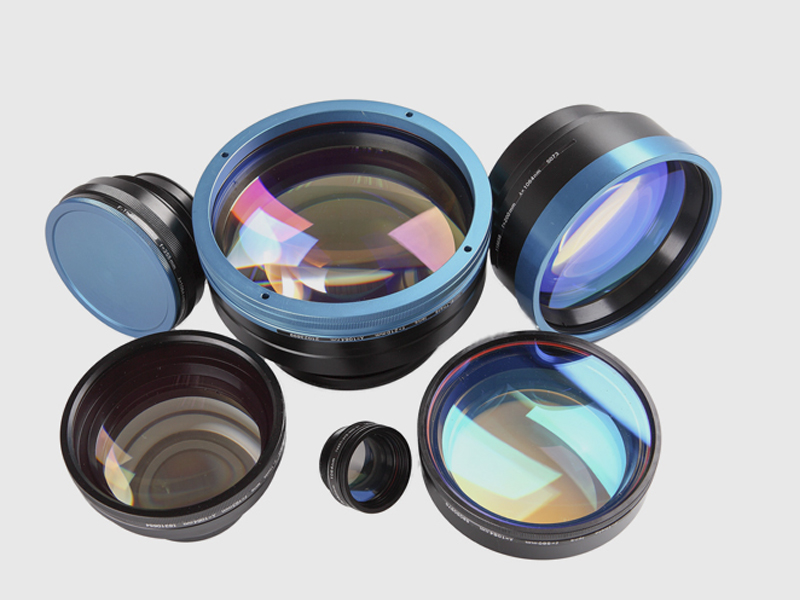
If you’re buying a fiber laser engraver, you’ve probably wondered:“If a 300 × 300 mm lens gives me a larger engraving area, why would I ever need smaller ones?”
The truth is that different lens changes what your laser does best.
Professional laser users often own multiple field lenses because each one is designed for a different balance of working area, laser spot size, energy density, and application. In this guide, we use real tests results and examples to help you get the best performance from your laser.
How Field Lenses Affect Laser Engraving Results
On a galvo laser engraver, the laser beam passes through several components before reaching the material:
Laser Source → Galvo Scanner →Field Lens → Material
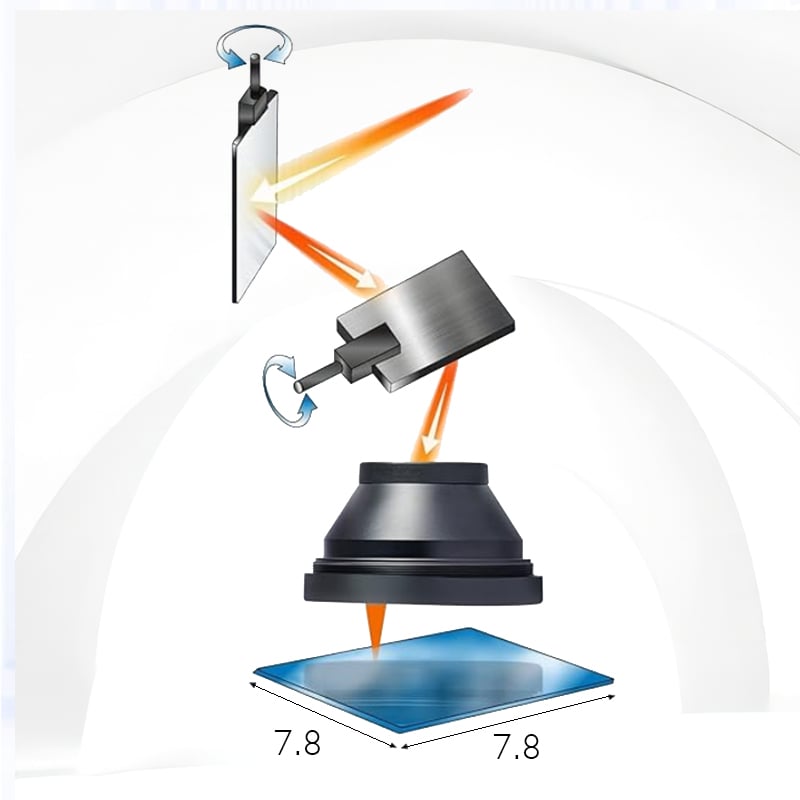
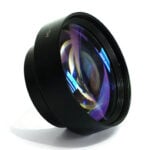
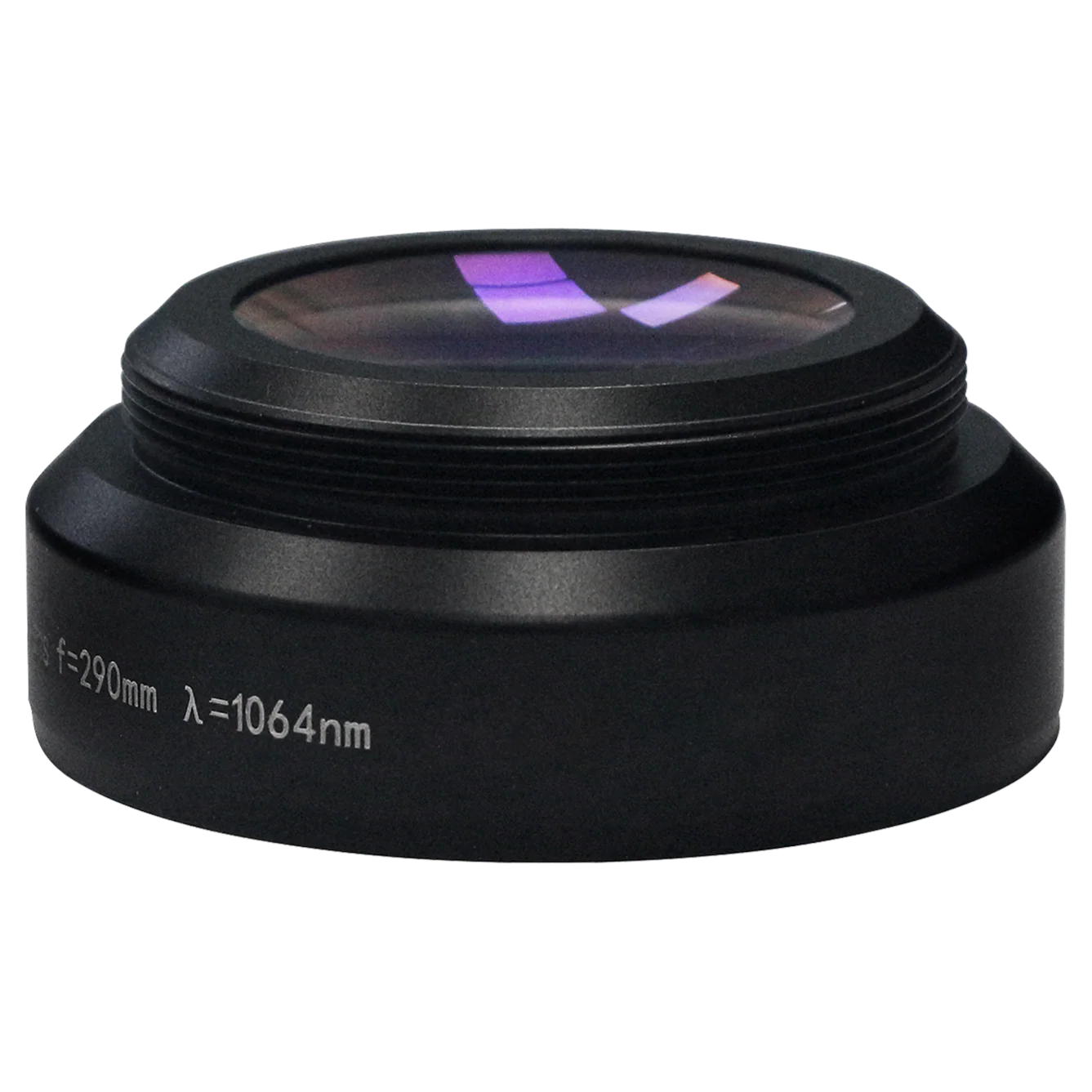
The field lens
• Focuses the laser onto a flat working plane
• Maintains consistent focus across the entire engraving area
• Determines the maximum marking area
• Controls the laser spot size
• Influences engraving precision and energy density
In other words, replacing a field lens changes how efficiently that laser energy is delivered to the workpiece. The focal length of an F-theta lens directly affects scan field size, spot size, working distance, and power density, making lens selection a balance rather than searching for the “biggest” option.
Why Bigger F-theta lens Isn’t Always Better
Many beginners assume: Bigger Lens = Better Machine
Think about camera lenses. A photographer doesn’t use a single lens for portraits, sports, wildlife, and macro photography. Each lens is designed for a different purpose.
Laser engraving works exactly the same way. Every field lens is a compromise.
|
Larger Lens Gives You |
But You Trade Away |
|
Larger engraving area |
Lower energy density |
|
Longer working distance |
Larger laser spot |
|
Better for oversized parts |
Lower engraving resolution |
A jewelry maker may switch to a 70 × 70 mm lens for microscopic detail.
A manufacturer may install a 300 × 300 mm lens to engrave large machine panels in a single operation.
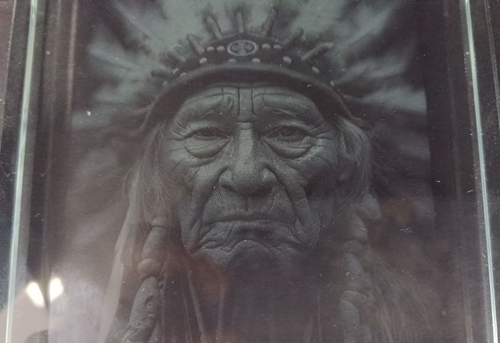
The ComMarker Omni X UV laser uses the SuperVision™ 70mm Field Lens for precise internal glass engraving.
How Lens Size Changes Laser Performance
Professional users rarely own only one field lens.
Changing a field lens costs far less than buying a second laser while expanding what one machine can do.
1. Smaller Lenses Produce Finer Detail
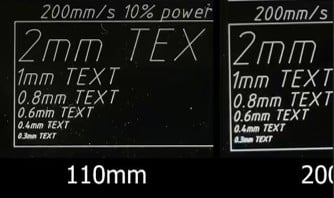
The most noticeable advantage of a smaller field lens is engraving resolution.
The focused spot diameter increases with focal length, so larger scan fields naturally sacrifice some resolution.
A 70 × 70 mm or 110 × 110 mm field lens focuses the laser into a much smaller laser spot size than a 200 × 200 mm or 300 × 300 mm lens.
That smaller spot translates directly into:
• Sharper text
• Cleaner QR codes
• Higher-resolution photo engraving
• More accurate logos
• Better color marking consistency
• Improved engraving of tiny features
Application:
For jewelers, electronics manufacturers, medical device suppliers, PCB marking, watch components, or intricate artwork, a smaller laser spot from a 70 mm lens produces noticeably cleaner edges and finer detail.
2. Why Small Lenses Feel Like a More Powerful Laser
One of the biggest advantages of a smaller field lens is higher energy density.
A smaller lens concentrates the same laser energy into a smaller spot. The result is faster material removal and deeper engraving.
This makes smaller field lenses ideal for:
• Material cutting
• Deep engraving
For example, on the ComMarker Omni X UV, the 70 mm SuperVision™ Field Lens delivers approximately 2× stronger engraving performance than the 150 mm lens when using the same laser source on demanding materials.
Real Test: ComMarker Titan 100W MOPA Fiber Laser Engraver
Using the same engraving parameters for laser engrave aluminum: Laser Power: 50%; Speed: 200 mm/s; Frequency: 50 kHz; Line Spacing: 0.03 mm; Passes: 30
|
Field Lens |
Engraving Depth |
|
110 × 110 mm |
1.13 mm |
|
200 × 200 mm |
0.35 mm |
This means a smaller 110mm lens delivers over 300% deeper engraving under identical parameters, cutting your cycle times significantly for deep metal jobs
3. Larger Field Lenses Improve Productivity
Of course, large field lenses have their own advantages.
Instead of using split marking in LightBurn, larger lens allows you to finish bigger tasks or batch jobs with larger laser engraving working area at once.
For example:
|
70 ×70 /110 × 110 mm |
150 × 150/ 250×250/ 300 × 300 mm |
|
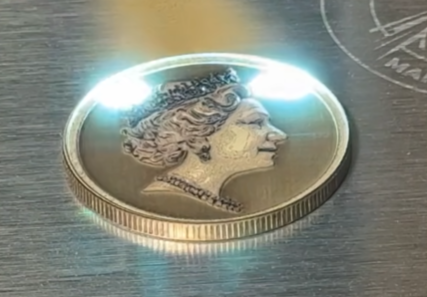
Small logos Coins Jewelry |
Large signs/artwork Laptop covers Batch keychain |

4. Some Applications Require a Specific Lens
Different field lenses are designed for different applications.
UV Internal Glass Laser Engraving
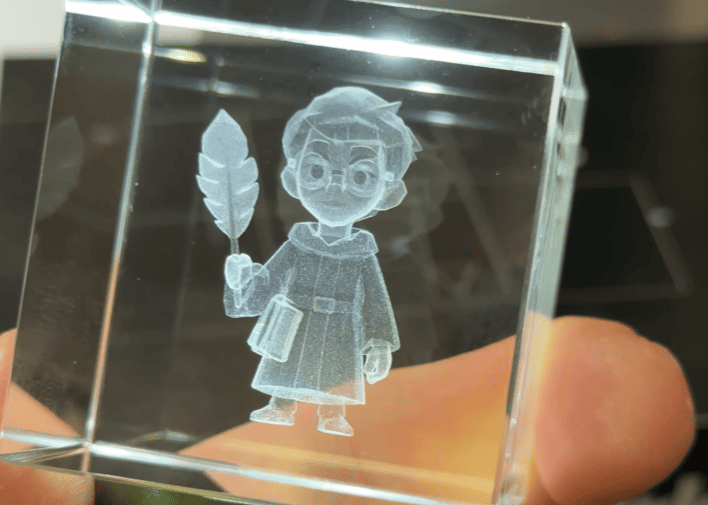
Unlike surface engraving, 3D subsurface engraving requires an extremely small and consistent laser spot to create precise fracture points inside the glass.
To cover this requirement, ComMarker developed the SuperVision™ 70 mm Field Lens for ComMarker Omni X UV, using four lens elements to maintain high image quality while expanding usable 3D engraving volume.
|
SuperVision™ 70 mm lens |
Standard 70 mm lens |
|
|
Lens Elements |
4 |
2 |
|
Scan Field |
70 × 70 mm |
70 × 70 mm |
|
3D Engraving Volume |
70 × 70 × 170 mm |
45 × 45 × 130 mm |
|
Best For |
Large, high-detail crystal engraving |
Standard crystal engraving |
So How to choose the Right Lens Size for Your Laser Machine
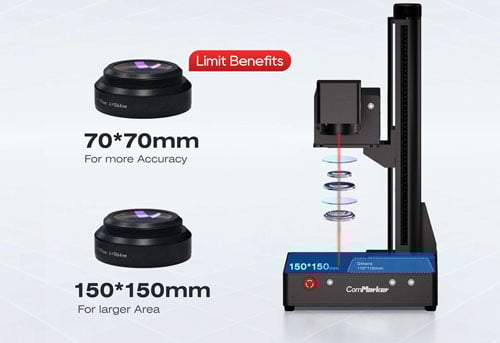
ComMarker offers interchangeable field lenses from 70 mm to 300 mm across its UV and fiber laser lineup, allowing users to upgrade applications without replacing the entire machine.
| Field Lens | Best Applications by Lens Size | Precision | Energy Density | Working Area | Compatible ComMarker Models |
| 70 × 70 mm | Jewelry, micro engraving, QR codes, UV internal glass engraving | ★★★★★ | ★★★★★ | ★ | Omni 1 / Omni X / Omni XE/B4 / B6 / B6 MOPA/Titan 60W |
| 110 × 110 mm | General metal engraving, logos, knives, tools | ★★★★★ | ★★★★★ | ★★ | Omni 1/B4 / B6 / B6 MOPA/Titan 60W |
| 150 × 150 mm | Nameplates, industrial parts, rotary engraving | ★★★★ | ★★★★ | ★★★ | Omni 1 / Omni X / Omni XE/B4 / B6 / B6 MOPA/Titan 60W |
| 200 × 200 mm | Larger products, signs, production work | ★★★★ | ★★★ | ★★★★ | Omni 1 (10W)/B4/B6 / B6 MOPA/Titan 60W/COX 40W |
| 250 × 250 mm | Large-format engraving, oversized artwork | ★★★ | ★★ | ★★★★ | Omni X / Omni XE (12W) |
| 300 × 300 mm | Large panels, machine covers, batch production | ★★★ | ★★ | ★★★★★ | Omni 1 (10W)B4 (100W)B6 MOPA (60W)Titan |
| 140 × 140 mm (CO2) | Paper, wood, leather, acrylic marking | ★★★★ | ★★★★ | ★★ | COX 40W |
Before Buying a Laser Engraver Lens
Before ordering a new field lens, check these two things.
• Laser Power
A larger field lens creates a larger laser spot, reducing power density. If you plan to engrave large areas while maintaining depth, make sure your laser has enough power. For example, the ComMarker Omni X 6W UV is recommended for field lenses up to 150 × 150 mm. The 12W Omni X supports field lenses up to 250 × 250 mm, providing enough laser power to maintain practical engraving performance over the larger scan field.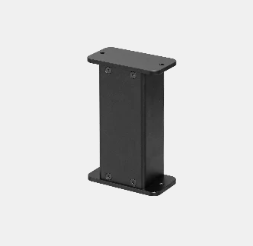
• Machine Height
Larger field lenses have longer focal lengths and require a longer working distance. Before purchasing, verify that your machine’s Z-axis or column has enough travel to reach the correct focus position. If additional clearance is needed, consider installing a column riser.
After Installing a New Lens
Replacing a field lens also means updating your machine setup.
Before starting your next project, complete this quick checklist:
• Update the field size and lens correction file in your engraving software.
• fine-tune your parameters.
|
If You Install… |
Recommended Adjustments |
|
Larger field lens |
Lower engraving speed, increase power (if available), add more passes, or reduce line spacing to compensate for lower power density. |
|
Smaller field lens |
Increase engraving speed where appropriate, reduce passes, or lower power to avoid overburning caused by the higher energy density. |
Tip: Every field lens has a different spot size and power density. Use your previous material settings as a starting point, then fine-tune them for the new lens. You can also compare settings in ComMarker Laser Engraving Parameter Library.

Lens and Laser Machine Recommendation for Laser Engraving Business
|
Your Application |
Recommended Lens |
Recommended Machine |
|
Jewelry, QR codes, micro engraving |
70 × 70 mm |
ComMarker Omni X UV laser engraver |
|
General metal engraving |
110 × 110 mm |
ComMarker B6 MOPA Fiber laser engraver |
|
Deep metal engraving |
110 × 110 mm |
ComMarker Titan 100W MOPA Fiber laser engraver |
|
Large panels & production |
200 × 200 mm / 300 × 300 mm |
ComMarker Titan 100W / Omni X 12W |
Ready to expand what your laser can do with more laser engraver accessories? Explore more about ComMarker laser engravers for the best combination for your application.