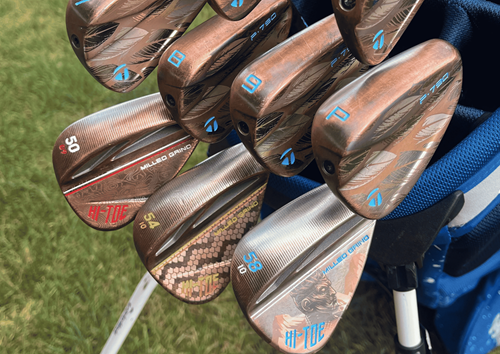
Golf club personalization is a high-value laser engraving application that combines precision, durability, and premium aesthetics. It is widely used for custom golf gifts, player identification, tournament awards, and branded merchandise.
This guide explains how to laser engrave golf clubs safely, what materials work best, and which laser settings and machines are commonly used in professional customization.
Which Laser Is Best for Golf Club Customization?
Most golf club heads are made from stainless steel, carbon steel, or titanium, which makes fiber lasers the most suitable engraving solution.
Fiber lasers provide clean, permanent markings on metal surfaces. For titanium clubs, MOPA fiber lasers can also produce color marking effects that are not possible with standard fiber systems.
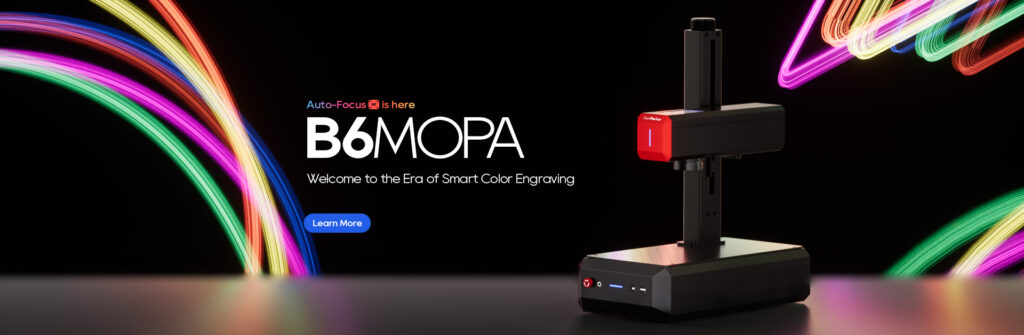
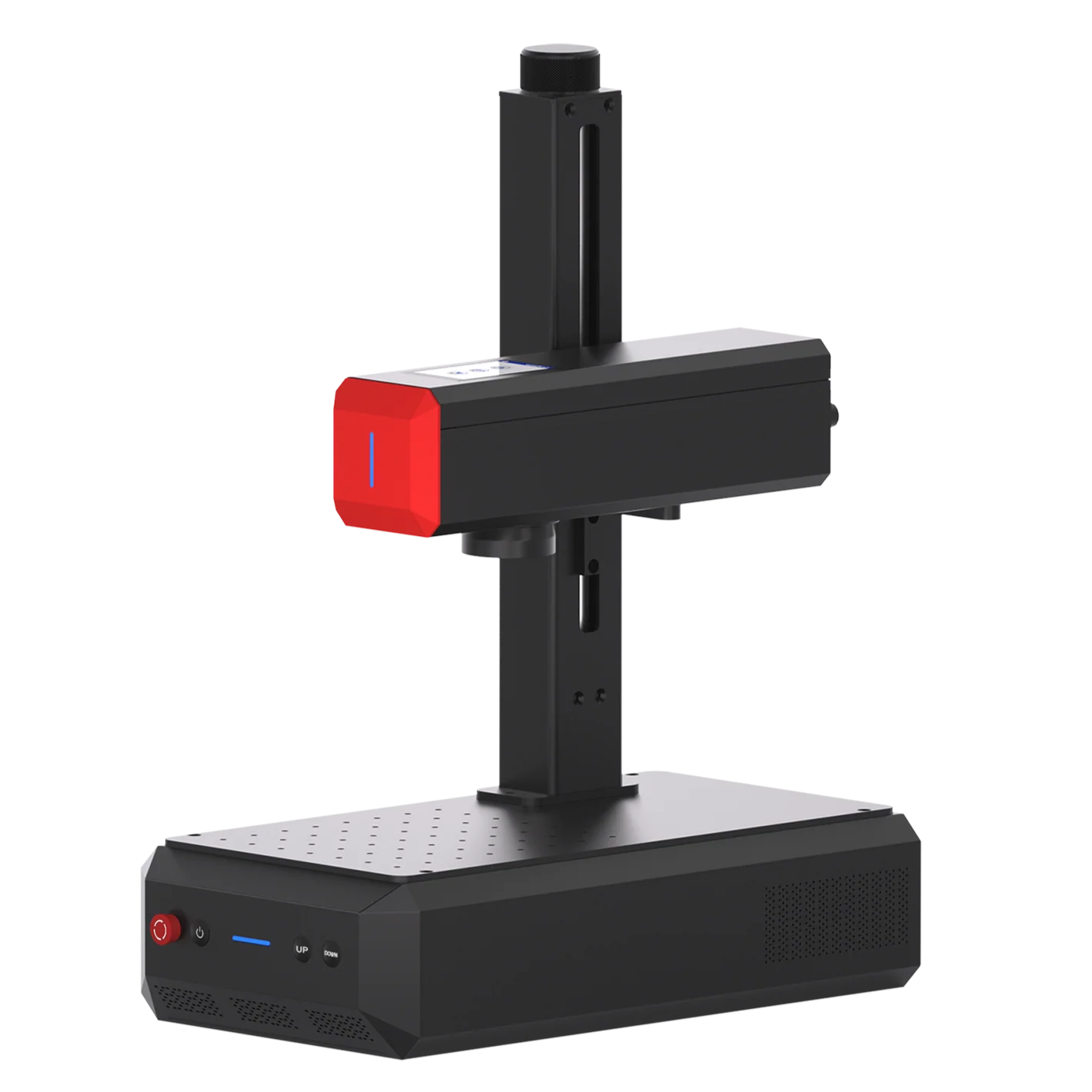
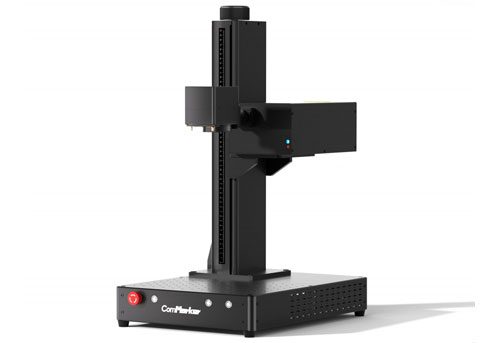
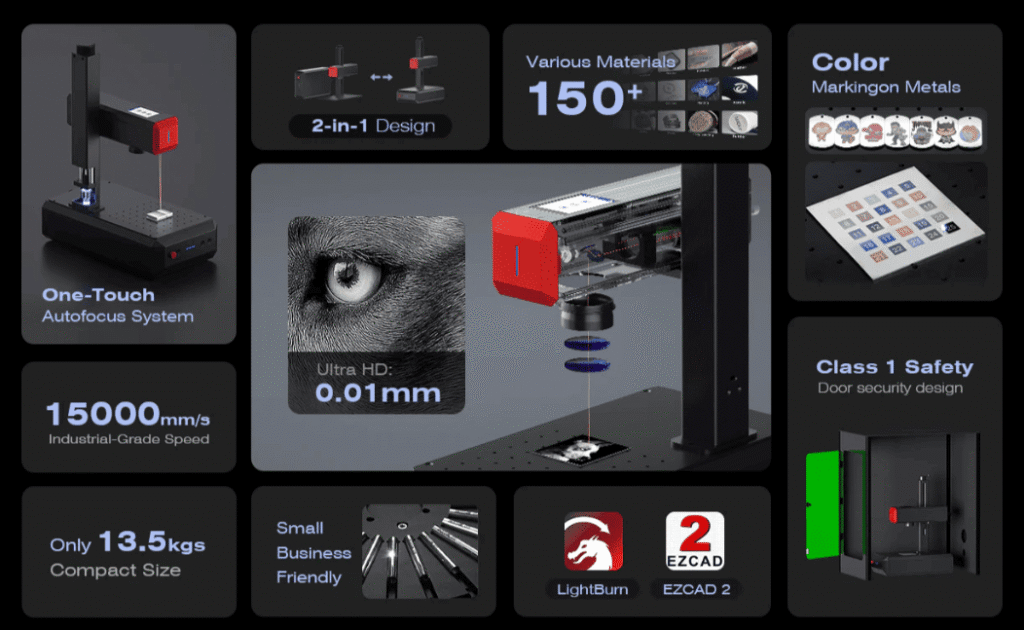
For users who want a single machine capable of handling surface marking, deep engraving, and titanium color marking, a 60W ComMarker B6 MOPA fiber laser engraver offers the flexibility across different engraving effects.
For detailed machine selection, see our Best Laser Engraver for Golf guide.
Where Can You Laser Engrave a Golf Club?
Laser engraving should only be applied to non-impact areas of the club to maintain performance and compliance.
Common engraving locations include:
Sole: Large visible area suitable for logos and decorative designs.
Back Cavity: Ideal for names, text, and paint-filled artwork.
Hosel: Used for initials, serial numbers, and dates.
Shaft: Suitable for identification markings and branding.
Material Considerations for Golf Club Engraving
Different materials respond differently to laser engraving and require different processing approaches.
Carbon Steel: Easy to engrave with strong contrast but prone to rust after coating removal, requiring oiling or paint fill for protection.
Titanium: Used in drivers and supports MOPA color marking. However, thin-walled structures are sensitive to heat, so surface marking is preferred over deep engraving.
Stainless Steel: The most stable engraving material with strong corrosion resistance and consistent results. Highly reflective finishes may require cleaning or marking spray to ensure proper absorption.
Common Golf Club Laser Engraving Effects
Surface Marking
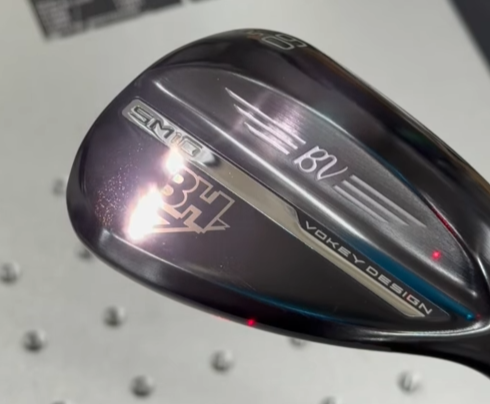
Surface marking is the simplest and fastest personalization method. It creates a permanent mark on the metal without removing significant material.
This effect is commonly used for names, initials, serial numbers, and small logos.
How it works:
- Prepare the artwork in LightBurn, Illustrator, or CorelDRAW.
- Clean the club head thoroughly to remove oil and residue.
- Secure the club and focus the laser.
- Use suitable marking parameters to create contrast.
- Clean the engraved area after processing.
Best for: Stainless steel, titanium, and other metal club heads.
Deep Engraving
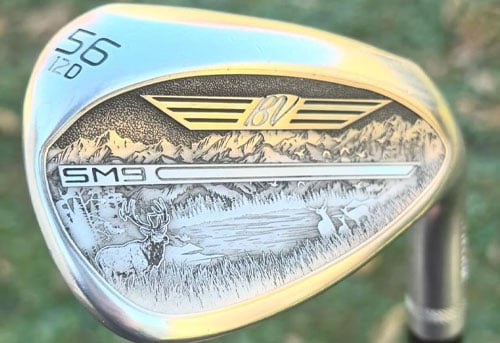
3D Laser engraving removes material layer by layer to create visible depth and texture.
This effect is often used for premium custom clubs, commemorative pieces, company logos, and paint-filled artwork.
How it works:
- Convert the artwork into vectors.
- Secure the club head and maintain proper focus.
- Use multiple engraving passes to gradually increase depth.
- Clean debris during processing.
- Polish and finish the engraved area if desired.
Best for: Stainless steel, carbon steel, and certain titanium club heads.
MOPA Color Marking
MOPA color marking is one of the most visually impressive golf club customization techniques.
Instead of creating depth, the laser precisely controls heat to generate different oxide layers on the metal surface, producing colors such as gold, blue, purple, and rainbow-like effects.
How it works:
- Perform color tests on the same material.
- Assign separate settings for different colors.
- Clean the metal surface carefully.
- Run the color marking process.
- Preserve the surface without polishing.
Best for: Titanium and selected stainless steel surfaces.
Coating or Paint Removal
Many golf clubs feature painted or coated surfaces. Laser ablation can selectively remove the coating while leaving the underlying metal intact.
This technique is useful for restoring worn clubs or creating high-contrast custom designs.
How it works:
- Import the artwork.
- Use low-power, high-speed settings.
- Remove only the top coating layer.
- Clean the surface after processing.
Best for: Painted logos, coated club heads, and restoration projects.
Paint Fill After Engraving
Paint filling is one of the most popular finishing techniques in golf club customization.
After engraving, paint is applied into the recessed areas to create stronger contrast and a more professional appearance.
The process involves engraving the design, cleaning the grooves, applying paint, allowing it to cure, and removing excess material from the surface.
Best for: Putters, wedges, irons, and decorative deep engraving projects.
Popular Golf Club Personalization Ideas
The most successful golf club engraving projects focus on meaningful personalization rather than complex artwork.
Popular examples include player names, initials, monograms, golf nicknames, lucky numbers, company branding, tournament awards, retirement gifts, and commemorative messages.
For premium clubs, deep engraving combined with paint fill can create a highly customized appearance. Titanium putters and specialty clubs can also benefit from color marking to achieve a truly unique finish.
Professional Pricing Reference for Laser Golf Club Customization
If you are offering engraving services, or want to start a golf club laser engraving business, pricing typically depends on design complexity, engraving depth, and finishing requirements such as paint fill or color marking.
• Basic (about $40–$75): Simple text or a small existing brand icon engraved in one area only.
• Standard (about $100–$150): More complex line graphics, multi-line text layouts, and single-color or multi-color paint fill.
• Complex / Full Coverage ($150–$250+): Full-surface camo or geometric designs, or multi-layer deep relief engraving with fire-burned or laser-color effects.
Important Rule: Never Engrave the Clubface
Laser engraving should be limited to non-impact areas such as the sole, back cavity, hosel, or shaft.
The clubface and groove area should never be engraved because modifying these surfaces may affect ball performance and could create equipment compliance issues.
Protecting the functional areas of the club ensures that personalization remains cosmetic rather than performance altering.
Final Takeaway
Golf club laser engraving enables a wide range of customization options, from simple identification marks to deep engraving, paint-filled designs, coating removal, and titanium color marking.
It is widely used in personalized golf gifts, sports branding, and professional engraving services.
Fiber laser systems remain the most reliable solution for metal golf clubs, while MOPA fiber lasers enable advanced color effects and multi-style engraving capabilities for premium applications.