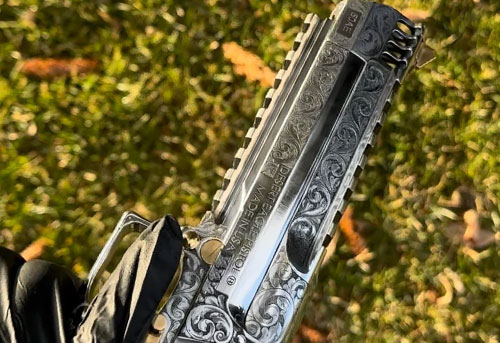
Want to print logos, photos, QR codes, or even color designs on metal?
Yes, laser engraving can do all of that.
Modern laser engravers can permanently mark, etch, or deeply engrave metal with incredible precision. From black logos on stainless steel to color marking on titanium and full-wrap tumbler engraving, different types of lasers can create very different results.
In this guide, we’ll explain:
• how laser engraving on metal actually works
• which lasers can print metal
• what effects different machines can create
• and how to choose the right laser for your projects
Why Laser Engraving Dominates Metal Marking
Laser engraving is the #1 method for permanent metal marking on stainless steel, aluminum, brass, and titanium.
How Laser Energy Changes the Metal Surface
Once the laser beam hits the metal surface, the metal begins absorbing energy, which allowing the laser to:
• oxidize the surface (color marking)
• melt microscopic layers (etching)
• vaporize material for deep engraving
Why Laser Engraving Metal Is More Precise Than Traditional Engraving
Unlike mechanical engraving, metal laser printing offers:
• Micro-Precision: 0.001mm spot size (e.g., ComMarker Omni 1) for intricate serial numbers, logos, or artwork.
• Zero Contact: No tool wear, burrs, or material distortion.
• Industrial Durability: Resists chemicals, heat, and abrasion.
• Speed: Engrave a custom knife in 60 seconds or 100 ID tags/hour.
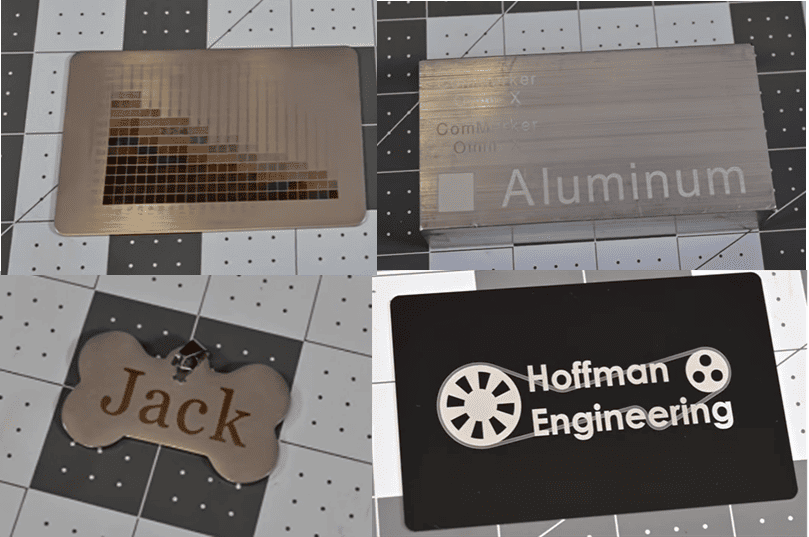
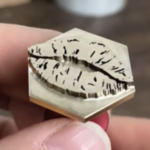
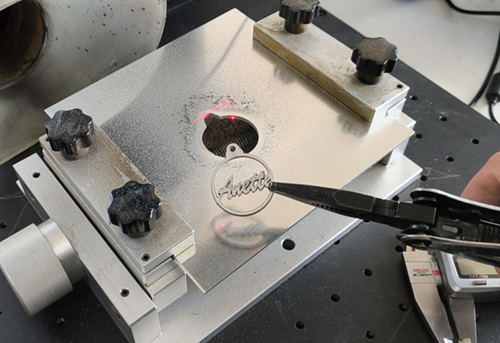
(Real Laser Printing Results on Metal)
4 Critical Factors When Choosing a Metal Laser Engraver
1. Laser Type
| Type | Best For | Avoid If You Need… |
|---|---|---|
| Fiber | Raw metals (steel, Ti) | Super Detailed engraving |
| MOPA | Color marking on stainless | Basic etching only |
| UV | Coated metals, jewelry | Deep engraving (>0.2mm) |
2. Power Requirements
20W–50W: Marking/text (e.g., serial numbers)
60W–100W+: Deep engraving (0.1–0.5mm) or cutting
<5W UV: Surface marks on plated/coated metals
Hot Tip: Need deep engraving? Prioritize pulse energy over wattage. A 50W MOPA often outperforms 100W non-MOPA lasers.
3. Work Area Size
110×110mm: Jewelry, small tools
300×300mm+: Laser engrave Firearms, laser cutting metal industrial plates
4. Pulse Control (MOPA Tech)
Essential for color marking stainless steel (black/gold/blue) by adjusting frequency and pulse width.
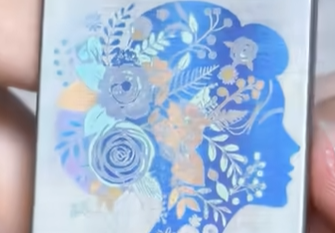
5. Laser Engraving Precision
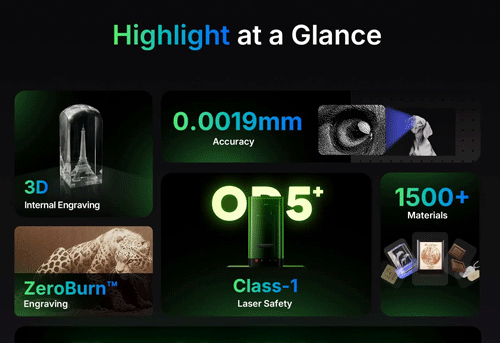
UV laser engravers offers a 0.0019mm laser spot and offer 16K HD precision
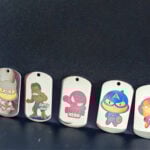
While Fiber laser engraver have 0.01mm laser spot. If you hope to laser engrave photo on metal, a UV laser engraver will give you better result.
| UV Laser Engraver | Fiber Laser Engraver |
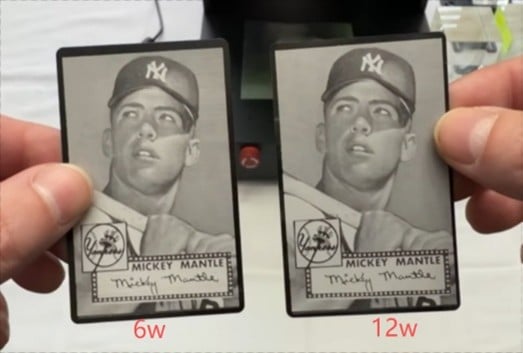 |
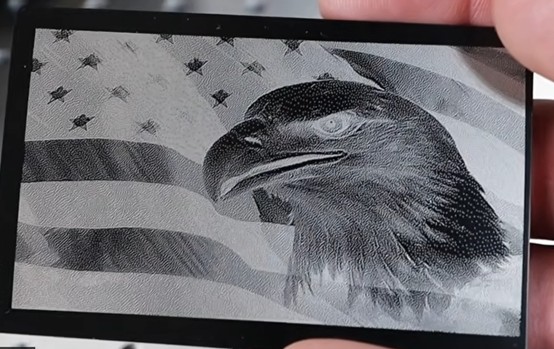 |
What Can Fiber, MOPA & UV Lasers Actually Print on Metal?
| Result Type | Fiber | MOPA Fiber Laser | UV |
|---|---|---|---|
| Black logo | ✔ | ✔ | ✔ |
| Color engraving | ✖ | ✔ | Limited |
| Photo engraving | ✔ | ✔ | ✔ (High Precision) |
| Deep engraving | ✔ | ✔ | ✖ |
Which Laser Should You Choose for Metal Printing?:Top Picks
🟢 Beginner (Budget & Learning Stage):
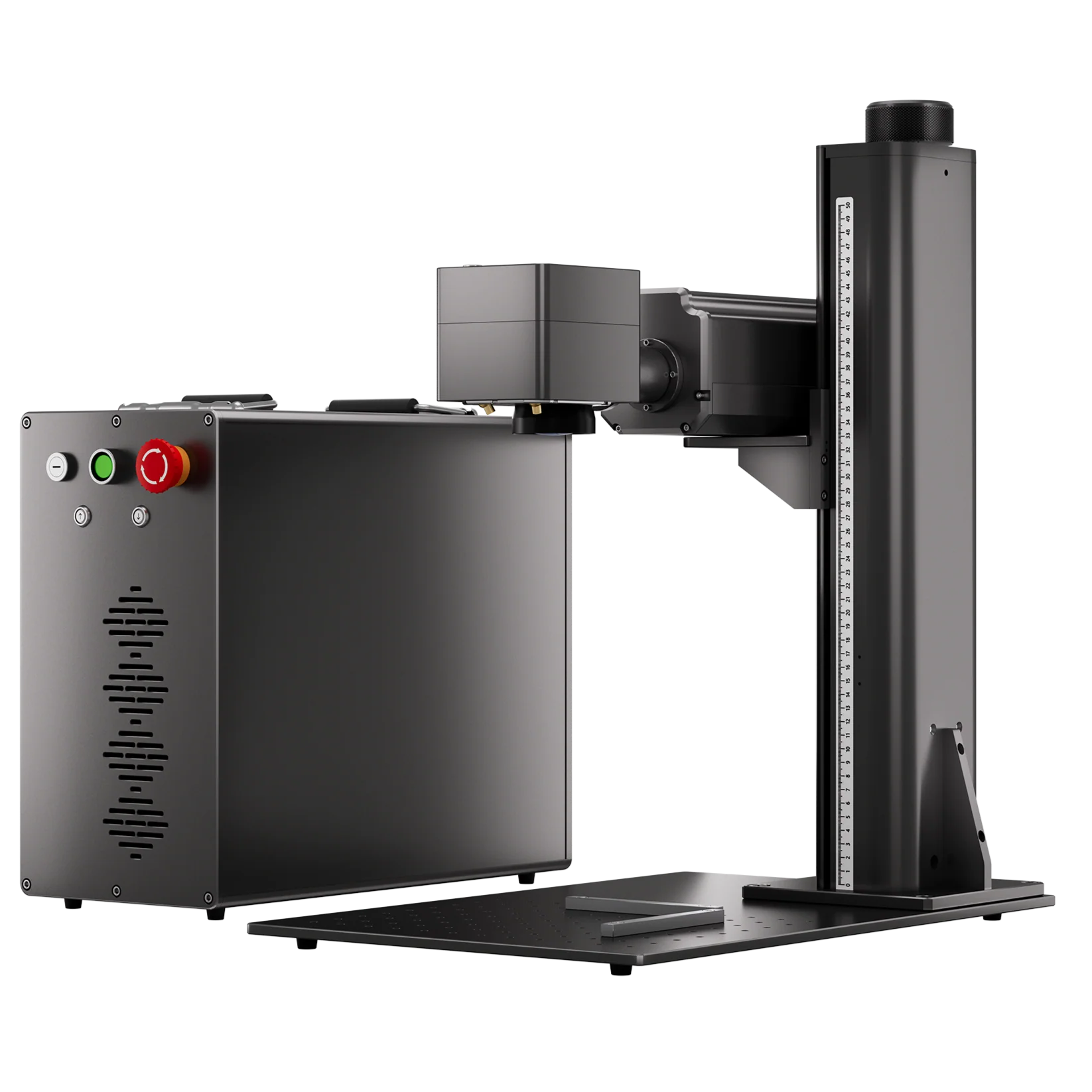
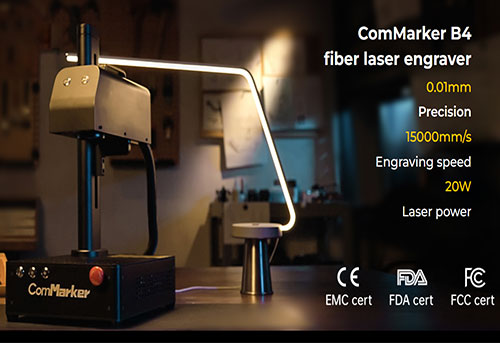
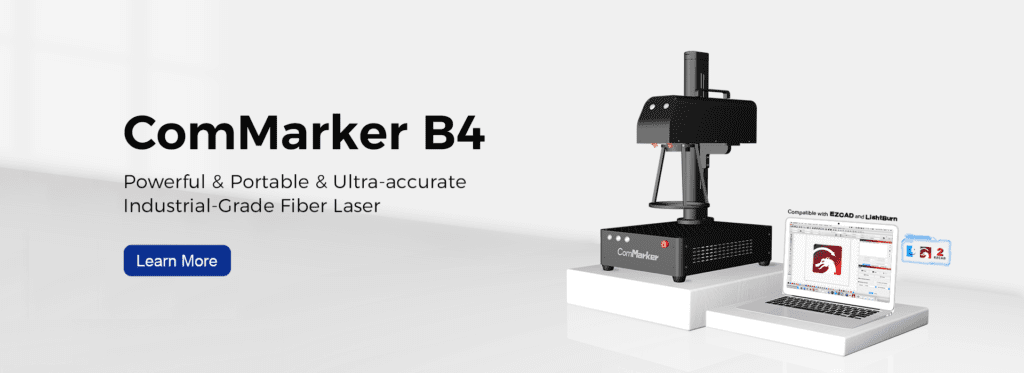
ComMarker B4 Fiber Laser Engraver (20W–100W)
Why choose it:
• Lowest entry cost into metal engraving
• Stable for basic production work (text, QR codes, logos)
• First-time business testing
⚠️ Limitation:
• No color engraving
🔵 Business Growth (Color + Commercial Use):
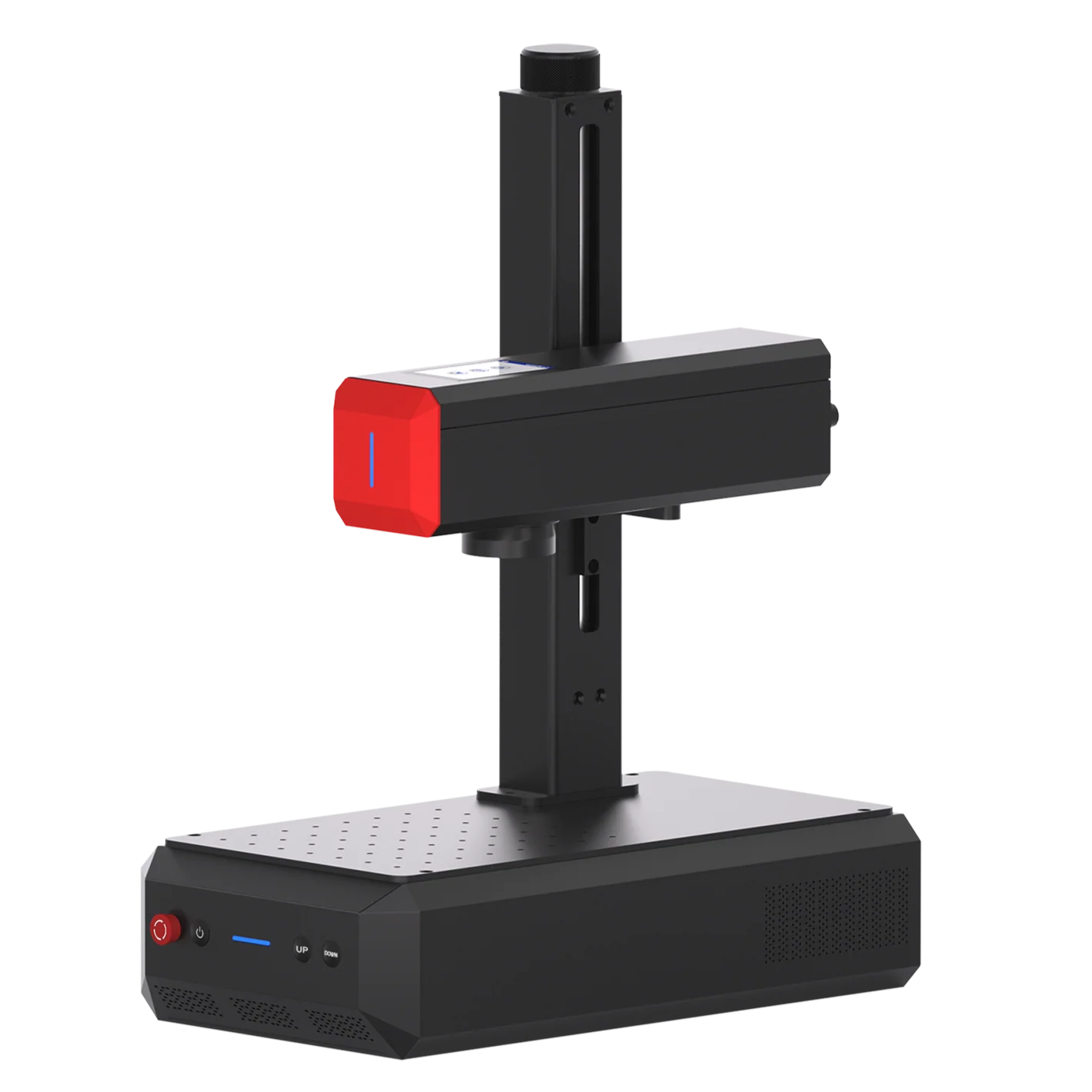
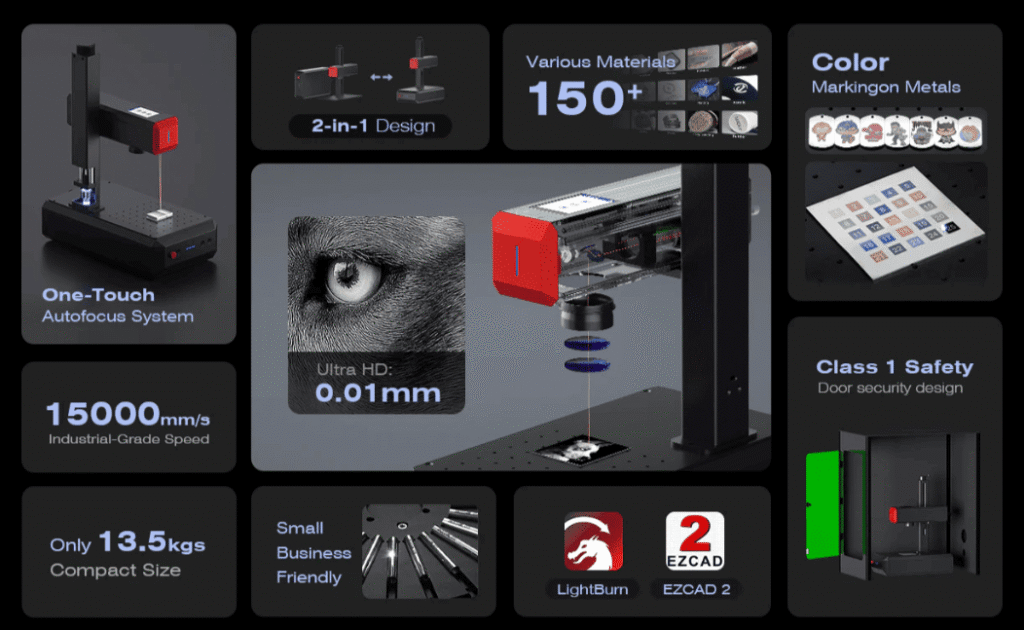
ComMarker B6 MOPA Fiber Laser Engraver (20W–50W)
Why choose it:
• Adds color capability (black/gold/blue effects)
• Strong balance between precision & productivity
• Scales from hobby to commercial work
🟣 Professional (Precision + High-End Applications):
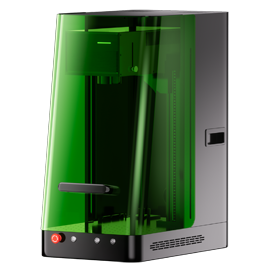
ComMarker Omni X UV Laser Engraver (6W-12W)
Why choose it:
• Highest precision output in this lineup
• Best results for photo engraving and fine textures
• Works on materials fiber lasers struggle with
Limitation:
• Higher cost
• Not designed for deep industrial engraving
What Kind of Metal is Best for Laser Printing: Types and Tips
Stainless Steel
Stainless steel is widely used in manufacturing, signage, and kitchenware. It supports deep engraving, color engraving, and cutting.
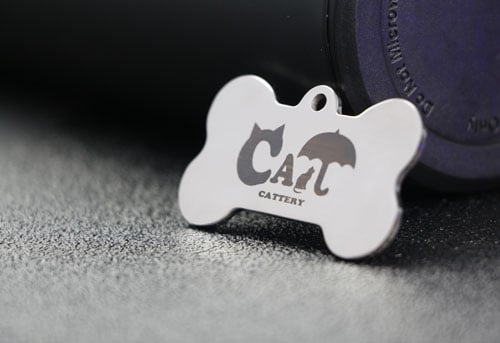
Learn more in Color Laser Engraving Stainless Steel.
Gold
Gold is commonly found in jewelry and luxury items. It requires precision marking due to its softness and sensitivity to heat.
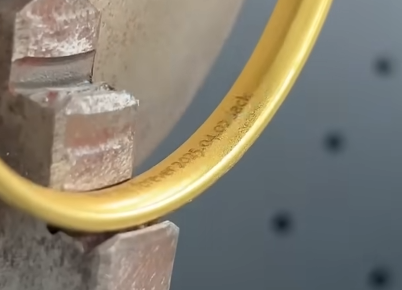
Check detailed tips and how much gold is lost during the engraving process in Laser Engraving Gold. After all, gold is expensive.
Silver
Silver is used for jewelry, decorative items, and coins. High reflectivity demands careful parameter control for clean, consistent results.
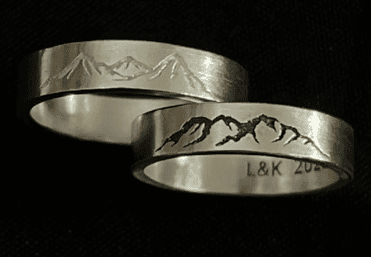
See our guide on Laser Engraving Silver.
Aluminum
Aluminum is popular in consumer electronics, signage, and branding plates. Anodized and raw surfaces respond differently, affecting contrast and efficiency.
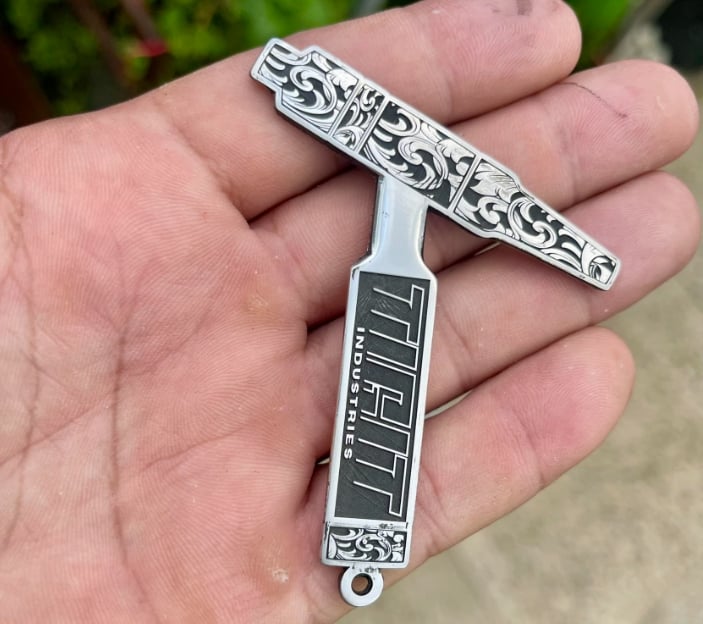
Read more in Laser Marking, Deep Engraving, and Cutting Aluminum.
Titanium
Titanium is used in aerospace, medical instruments, and premium accessories. It allows color marking under specific conditions for high-value applications.
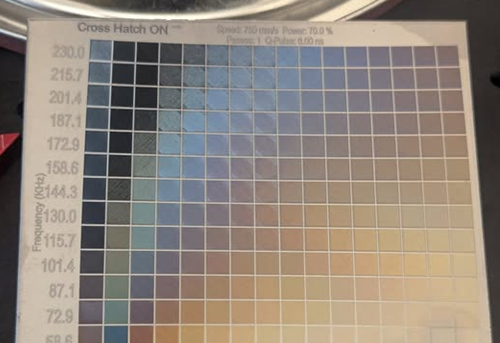
Full instructions are in Laser Marking, Deep Engraving, and Cutting Titanium.
Copper
Copper is common in electrical components and artistic items. Its high reflectivity requires optimized energy control for consistent engraving.
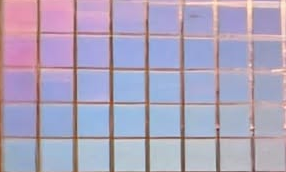
color you can get on copper with fiber laser engraving
Learn technical details in Laser Engraving and Cutting Copper.
Brass
Brass is often used for decorative hardware, instruments, and plaques. Heat sensitivity means surface quality depends on stable processing.
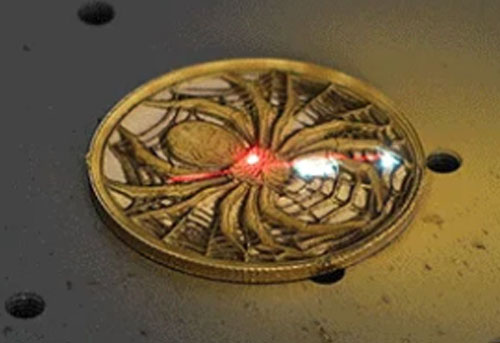
Explore more in Laser Engraving Brass.
Bronze
Bronze is found in sculptures, coins, and architectural elements. Stable processing conditions are needed for uniform results.

For guidance, see Laser Engraving Bronze.
Proven Laser Marking Settings Samples for Common Metals
Tested 20w fiber laser engraver parameters for crisp, consistent results:
| Metal | Power | Speed | Freq. | Air Assist? |
|---|---|---|---|---|
| Stainless Steel | 80–100% | 300–500 | 30–60 | Yes |
| Aluminum | 20–50% | 600–1000 | 20–30 | Optional |
| Brass | 60–90% | 200–400 | 40–60 | Yes |
| Titanium | 70–100% | 400–700 | 50–80 | Yes |
⚠️ Critical: Always run a focus test (ramp method) before production. Material thickness affects beam convergence.
5 High-Profit Laser Metal Printing Applications
Custom Knives/Tools: Logos, ownership marks (50–100W fiber)
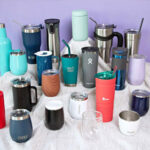
Photo Engraving on Tumblers & Drinkware: Full-wrap designs (MOPA for color)
Jewelry Laser Engraving: Micro-engraving pendants/rings, Bracelet, Earrings
Firearms: Compliance markings + personalization (check ATF rules!)
Aerospace ID Plates: Barcodes, serials (fiber laser)
4 Costly Mistakes to Avoid
Using CO₂ on bare metal → Leaves faint/unreadable marks.
Skipping fume extraction → Metal vapor is toxic (install exhaust + filter).
Engraving coated metals too deep → Peeling/cracking (use <0.05mm depth).
Guessing focus → Calibrate with a ramp test for sharpness.
The Verdict
Yes, laser engravers excel with metal – but fiber/MOPA lasers are essential for professional results. For $1300+, you can get a qualified laser engraver enough to laser print on nearly all metal you grab.
FAQ Section
Q: Can diode lasers engrave metal?
A: Only with thermal spray coatings (e.g., Cermark). Fiber/UV lasers are required for raw metal.
Q: How deep can a 50W laser engrave metal?
A: 0.1–0.3mm on steel/brass (after 3–5 passes).
Q: Why does stainless steel turn black when engraved?
A: MOPA lasers oxidize the surface – adjust pulse width for gold/blue effects.